
Frank V Flohr
Sep 29, 2026
ISSUE #35 · TUESDAY, SEPTEMBER 29, 2026
This Week in The San Luis Valley BeatOctober is almost here, and the Valley is getting ready for winter. This week, Lost Places visits Garland City — the railroad town that was loaded onto flatcars and hauled to Alamosa — and we celebrate Monte Vista at 140. We'll also take the long way over La Veta Pass, shine the Community Spotlight on Tu Casa, look at the little signs that winter is on the way, and round up fall events around the Valley — plus, Around the Table makes a pot of creamy white chicken chili. TRIVIA QUESTION ?
Garland City took its name from nearby Fort Garland — but which famous frontiersman commanded Fort Garland in 1866 and 1867?
(Answer at the bottom!)
|
🎁 Subscriber Bonus: Your Free San Luis Valley Restaurant Guide
As a thank-you for being a subscriber to **The San Luis Valley Beat**, we've created a **free San Luis Valley Restaurant Guide** featuring local restaurants from communities across the Valley.
Whether you're searching for your next breakfast stop, a family dinner, a quick lunch, or a place you've never tried before, this guide makes it easy to discover great local dining options.
This is just the beginning. We'll continue updating the guide as new restaurants are added and information changes, so you'll always have access to the latest edition.
Thank you for supporting local businesses and The San Luis Valley Beat! |

The San Luis Valley Beat uses AI, and I understand why some readers object.
At 74, I produce a weekly newsletter covering six Valley counties without a newsroom, so AI helps me organize information, explore story ideas and occasionally create illustrations.
It does not make editorial decisions: I verify information, talk with local people and label AI-generated images as renderings, not photographs.
Concerns about AI’s electricity and water demands are real, especially in the San Luis Valley.
Several local governments have restricted data center development while weighing those impacts.
Alamosa County, meanwhile, approved a small facility near Hooper that it says will use air cooling, no cooling water and existing electrical infrastructure.
Such projects could bring investment and revenue for the rural electric system, but communities deserve clear answers about resource use, costs and long-term effects before development begins. Read More... |
 |
Small Business Spotlight |
Tumbleweed Bread |
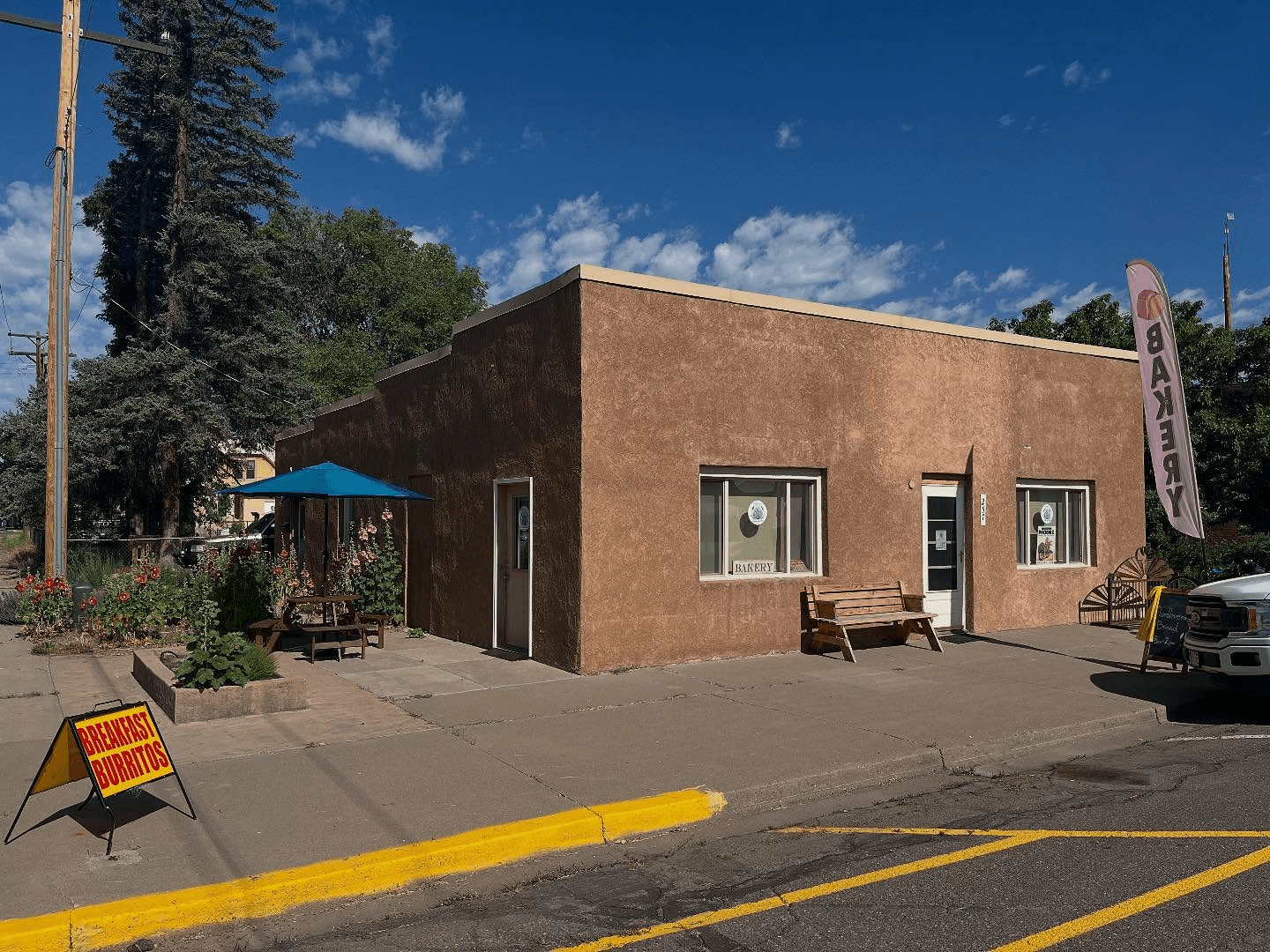
Tumbleweed Bread brings handcrafted baking to downtown Monte Vista. Located at 257 Adams Street, this neighborhood bakery offers naturally leavened breads, pastries and other baked goods, along with coffee and rotating café selections. With an emphasis on whole grains and locally and regionally sourced ingredients, Tumbleweed is a great little Valley stop for something fresh from the oven. |
|
|
 |
 |
Preserving the stories of places time forgot. |
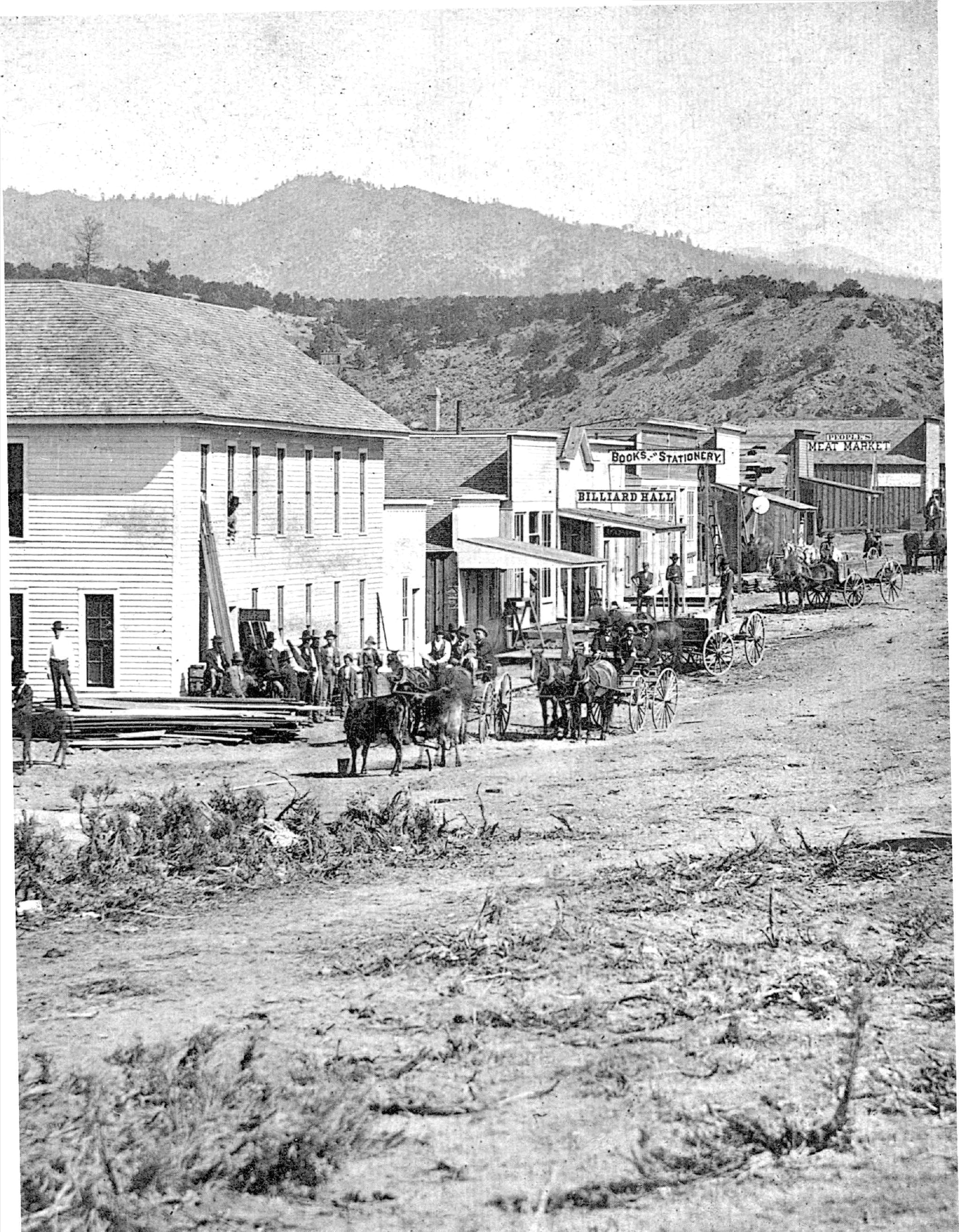
Garland City — The Town That Rode the Rails to AlamosaIn the summer of 1877, it sprang up almost overnight at the end of the railroad. A year later, much of it was loaded onto flatcars and hauled away. Most Lost Places fade slowly. A mine plays out, a railroad moves on, and people drift away over the years. Garland City didn't fade. It packed up and left. For about a year, it was one of the busiest spots in the San Luis Valley. Then, in the summer of 1878, much of the town was lifted onto railroad cars and carried west — where it helped build a brand-new town called Alamosa. Over the PassIn 1877, the Denver & Rio Grande Railway was pushing its narrow-gauge track over La Veta Pass and into the San Luis Valley. Wherever the track stopped for a while, a town appeared. Railroad crews, freighters, merchants and anyone else hoping to make money followed the end of the line. That summer, the end of the line was a spot a few miles east of the old military post at Fort Garland. The new town took the fort's name: Garland City. 200 Buildings in 50 DaysGarland City grew astonishingly fast. A stereograph by Colorado Springs photographer B.H. Gurnsey, dated Aug. 24, 1877, shows the town as the “present terminus” of the Denver & Rio Grande. According to the card, Garland City was just 50 days old and already had more than 200 buildings. Most were quick, cheap wooden structures — hotels, stores, saloons and places to eat and sleep. A settler named John Morgan, writing in 1878, called it “emphatically a railroad town.” Garland City also mattered for more than the railroad. It became a jumping-off point for stagecoaches and wagon freight headed west across the Valley to the booming mining camps of the San Juan Mountains. For a short time, if you were traveling to the San Juans, you likely came through Garland City. The Railroad Moves OnThe trouble with being an end-of-track town is that the track doesn't stay put. By 1878, the Denver & Rio Grande was building west again, across the Valley floor toward the Rio Grande. There, the railroad laid out a new town of its own. It was called Alamosa, Spanish for “place of cottonwoods.” Once the railroad reached Alamosa, Garland City's reason for existing was gone. So the town went too. A Town on FlatcarsIn June 1878, buildings began leaving Garland City — not as lumber, but whole. According to the Colorado Encyclopedia, nearly 100 buildings, including houses, stores and churches, were loaded onto flatcars, hauled some 30 miles west and set down along the tracks in Alamosa. One story from the move has been told ever since. Joe Perry, who ran a hotel called the Perry House, served his guests breakfast in Garland City. That same day, he served them dinner in Alamosa — in the very same building. The first train pulled into Alamosa on July 10, 1878. By then, Alamosa already had a head start, thanks to a town that had arrived by rail ahead of it. A couple of little hotels and a saloon had made the trip in time for the Fourth of July. What Was Left BehindWhatever didn't make the trip was torn down and hauled off, or simply abandoned. John Morgan watched it happen. He predicted Garland City would soon be “a thing of the past,” with little more than battered oyster cans, cast-off clothing and old shoes to show where a town had once stood. He was right. Garland City became a ghost town almost as quickly as it had appeared. Two decades later, in 1899, the railroad even abandoned its original route over La Veta Pass for a new line farther south. A Lost Place With a Living LegacyThere's no Garland City on today's maps, and little to see where it once stood. But in a way, it never completely disappeared. Some of the first buildings in Alamosa came from Garland City. The people who ran its hotels, stores and saloons helped open the new town's first businesses. And Alamosa went on to become the commercial center of the San Luis Valley. Garland City lasted barely a year. But part of it is still riding the rails — in the town it helped build. |
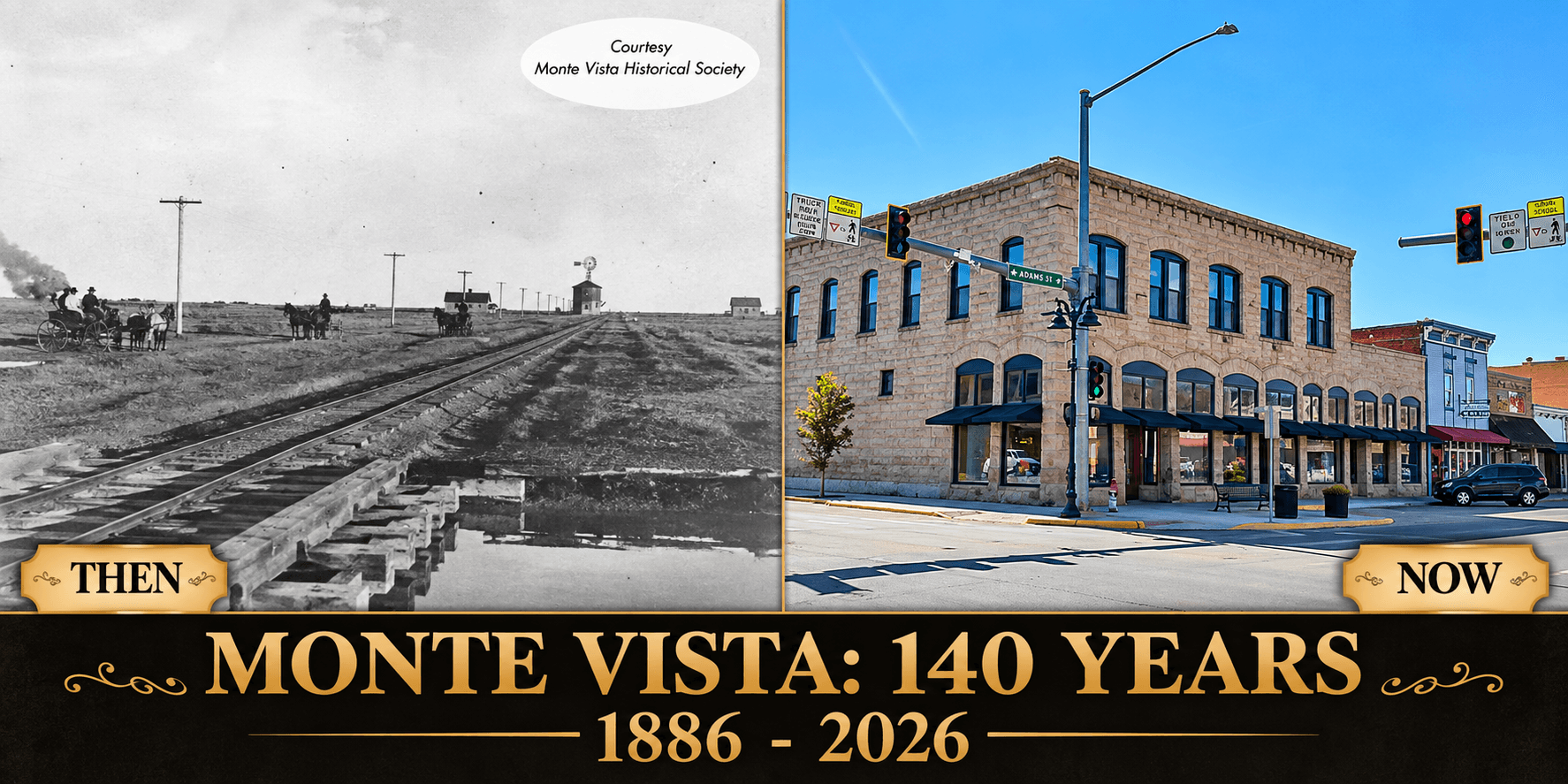
Monte Vista marks 140 years since it was incorporated under the name it carries today — but it didn't start out as Monte Vista.
It began in 1881 as a Denver & Rio Grande water stop called Lariat, where a young widow, Lillian Taylor Fassett, opened a general store that doubled as the post office and first library.
In 1884 promoter Theodore C. Henry platted the town and named it after himself — then left town, and his debts, behind.
The Travelers' Insurance Company stepped in, invested heavily and asked for a new name: Monte Vista, Spanish for “mountain view.”
From its volcanic-stone downtown to the Ski-Hi Stampede, here's how the town grew over 140 years. Read More... |
 |

Tu Casa — A Safe Place to Turn in the San Luis Valley
For more than four decades, the Alamosa-based nonprofit has helped children and adults facing domestic and sexual violence find safety, support and a way forward — free, confidential and available 24 hours a day. Some of the most important work in a community happens quietly, out of the spotlight, and often in the middle of the night. In the San Luis Valley, much of that work is done by Tu Casa. The name means “your home” in Spanish. For people facing violence in their own homes, Tu Casa offers something that can be hard to find: a safe place to turn. More Than 40 Years of ServiceTu Casa has been serving the Valley since 1980. Its mission is to support healthy, violence-free lives and relationships for all children and adults in the San Luis Valley. It serves all six Valley counties — Alamosa, Conejos, Costilla, Mineral, Rio Grande and Saguache — an area of roughly 8,000 square miles. That distance matters. In a rural region, someone trying to leave a dangerous situation may face miles of empty road, limited transportation, little money and few places to go. Language can be another barrier. Tu Casa was built to help people get past those obstacles. What Tu Casa DoesTu Casa works with survivors of domestic violence, sexual assault, stalking, human trafficking and child sexual abuse. Its services include: • A 24-hour crisis hotline, answered every day of the year All services are provided at no charge. Spanish-speaking help and interpreters are available, and no referral or proof of citizenship is required. Help for Children, TooTu Casa is also home to the Children's Advocacy Center of the San Luis Valley. When a child may have been abused, the center gives them a safe, child-friendly place to tell their story and get care, rather than having to repeat it again and again in unfamiliar settings. It's one of the ways Tu Casa works alongside law enforcement, medical providers and others to make sure the response to violence puts the victim first. October Is Domestic Violence Awareness MonthOctober is Domestic Violence Awareness Month, a good time to remember that this isn't a problem that happens somewhere else. It happens here, in small towns and on quiet county roads, to neighbors, coworkers and friends. Often, the people closest to the situation don't know what's going on. Sometimes the most helpful thing anyone can do is simply know where to point someone for help. How You Can HelpLike most nonprofits, Tu Casa depends on community support. You can: • Donate through Tu Casa's website or its ColoradoGives.org page Tu Casa's work doesn't often make headlines. But for the people who reach out, it can change everything. No one in the San Luis Valley should have to face violence alone. Tu Casa, Inc. 24-Hour Hotline: (719) 589-2465 info@slvtucasa.net · slvtucasa.net National Domestic Violence Hotline: 1-800-799-7233 If you are in immediate danger, call 911. |
 |
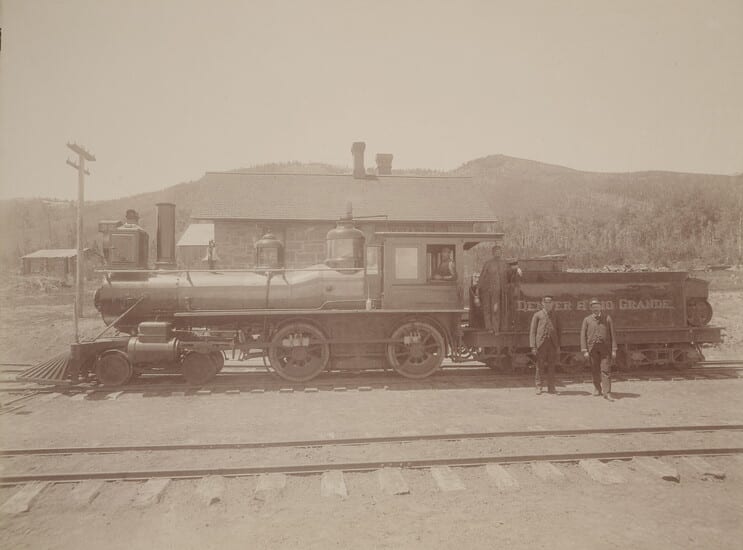
La Veta Pass — Three Routes Over the SangresMost of us cross it on U.S. 160 without a second thought. But just off the highway is an older road, an 1877 depot and a little mountaintop settlement with a story all its own. For a lot of Valley residents, La Veta Pass is simply the way out — the climb east from Fort Garland toward Walsenburg, Pueblo and the Front Range. It's a road we drive for doctor's appointments, shopping trips and holidays with family. We know the curves, the snow and the spots where the deer like to cross. But La Veta Pass isn't really one pass. Over the past 150 years, travelers have crossed this part of the Sangre de Cristos by several different routes — and the oldest ones are still there if you know where to look. The Railroad Above the CloudsLong before there was a highway, this gap in the mountains was a route for Native peoples moving between the plains and the San Luis Valley. In 1877, the Denver & Rio Grande Railway brought its narrow-gauge track over the top. The summit of what's now called Old La Veta Pass sits at about 9,380 feet, and the railroad needed tight curves on the eastern climb to make the grade workable. The line was promoted as “The Railroad Above the Clouds.” That same year, the railroad built a small stone depot near the summit to serve passenger trains headed to and from the San Luis Valley. Remarkably, that 1877 depot is still standing. It was listed on the National Register of Historic Places in 1980. The Tracks Move SouthThe narrow-gauge route served for about two decades. In 1899, the railroad switched to standard gauge and built a new line about seven miles to the south, over a lower crossing that was easier on trains. The old depot's railroad days were over. But the mountaintop wasn't abandoned. UptopThe old railroad grade became a road, and a small settlement grew up around the summit. It came to be known as Uptop. Uptop became a Hispanic logging and lumber community of more than 100 people. A chapel was built in 1930, and there was a one-room schoolhouse. When the road over the old pass became the main highway, travelers stopped for water, food and a break from the climb. Then, in 1962, a new highway route opened over North La Veta Pass, at about 9,413 feet. It's actually a little higher than the old pass, but it has no sharp curves, which made it far better suited to modern traffic. U.S. 160 moved to the new route, and with the traffic gone, Uptop faded. Trains Come Back — For a WhileFreight kept rolling over the southern rail line, but passenger trains had disappeared by the 1950s. In 2006, a passenger train ran between Alamosa and La Veta for the first time since 1953. For several years, excursion trains — including steam — carried visitors over the pass, until the Rio Grande Scenic Railroad went into receivership in 2019. Take the Old RoadToday, the route over Old La Veta Pass is an unpaved, lightly traveled back road that branches off U.S. 160. It's a slower, quieter way over the mountains — and late September and early October, when the aspens turn, is a fine time to try it. Near the top, you'll find the old depot, the chapel and what remains of Uptop. The site has been privately preserved in recent years and has hosted concerts and community gatherings. Please respect private property, and check road conditions before you go — a dirt road at more than 9,000 feet can change quickly this time of year. Next time you're headed over the hill, consider taking the long way. The highway will get you there faster. The old road will show you where it all started. |
 |
Events Around the ValleyFrom First Fridays and farmers markets to live music, author events, a fall festival and a five-course dinner, there's plenty happening around the San Luis Valley over the next couple of weeks. Here are some events to put on your calendar. Friday, October 2First Fridays Bluegrass Night at Dune Valley Distillery Saturday, October 3Alamosa Farmers Market Splashland Triathlon Fall Festival & 5K Artist Reception for Julie Rodriguez October Fall Fest — Del Norte Saturday & Sunday, October 3–4Crestone Artists Open Studio Tour Sunday, October 4Tish Hinojosa in Concert Thursday, October 8Reading & Discussion with Betsy Gaines Quammen Friday, October 9Book Signing with Trina Spillman Saturday, October 10Alamosa Farmers Market Boriqua: A 5-Course Culinary Experience Sunday, October 11The ReMemberers: Mythic Theater, Concert and Ceremony Worth the Drive: Make a Weekend of ItThese events aren't technically in the San Luis Valley, but they're close enough for a fall road trip—and together they make a pretty good weekend getaway. Saturday, October 3 — La Veta Oktoberfest Sunday, October 4 — Ski & Ride School Pancake Breakfast Fundraiser Sunday, October 4 — Fall Colors Concert |
 |
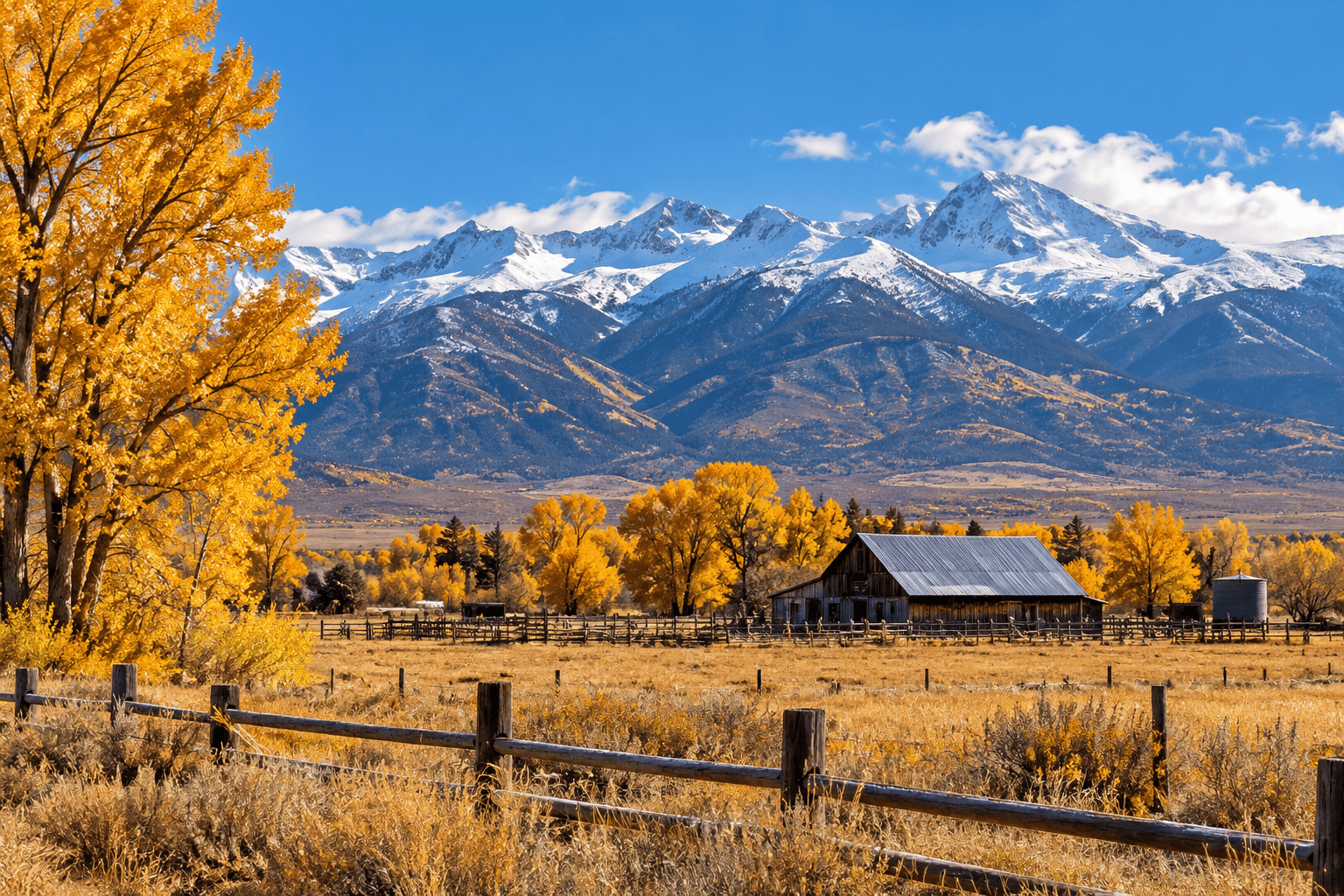
There's no official first day of getting-ready-for-winter in the San Luis Valley — but everyone who lives here knows the signs.
It's frost on the windshield before work, fresh snow dusting the high peaks, and potato trucks rumbling down county roads at harvest time.
It's the sound of sandhill cranes overhead again, the smell of roasting green chile and the first time the furnace kicks on.
Woodpiles grow, swamp coolers get covered and the aspens turn gold on the mountainsides.
Here's a look at the little signals that tell Valley residents the seasons are changing. Read More... |
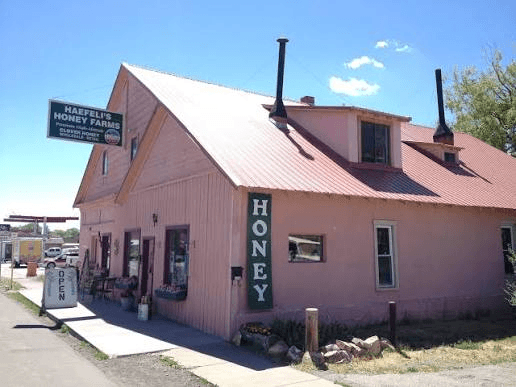
A little mountain sweetness goes a long way. Haefeli’s Honey Farms has been sharing honey since 1903, with pure, raw, unprocessed high-altitude clover honey that’s locally harvested. It’s a family tradition built around bees, blossoms, and keeping things simple. Explore liquid clover honey, creamed honey, honey sticks, and flavors like cinnamon and lemon. The shop also offers beeswax, specialty foods, and gift boxes, making it easy to find something thoughtful for a honey lover. If you’re near Del Norte, stop by the retail store Monday through Saturday. Shopping from farther away? Haefeli’s ships via UPS, too. |
|
|
💡 Tip of The Day
Test Your Carbon Monoxide Detectors
Furnaces, wood stoves and space heaters are coming back on across the Valley, and that makes this a good time to check your carbon monoxide detectors.
Press the test button on each one and replace the batteries if needed. Most detectors also have an expiration date printed on the back, often around 7 to 10 years. If yours is past it, replace it.
Carbon monoxide has no color or smell, so a working detector is your only warning. It's also a good time to have your furnace or wood stove checked before the cold really sets in. |
 |
Meet ApacheMeet Apache, a large adult male German Shepherd who recently became available for adoption through the Upper Rio Grande Animal Society's Conour Animal Shelter in Monte Vista. Apache is estimated to have been born around July 7, 2020, and his shelter profile describes him as friendly with new people and good with cats, dogs, kids and adults. He's also up-to-date on his vaccinations. Apache is a high-energy, highly active dog who will need plenty of exercise and room to move. His listing says a yard is required, along with a 6-foot fence, so he'll likely be best suited to a home prepared for an active German Shepherd. One important note on Apache's profile is that he's listed as an outdoor-only dog. Anyone considering adopting him should talk with the shelter about his background, needs and what type of living arrangement would be appropriate for him. With his classic black-and-tan German Shepherd looks and people-friendly disposition, Apache may be just the companion an active household has been looking for. 📍 Adoption InformationUpper Rio Grande Animal Society 👉 Contact the shelter directly to learn more about Apache or arrange a meet-and-greet. Quick Facts
Not ready to adopt? Sharing Apache's story could help him find the right home. |
 |
 |
 |
Creamy No-Bean White Chicken ChiliTender shredded chicken, corn and just enough green chile in a creamy, cheesy broth — made in the Instant Pot, with very little hands-on cooking. As cooler fall weather settles into the San Luis Valley, it's time to bring out the soups, stews and hearty dishes. This week we're taking chili in a different direction. This Creamy White Chicken Chili skips the beans and combines tender shredded chicken, corn and just enough green chile with a creamy, cheesy broth. It's made in the Instant Pot, so there isn't much hands-on cooking involved. I made this one ahead and refrigerated it overnight. It thickened considerably as it sat, so I added chicken broth when reheating it. That's something I've included in the recipe below. Ingredients• 1½ pounds boneless, skinless chicken breasts For serving, optional: crushed tortilla chips, additional shredded cheese, crema or sour cream, and lime wedges. Directions1. Sauté the onion and garlic. 2. Add the broth and seasonings. 3. Add the chicken. 4. Pressure cook. Using frozen chicken breasts? Increase the pressure-cooking time to about 11–12 minutes, depending on thickness, followed by the same 10-minute natural release. 5. Shred the chicken. 6. Make it creamy. 7. Finish the chili. If the chili is thicker than you like, add additional chicken broth, ¼ cup at a time, until it reaches your preferred consistency. Taste and add salt only if needed. Cook's NoteThis chili thickens considerably as it cools and after refrigeration. That's especially noticeable if you make it a day ahead. When reheating, simply stir in additional chicken broth until it returns to the consistency you like. Serve it topped with crushed tortilla chips and extra shredded cheese for a little crunch—exactly how I served mine. Around the Table Tip: If your family isn't big on green chile, start with ¼ cup. If you want a stronger Southwestern flavor, increase it to ½ cup. Make It Your OwnI made this version without beans, but there's no reason you can't add them. For a more traditional white chicken chili, stir in 1–2 (15-ounce) cans of white beans, drained and rinsed, when you add the corn and shredded chicken. Cannellini, Great Northern or navy beans will all work well. If adding two cans, you may also need a little additional chicken broth to get the consistency you prefer. |
📣 Community Tip LineSee something happening around the San Luis Valley? Let us know! The San Luis Valley Beat depends on readers throughout our six counties to help us keep an eye on what is happening. Send us your tips about new businesses, construction and development, community projects, local accomplishments, interesting people, changes around town, historical stories, photos, or anything else you think deserves a closer look. You do not have to write the story — just point us in the right direction. 📧 editor@thesanluisvalleybeat.com Six counties. One Valley. Your stories help us cover it. |
TRIVIA ANSWER !
Kit Carson
Carson took command of Fort Garland in 1866 and worked with Chief Ouray and other Ute leaders to keep peace in the San Luis Valley. The fort was named for Brig. Gen. John Garland, who ordered it built, and was abandoned in 1883, after the railroad arrived.
|