
The Cranes Are Back: The San Luis Valley’s Other Sandhill Crane Migration |
March gets most of the attention, but every autumn thousands of sandhill cranes make another remarkable journey through the San Luis Valley |
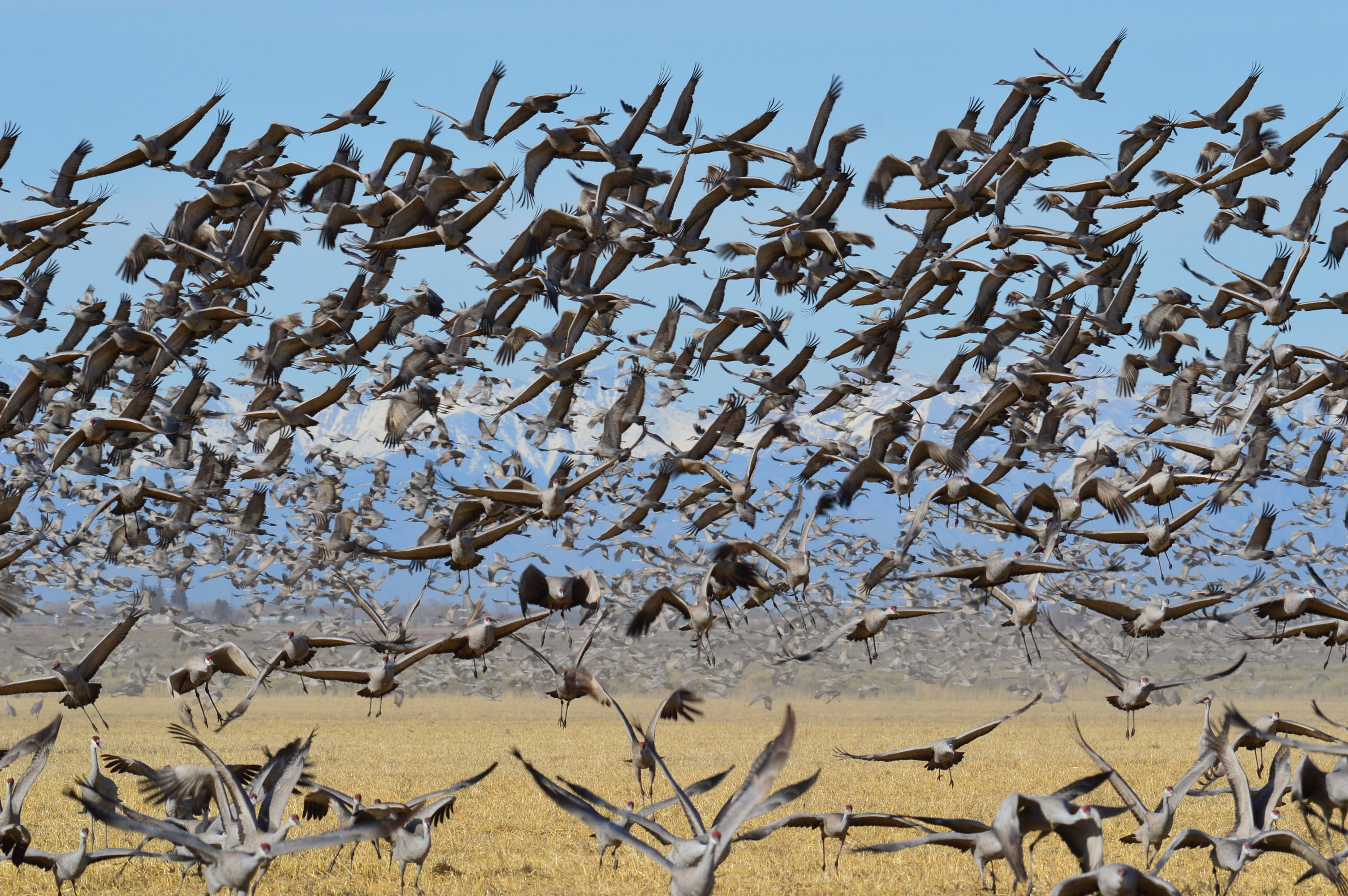
The Cranes Are Back: The San Luis Valley’s Other Sandhill Crane Migration
March gets most of the attention, but every autumn thousands of sandhill cranes make another remarkable journey through the San Luis Valley.
SAN LUIS VALLEY — If you've heard that unmistakable rolling call overhead recently, look up.
The sandhill cranes are coming through again.
Most San Luis Valley residents know about the spectacular spring migration that brings thousands of cranes to the Monte Vista area each March. The annual Monte Vista Crane Festival celebrates their arrival and has become one of the Valley's signature events.
But March isn't the cranes' only visit.
Every autumn, sandhill cranes return to the San Luis Valley as they make their journey south, creating a second migration that receives considerably less attention but can be every bit as fascinating to watch.
And October is the time to see it.
The Journey South
After leaving the San Luis Valley in spring, many of the cranes continue north to breeding grounds in the greater Yellowstone region, including parts of Montana, Wyoming, Idaho and northern Colorado.
There they spend the warmer months nesting and raising their young.
Then, as temperatures begin dropping and autumn spreads across the Rocky Mountains, the cycle reverses and the cranes head south again.
U.S. Fish and Wildlife Service guidance says cranes typically arrive in the San Luis Valley in mid-September and leave by mid-November. The agency estimates roughly 23,000 to 27,000 sandhill cranes migrate through the Valley in spring and fall.
At Monte Vista National Wildlife Refuge, the fall migration generally peaks around early to mid-October.
That means right now is one of the best times of fall to start watching for them.
Why the San Luis Valley?
For migrating cranes, the San Luis Valley is much more than a convenient rest stop.
It provides two things the birds need during their long journey: food and safe places to roost.
Agricultural fields provide grain, especially barley and wheat, while wetlands provide roots, seeds, invertebrates and other food. Shallow wetlands also give cranes relatively protected places to gather overnight.
That combination has made the San Luis Valley an important stop along their migration route.
The Monte Vista National Wildlife Refuge is particularly valuable because it contains both agricultural fields and wetlands.
During daylight hours, cranes can often be spotted feeding in fields. As evening approaches, groups begin returning to shallow wetlands to spend the night.
Around sunrise, the process begins again.
Fall Is Different From March
Anyone familiar with the March migration may notice something different about the cranes in October.
After the fall barley harvest, cranes and waterfowl spread throughout the Valley to take advantage of grain remaining in privately owned fields. That can make fall crane watching feel more scattered and unpredictable than the familiar spring spectacle.
It can also make it feel like a discovery.
A drive down a familiar Valley road can suddenly reveal hundreds of cranes feeding in a field.
Sometimes you'll hear them before you ever see them.
That distinctive rattling call can carry across the open Valley landscape, announcing the birds long before they come into view.
Where to Look
The Monte Vista National Wildlife Refuge remains one of the best places to start.
The refuge lies south of Monte Vista and includes wetlands, agricultural habitat and public wildlife-viewing areas.
The refuge's Wildlife Drive, trails and wildlife-viewing pullouts are open from one hour before sunrise until one hour after sunset.
U.S. Fish and Wildlife Service crane-viewing guidance points visitors toward the Highway 15 viewing areas, the auto-tour route and areas near County Roads 7S, 8S and 2E.
Wherever you look, remember that many agricultural fields are private property.
Enjoy the birds from public roads and designated viewing areas, never enter private property without permission, and give crane roosts plenty of space.
The Best Times to Watch
Early morning and late afternoon can provide some of the most memorable viewing.
Cranes commonly feed in agricultural fields from sunrise to mid-morning and again from late afternoon until sunset. During the middle of the day, they may loaf and feed in wet meadows and uplands.
Later in the day, groups leave the fields and begin returning toward their nighttime roosts.
Watching flock after flock cross a San Luis Valley sunset can be every bit as impressive as seeing them during the better-known March migration.
Binoculars certainly help, but they aren't always necessary. Sandhill cranes are large birds, and a sizable flock standing in an open field isn't difficult to spot.
Their voices can carry even farther.
A Quieter Crane Season
Perhaps one of the most appealing things about the autumn migration is what it doesn't have.
It doesn't receive the same attention as March.
There are fewer people specifically traveling to the Valley to see the cranes, and the birds are arriving against a completely different landscape.
The cottonwoods are turning gold. The mornings are getting colder. Snow is beginning to appear on the high peaks. Harvest season is winding down.
And overhead, another ancient seasonal journey is underway.
The spring cranes arrive as winter loosens its grip on the San Luis Valley. The autumn cranes carry a different message: they're passing through as another Valley summer gives way to winter.
So sometime during the next few weeks, listen when you're outside.
If you hear that familiar call somewhere above you, stop for a moment and look toward the sky.
The cranes are back — they're just heading the other direction.
Photo: Kate Miyamoto/USFWS. Public domain. |
0 Comments
Join the conversation
Be the first to comment
Share your thoughts above.