Livestock Auctions Keep a Valley Tradition Alive in Monte Vista |
A look inside the sale barn and its role in San Luis Valley ranching |
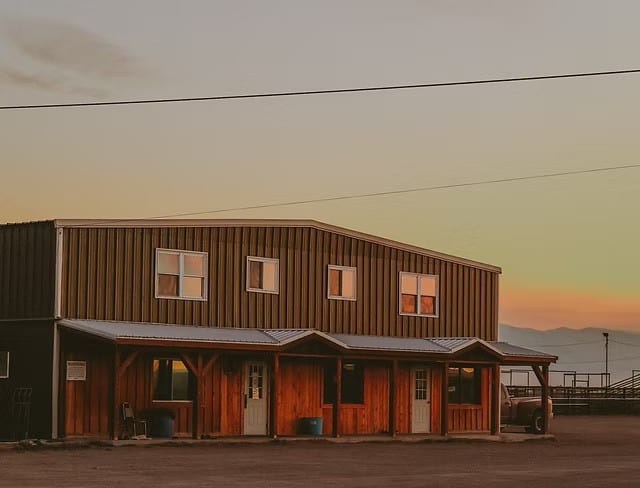
For ranching families in the San Luis Valley, a livestock auction is more than a place where animals change owners. It is part of the business of agriculture and a gathering point for people whose livelihoods depend on livestock.
At Monte Vista Livestock Auction, east of Monte Vista along U.S. Highway 160, sellers bring animals to market and buyers compete for them through bidding. The familiar calls of an auctioneer are only the most visible part of a much larger operation.
Before livestock reaches the sale ring, workers must receive and handle animals, organize pens, and prepare the information needed for each sale. Buyers assess the livestock offered while sellers watch the bids that will determine the outcome of months of work.
The sale barn describes itself as locally owned and operated. Its regular cattle and horse auctions are scheduled for Fridays beginning at noon, while special sales are held at various times throughout the year. The published calendar also includes small-animal sales on the first Saturday of the month.
The different sale formats serve different needs. A producer selling calves may be looking for a competitive market at a particular time of year, while another rancher may be searching for breeding stock or other livestock. Auctions bring those interests together in one place.
Monte Vista Livestock Auction also carries a connection to southern Colorado's ranching history. A Chaffee County historic resources survey identifies livestock businessman Loy Adams, who operated an auction in Salida, as the builder and operator of the Monte Vista auction.
That reference offers a starting point for understanding how livestock marketing facilities developed across the region. The precise opening date of the Monte Vista operation, however, still deserves further historical research rather than an unsupported guess.
An auction's importance extends beyond the bidding itself. Transporters, livestock handlers, brand inspectors and other agricultural service providers all have roles in the process. The work reflects the coordination required to move animals responsibly from one owner to another.
For people outside agriculture, it can be easy to overlook how much planning goes into selling livestock. Ranchers must consider feed costs, animal condition, transportation and market timing. The price achieved at auction is one important part of that calculation.
Sale days can also create opportunities for neighbors to catch up and exchange information. In a region where ranches and farms are spread across long distances, familiar gathering places help maintain the relationships that support rural life.
The Valley is often associated with potato fields, hay production and sweeping mountain views. Livestock operations are another enduring part of that landscape, and the auction ring offers a particularly visible connection between agricultural work and the marketplace.
Anyone planning to attend a sale or bring livestock should confirm the schedule and applicable requirements directly with the auction before traveling. Special sales and seasonal changes can affect the calendar.
For Monte Vista, the sound of bidding is a reminder that the Valley's agricultural heritage is not simply something preserved in photographs or museums. It remains part of everyday business for the people raising, buying and selling livestock today.
Monte Vista Livestock Auction is at 5660 U.S. Highway 160 East, Monte Vista. Its listed telephone number is (719) 852-9500. |
1 Comment
Join the conversation
My In-laws Conrad and Sharon Gulliford ran that auction for many years. Loy Adams was her dad.