
The Valley's Volunteer Fire Departments: Neighbors Answering the Call |
Across the San Luis Valley, volunteer firefighters help protect communities separated by miles of highways, farmland, forests, and mountains. Their service is one of rural Colorado's most important traditions. |
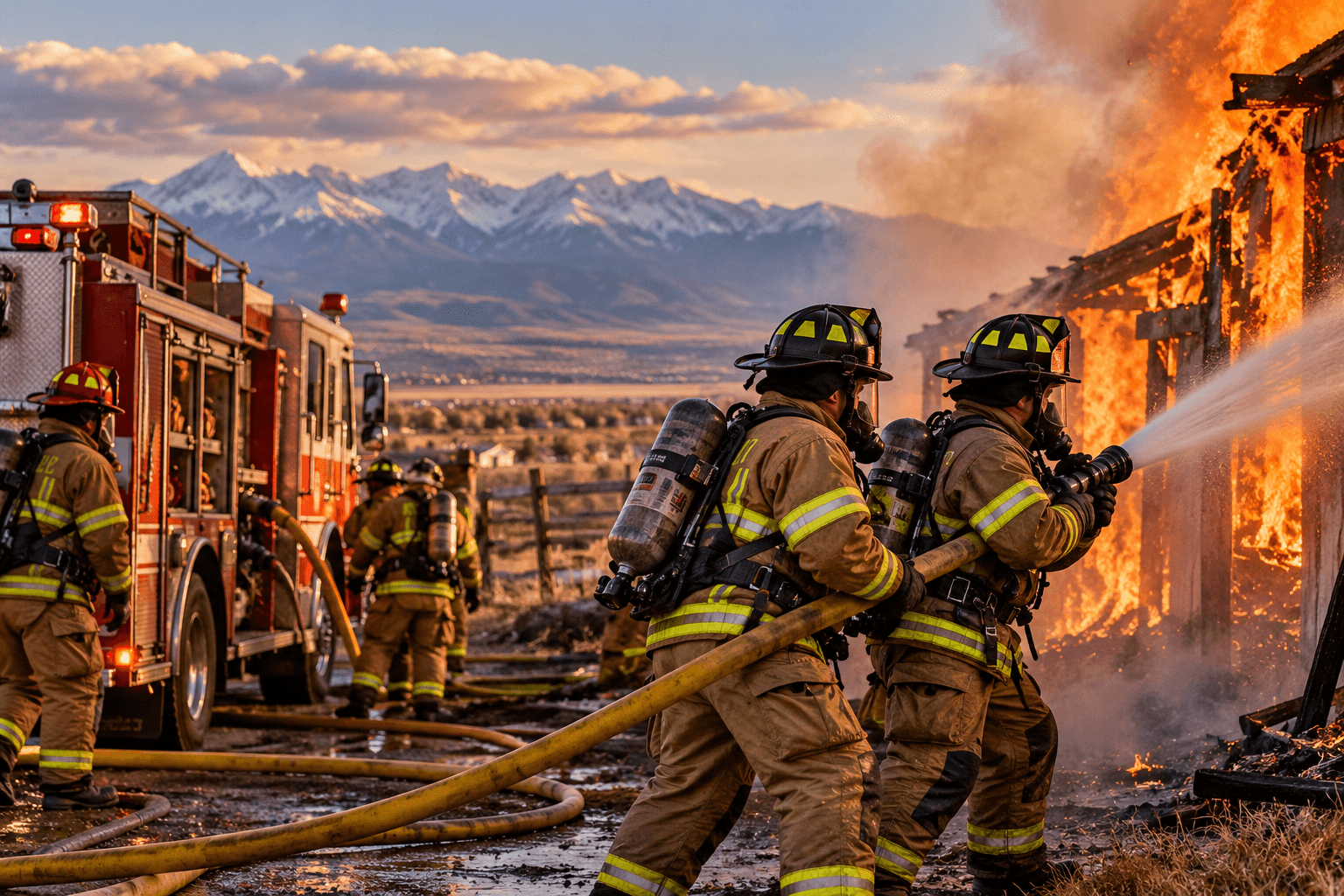
When a fire breaks out in a small San Luis Valley community, the people responding may be the same people you saw earlier that day at the grocery store, working on a ranch, or running a local business.
They are neighbors, friends, and family members. And when an emergency call comes, they put aside whatever they are doing to help.
Across the Valley's six counties, volunteer firefighters provide an essential layer of emergency protection. They serve communities where distances are long, populations are small, and maintaining a fully staffed, around-the-clock fire station can be financially difficult.
Their work often takes place quietly, without much recognition. Yet the safety of thousands of Valley residents depends on people willing to answer the call.
A Different Kind of Fire Service
In larger cities, firefighters typically work scheduled shifts at stations staffed around the clock.
In many rural communities, the system works differently.
Volunteer firefighters may be at home, at work, or tending livestock when an emergency alert comes in. Depending on the department and its procedures, they respond to the station, assemble their equipment, and head toward the emergency.
That arrangement makes volunteer availability especially important.
The San Luis Valley has numerous volunteer-based fire departments and fire protection districts, although their staffing and compensation arrangements vary.
The Monte Vista Fire Protection District and Del Norte Fire Department are among the Valley's volunteer organizations. The City of Alamosa describes its fire department as a volunteer, paid-per-call operation.
In northern Saguache County, the Northern Saguache County Fire Protection District serves communities including Saguache, Moffat, Crestone, Villa Grove, and Bonanza.
These departments and their neighboring agencies help provide protection across a landscape that would be difficult for any single organization to cover alone.
More Than Fighting Fires
The name fire department only begins to describe the responsibilities of today's rural firefighters.
Depending on the department's equipment, training, and responsibilities, calls may involve structure fires, grass and brush fires, vehicle accidents, rescue situations, and other emergencies.
Firefighters may also assist other emergency responders, help protect property during wildfires, and participate in fire-prevention education.
The challenges vary considerably across the Valley.
Agricultural areas face risks from equipment fires, hay and outbuilding fires, and fast-moving grass fires.
Mountain communities contend with steep terrain, forested landscapes, seasonal visitors, and difficult access during winter.
Along highways such as US 160 and US 285, emergency responders must be prepared for incidents involving residents and travelers alike.
Each call presents its own demands, and the people responding must be prepared for circumstances that can change rapidly.
When Departments Help One Another
One of the most important features of rural emergency response is mutual aid.
A serious fire or rescue may require more personnel, water, or specialized equipment than one department can provide.
Mutual-aid agreements allow neighboring departments to assist when needed.
The Alamosa Fire Department identifies mutual aid throughout the six San Luis Valley counties as part of its service. In the Crestone area, the Baca Grande Fire Department describes an automatic mutual-aid agreement with the Northern Saguache County Fire Protection District.
These arrangements are especially valuable in rural communities, where a major emergency can quickly stretch local resources.
They also reflect something familiar to Valley residents: when a neighbor needs help, communities work together.
The Challenges Behind the Commitment
Volunteer firefighting requires much more than responding to emergencies.
Members must train, maintain equipment, attend meetings, and develop the skills needed to work safely in dangerous situations.
Those commitments must often be balanced with jobs, family responsibilities, and everyday life.
Recruiting and retaining volunteers has become a significant challenge for rural fire departments across Colorado.
A statewide Fire Service Needs Assessment discussed in August 2026 found that two-thirds of the responding departments reported insufficient funding to cover all their operations.
The assessment also identified substantial needs involving training and equipment, particularly as departments prepare for fires in areas where homes and wildland vegetation meet.
These are statewide findings, not a measurement of staffing or finances in the San Luis Valley alone. But they illustrate the pressures facing smaller departments that must provide essential services with limited resources.
Fire trucks, protective clothing, breathing equipment, radios, and rescue tools are expensive. Even volunteer departments require dependable funding to operate safely.
And replacing experienced volunteers is not always easy.
Supporting Those Who Serve
The future of volunteer fire protection depends partly on the communities it serves.
Residents can help by supporting local fundraising activities, respecting fire restrictions, maintaining defensible space around buildings, and taking steps to prevent accidental fires.
Those interested in volunteering can contact their local fire department or fire protection district to learn about current opportunities and requirements.
Not every volunteer role necessarily involves entering a burning building. Some departments may have opportunities involving administration, public education, fundraising, or other support activities.
Community members can also help by recognizing that emergency response in a rural area takes preparation, cooperation, and resources.
A volunteer firefighter's service begins long before the alarm sounds.
A Tradition Worth Preserving
The San Luis Valley has always depended on neighbors helping neighbors.
That tradition is especially visible in its volunteer fire departments.
Whether responding to a house fire, helping at an accident, or assisting another community during an emergency, these men and women provide a service that is difficult to replace.
They give their time, develop demanding skills, and accept responsibilities that most residents will never have to face.
The next time a fire engine passes through town with its lights flashing, remember that some of the people aboard may have stepped away from their jobs, families, or farms to answer that call.
Across the San Luis Valley, volunteer firefighters are more than emergency responders. They are neighbors protecting neighbors—and their dedication helps keep our rural communities safe.
|
0 Comments
Join the conversation
Be the first to comment
Share your thoughts above.