
As Floodwaters Recede, San Luis Valley Faces the Long Road to Recovery |
Damaged roads, private wells and flooded properties remain concerns after historic Rio Grande flooding |
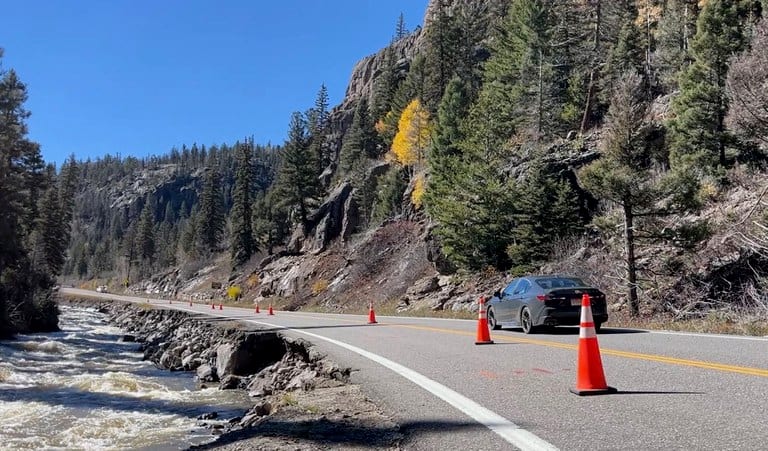
The rivers are beginning to settle, but for many San Luis Valley residents, the hardest work may be just beginning.
After days of flooding along the Rio Grande and its tributaries, communities from South Fork through Del Norte, Monte Vista and Alamosa are turning their attention from emergency response to cleanup, damaged infrastructure and the long process of recovery.
Floodwaters have begun to recede in many areas, and several major highways have reopened, but a flood does not end simply because the river returns to its banks.
Historic water levels across the Valley
The flooding followed heavy rainfall in the San Juan Mountains, sending large volumes of water into the Rio Grande and surrounding waterways.
The Rio Grande at Alamosa rose to roughly one foot above its nine-foot flood stage earlier this week before beginning to recede.
Colorado Public Radio reported that a National Weather Service hydrologist characterized the recent Rio Grande flow at Alamosa as the third highest on record and the highest since the late 1940s.
South Fork: assessing the damage
In and around South Fork, floodwaters damaged access routes and affected homes and neighborhoods, leaving residents and emergency officials to assess the condition of buildings, bridges and roads.
For property owners, recovery can involve more than removing standing water: erosion, debris, saturated foundations and damaged utilities may create problems after the immediate danger has passed.
Some evacuation orders in the South Fork area were lifted Monday, October 26, but residents should confirm access and safety conditions before returning to affected properties.
Monte Vista and Alamosa: flooding beyond the riverbanks
The flooding demonstrated that properties do not have to sit directly beside the Rio Grande to be affected.
Reports from the Monte Vista area described water surrounding properties well away from the river, while agricultural fields and other low-lying areas across the Valley experienced inundation.
In Alamosa, the Rio Grande reached unusually high levels, and residents should continue to avoid flooded low spots and saturated riverbanks as water drains away.
Conejos River communities
Flooding along the Conejos River and connected waterways affected southern Valley communities, including low-lying areas near Manassa.
Even where evacuation orders have ended, standing water and damaged access routes can remain hazardous; residents should continue following county emergency-management notices.
Wolf Creek Pass reopens, but repairs continue
On Tuesday, October 27, the Colorado Department of Transportation reopened US Highway 160 over Wolf Creek Pass at 3:30 p.m. after flood damage had closed the route.
The reopening is an important improvement, but emergency repairs are not finished.
CDOT reported alternating single-lane traffic near The Narrows east of South Fork and restrictions near Treasure Falls on the Pagosa Springs side, with travelers advised to allow up to an additional hour.
Flood damage also affected roads within the Rio Grande National Forest, including Forest System Road 250 between the Alamosa Guard Station and Science Camp, which has been listed as impassable.
October 28 update: Colorado seeks federal highway repair funding
On Wednesday, October 28, the Colorado Department of Transportation announced a request for federal emergency relief following extensive flood damage to highways across southwestern Colorado.
CDOT estimates approximately $65 million in damage to federally eligible highways and has requested an initial $6.5 million through an expedited federal process to support urgent repairs before winter.
The Colorado Transportation Commission has already approved $5 million in state emergency funding, but the requested federal funding has not yet been approved.
Among the affected routes is US 160 over Wolf Creek Pass, where floodwaters damaged a culvert and retaining wall and undermined portions of the roadway near the Rio Grande headwaters.
The $65 million estimate covers damaged highways across southwestern Colorado, not just the South Fork corridor.
CDOT cautions that the figure is preliminary because high water has delayed some inspections, and a more complete estimate is expected in eight to ten weeks.
Private wells and septic systems deserve attention
Floodwater can introduce bacteria, sewage, fuel and other contaminants into private wells, especially where wellheads were submerged or damaged.
Residents whose wells were affected should follow local public-health guidance for inspection, disinfection and appropriate testing before treating the water as safe to drink.
Flooding can also disrupt septic tanks and drain fields because saturated soil may prevent wastewater systems from operating properly.
Property owners should contact their county public-health department or qualified professionals when a well or septic system may have been compromised.
The work ahead
As the immediate emergency eases, the Valley faces repairs to bridges and roads, restoration of access to properties, water-quality concerns and the challenge of helping affected families and businesses recover.
For some residents, cleanup may take days; for others, repairs and rebuilding could continue for months.
The full extent of the damage may take time to become clear, particularly along remote roads and properties that remain difficult to reach.
The San Luis Valley Beat will continue following recovery efforts, road repairs, public-health guidance and assistance available to affected residents. |
0 Comments
Join the conversation
Be the first to comment
Share your thoughts above.