From the Valley to the Table: A Taste of San Luis Valley Cooking |
From generations-old recipes to today's family kitchens, the San Luis Valley's food traditions tell a story of agriculture, heritage, and the simple pleasure of sharing a meal. |
There is something special about a meal made with ingredients grown close to home.
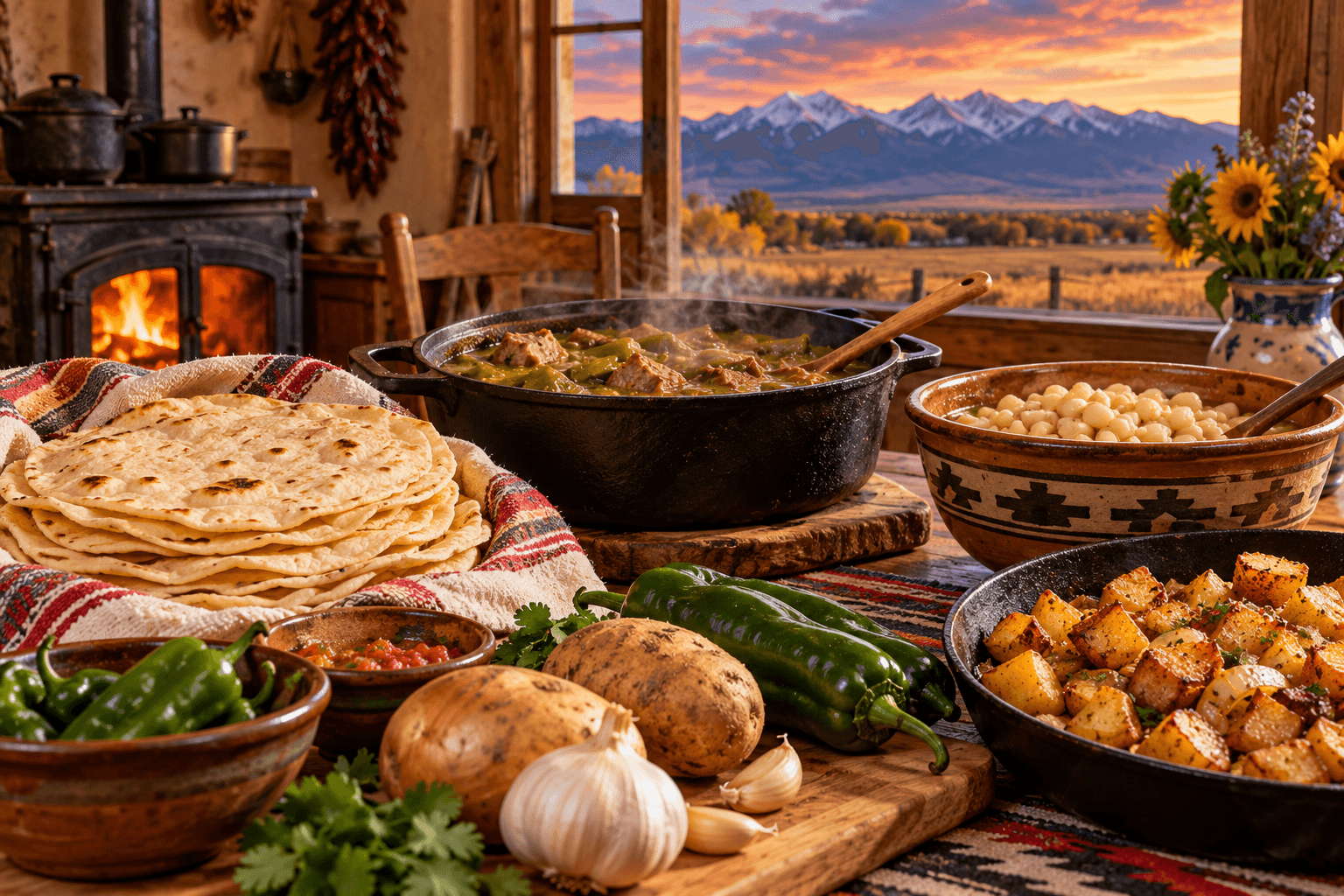
In the San Luis Valley, that might mean a pot of green chile simmering on the stove, potatoes fresh from the fields near Center, homemade tortillas warming on a griddle, or a hearty stew prepared from a recipe handed down through generations.
Food has always been part of the Valley's identity.
Long before modern grocery stores, refrigerated trucks, and restaurant menus, families relied on what they could grow, raise, preserve, and prepare themselves. Their kitchens reflected the seasons, the land, and the cultures that came together in this high mountain valley.
Today, those traditions remain alive, even as new ingredients, cooking methods, and generations of home cooks add their own touches.
A Valley Built on Agriculture
To understand San Luis Valley cooking, it helps to begin with the land.
At roughly 7,600 feet above sea level, the Valley presents unusual challenges for agriculture. The growing season is relatively short, nights can be cold even during summer, and farming depends heavily on irrigation water supplied by mountain snowmelt.
Yet generations of farmers and ranchers have made this high-altitude landscape remarkably productive.
Potatoes are perhaps the Valley's best-known crop. Fields around Center, Monte Vista, Alamosa, and surrounding communities produce potatoes shipped to markets throughout the country.
But the agricultural story extends far beyond potatoes.
Barley, wheat, hay, lettuce, carrots, spinach, and other crops are part of the Valley's agricultural economy. Cattle and other livestock have also contributed to the region's food traditions.
Some crops are grown primarily for commercial markets, while others find their way into local kitchens and family recipes.
For many Valley families, the connection between farming and cooking has never been difficult to understand. The food on the table often begins with someone working the land.
The Foods That Came Before Us
The Valley's food traditions reflect a long history of Indigenous agriculture, Hispano settlement, and the contributions of later generations of residents.
Corn, beans, squash, and chile peppers have deep roots in the food cultures of the Southwest.
Early Hispano families brought seeds, livestock, agricultural knowledge, and cooking traditions from northern New Mexico. They grew vegetables, raised animals, and preserved food to survive the Valley's long winters.
In communities such as San Luis, Antonito, and the smaller settlements of Conejos and Costilla counties, family food traditions became an important part of everyday life.
Meals were often built around practical ingredients: beans, corn, potatoes, chile, flour, and whatever meat or vegetables were available.
The resulting dishes were nourishing, economical, and suited to feeding families after long days of work.
Many remain familiar today.
A bowl of posole, a plate of enchiladas, homemade tamales, or a pot of beans accompanied by fresh tortillas can carry generations of family history.
And although recipes may share familiar names, every family seems to have its own way of preparing them.
Chicos: A Taste of Tradition
Few foods connect the Valley's agricultural past with its present quite like chicos.
Chicos are made from corn traditionally roasted or steamed in an outdoor adobe oven known as an horno, then dried for later use.
The dried kernels can be stored and eventually simmered in soups or stews, often with beans or meat.
For generations, preparing chicos was part of the fall harvest in some Valley communities.
The work required patience. Corn was harvested, cooked, dried, and stored for the winter months.
In San Luis, farmer Arnie Valdez has helped preserve this tradition using heirloom white corn and a family horno.
His family's practice is an example of how traditional food preparation continues to connect people with their ancestors.
The horno itself remains an important part of the Valley's cultural landscape.
At the Rio Grande Farm Park in Alamosa, a community horno built in 2022 provides a place where people can experience traditional outdoor cooking.
It is a reminder that preserving food heritage is not simply about remembering the past. It is also about giving new generations opportunities to participate.
The Humble Potato Takes Center Stage
No article about San Luis Valley cooking would be complete without potatoes.
They may be one of the simplest foods in the kitchen, but their versatility is difficult to match.
Baked, mashed, roasted, fried, or simmered in soup, potatoes have earned their place on tables throughout the Valley.
Different varieties lend themselves to different preparations.
Russet potatoes are especially well suited to baking and mashing. Red potatoes hold their shape nicely in soups and stews, while yellow varieties offer a creamy texture that works well in many dishes.
For families preparing economical meals, potatoes can help turn a few basic ingredients into something satisfying.
A pot of potato soup, a skillet of fried potatoes and onions, or a pan of roasted potatoes served alongside meat can provide the foundation for a hearty supper.
Potatoes also find their way into breakfast burritos, green chile stews, casseroles, and countless family favorites.
The Valley's potato growers supply far more than local dinner tables, but there is something especially fitting about enjoying a meal made with potatoes grown just down the road.
Green Chile and the Family Recipe
Ask a group of San Luis Valley cooks how to make green chile, and you're likely to hear several different answers.
Some prefer pork. Others make it without meat.
Some want a thick sauce suitable for smothering burritos, while others favor a thinner version served as a stew.
The choice of peppers, seasonings, and thickening methods can vary from one kitchen to another.
Those differences are part of the tradition.
Green chile is more than a popular regional dish. In many households, it represents family gatherings, holidays, Sunday dinners, and memories of learning to cook alongside parents or grandparents.
The same can be said for homemade tortillas.
A simple combination of flour, fat, salt, and water becomes something special when rolled by hand and cooked on a hot griddle.
The ingredients may be ordinary, but the knowledge involved in preparing them well often comes from years of practice.
Sometimes the most treasured recipes are the ones that were never written down.
A grandmother might have measured flour by feel, seasoned a pot of beans by taste, or known exactly when a tortilla was ready to turn.
Passing along that knowledge remains one of the most meaningful ways families preserve their heritage.
Making the Most of What You Have
Traditional Valley cooking also reflects the importance of avoiding waste.
Before refrigeration became commonplace, families depended on drying, curing, storing, and preserving food.
Corn could be dried into chicos. Chile peppers could be dried for later use. Meat could be preserved, and root vegetables could be stored for winter.
These practices were born of necessity, but they also produced distinctive flavors and traditions.
Even today, many home cooks follow the same practical philosophy.
Leftover meat becomes soup. A ham bone provides flavor for a pot of beans. Extra potatoes find their way into breakfast the next morning.
A large pot of stew can feed a family for several meals, and homemade bread or tortillas can turn a simple supper into something memorable.
That kind of cooking isn't fancy, but it has sustained generations.
Today's Valley Kitchens
While traditional recipes remain important, San Luis Valley cooking continues to evolve.
Today's home cooks combine family favorites with new techniques and ingredients.
Slow cookers make it easier to prepare a meal while working. Pressure cookers can turn tough cuts of meat into tender stews. Outdoor smokers, grills, and griddles offer new ways to prepare familiar foods.
Some families continue to make traditional dishes exactly as their grandparents did.
Others adapt those recipes to suit changing tastes, available ingredients, or busy schedules.
And many kitchens reflect a combination of traditions.
A Sunday dinner might feature green chile and tortillas one week, smoked meat and roasted Valley potatoes the next, and homemade soup when the weather turns cold.
The common thread is the importance of preparing food that brings people together.
Keeping the Tradition Alive
Food traditions survive when people continue to practice and share them.
That might mean teaching a child how to roll tortillas, writing down a family recipe, preserving garden vegetables, or preparing a favorite dish for a community gathering.
It can also mean supporting local farmers, visiting farm stands, and choosing Valley-grown ingredients when possible.
Organizations such as the San Luis Valley Local Foods Coalition and Rio Grande Farm Park help strengthen connections between agriculture, food, and community.
Their work reflects a simple idea: the Valley's agricultural heritage is not just something to celebrate in museums or history books. It remains part of everyday life.
More Than a Meal
Every region has foods that help define its identity.
In the San Luis Valley, those foods tell stories of high-altitude farming, Indigenous knowledge, Hispano heritage, ranching families, and generations of people who learned to make the most of what the land provided.
They also tell stories of ordinary kitchens, where recipes are shared, memories are made, and meals bring families and friends together.
The Valley's food traditions are not frozen in time. They continue to grow and change with every generation.
But the connection between the land and the table remains.
Whether it's a bowl of homemade green chile, a pot of chicos, or potatoes harvested from a nearby field, San Luis Valley cooking offers something that goes beyond flavor: a taste of home.
What's Cooking in Your Kitchen?
From homemade tortillas and simmering pots of green chile to locally grown potatoes and hearty ranch-style meals, food has always been part of the San Luis Valley's story.
We'd love to hear what's cooking in your kitchen!
We're inviting readers from across the San Luis Valley to share their favorite recipes, family food traditions, cooking tips, and photographs for possible future features in Around the Table.
Whether it's a treasured recipe passed down through generations or a family favorite you've created yourself, we'd love to hear about it.
Send your recipes, stories, and photos to editor@thesanluisvalleybeat.com.
Let's celebrate the people, flavors, and traditions that make cooking in the San Luis Valley special!
|
0 Comments
Join the conversation
Be the first to comment
Share your thoughts above.