Frank V Flohr
Jul 14, 2026
ISSUE #24 · TUESDAY, July 14, 2026
The University That Built the Valley, Arts From Crestone to Creede & the Town That Outlived Its NeighborAdams State turns 103, the Valley's creative community is thriving, and Jaroso survived what Eastdale couldn't 🎓🎨🎭 TRIVIA QUESTION ❓
The Creede Repertory Theatre is currently in its 61st season — making it one of the longest-running professional regional theaters in Colorado. What year was the first CRT season performed, and what is the name of the historic building in downtown Creede where it has called home? (Answer at the bottom!) |
🎁 Subscriber Bonus: Your Free San Luis Valley Restaurant Guide
As a thank-you for being a subscriber to **The San Luis Valley Beat**, we've created a **free San Luis Valley Restaurant Guide** featuring local restaurants from communities across the Valley.
Whether you're searching for your next breakfast stop, a family dinner, a quick lunch, or a place you've never tried before, this guide makes it easy to discover great local dining options.
This is just the beginning. We'll continue updating the guide as new restaurants are added and information changes, so you'll always have access to the latest edition.
Thank you for supporting local businesses and The San Luis Valley Beat! |
Good Tuesday morning, Valley neighbors! Issue #24 is here, and this week we're celebrating what happens when people commit to this place — not just for a season, but for a lifetime.
Beginning with the untamed beauty of the San Luis Valley and all the reasons to get out into it. We're picking up from there with two stories that show what community looks like when it goes deep: a look at Adams State University, which has been quietly powering the Valley's workforce, economy, and cultural life for over a century, and a tour of the Valley's arts scene, which runs from Creede's professional theater to Crestone's eclectic galleries and everything in between.
Plus: a fly fishing outfitter in Antonito that's been putting guides on the Conejos River for years, a music shop in Alamosa that's been the heartbeat of local musicians since 2004, a small Costilla County town that became a commercial crossroads for northern New Mexico — and the farming settlement just up the road that didn't survive long enough to see any of it.
Let's get into it. 🌄 |

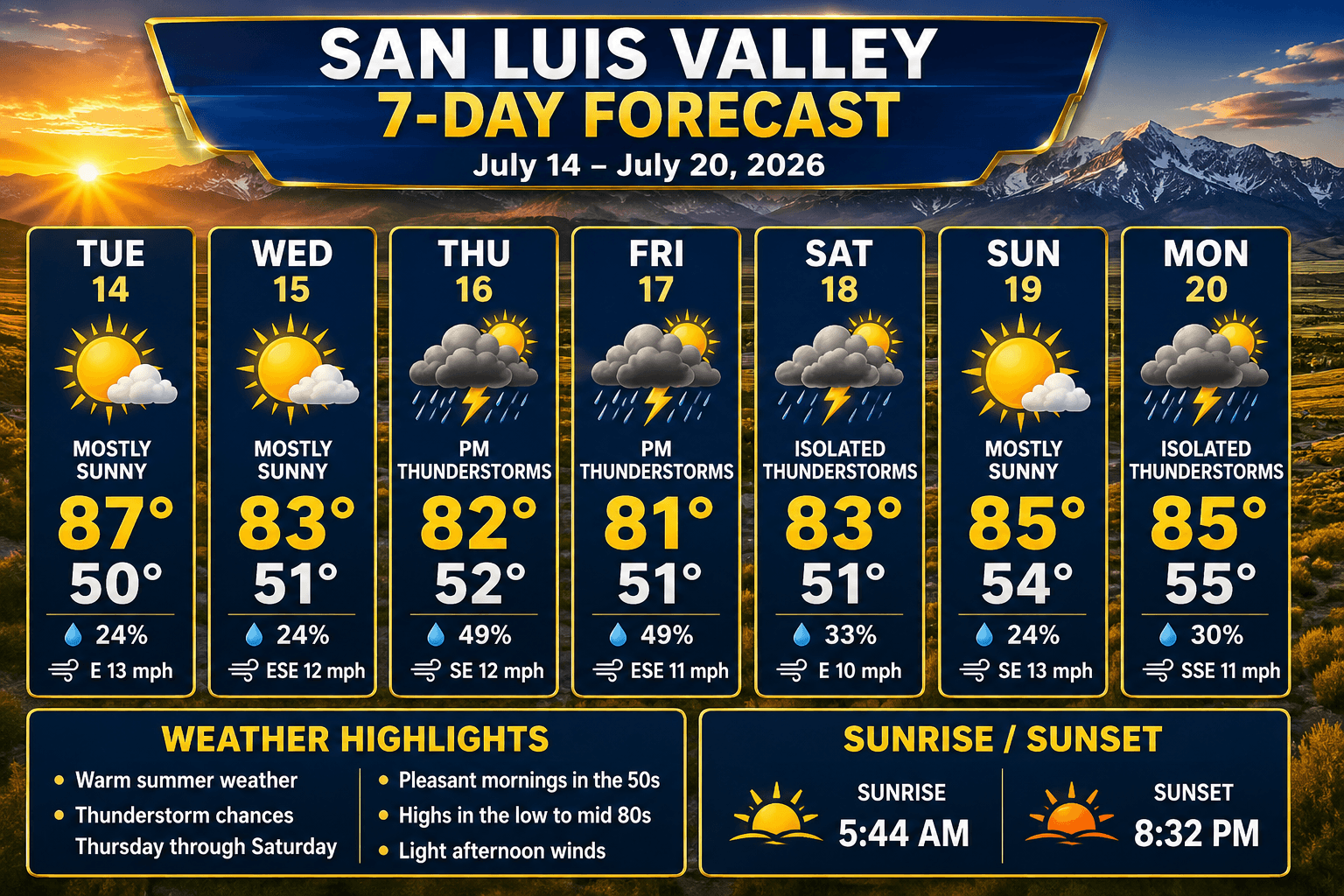
The San Luis Valley faces another dry summer, with drought conditions increasing across southern Colorado and widespread fire restrictions now in place.
These precautions protect forests, ranches, homes, and local residents.
Yet the Valley stands out as one of Colorado’s most welcoming destinations, still largely unaffected by the large wildfires that have hit other parts of the state in recent years.
Visitors are drawn to spectacular mountain views, vibrant farmers markets, and lively summer events, including Monte Vista’s historic Ski-Hi Stampede and smaller rodeos that showcase the Valley’s signature hospitality.
Outdoor recreation thrives, from fishing in clear streams to hiking in the Sangre de Cristo and San Juan Mountains, while wildlife abounds and dark skies promise unforgettable stargazing.
The Valley’s rich history, welcoming local businesses, and close-knit communities continue to offer memorable experiences—so long as everyone explores responsibly and respects fire restrictions to protect this remarkable place for all. |
 |
This newsletter sponsored by Conejos River Anglers, Antonito |

Five miles west of Antonito on State Highway 17, the Conejos River rolls through a canyon that most people outside the Valley have never heard of and that serious fly fishermen treat like a secret they'd prefer to keep.
Conejos River Anglers has been operating out of this stretch for years, offering guided trips, a full fly shop, and streamside cabins that make the whole operation a proper destination rather than just a day stop.
The outfitter runs guided fly fishing trips on the Conejos River and its tributaries — including La Jara Creek and the Rio de los Pinos — with six experienced guides who know these waters the way most people know their own backyard.
Trips are available for all skill levels, from first-time fly fishers to experienced anglers chasing Rio Grande cutthroat and trophy browns.
The fly shop is fully stocked, and the cabins — two-bedroom, full kitchen, living room, 0.2 miles from the river — are the kind of place where you can show up for a weekend and leave wondering why you don't come every summer.
The Conejos is one of the most underrated Gold Medal trout rivers in Colorado. Conejos River Anglers has been making the most of that for a long time.
📍 34591 State Highway 17, Antonito, CO 81120 Tell them The San Luis Valley Beat sent you! 💛 |
|
 |
 |
Preserving the stories of places time forgot. |
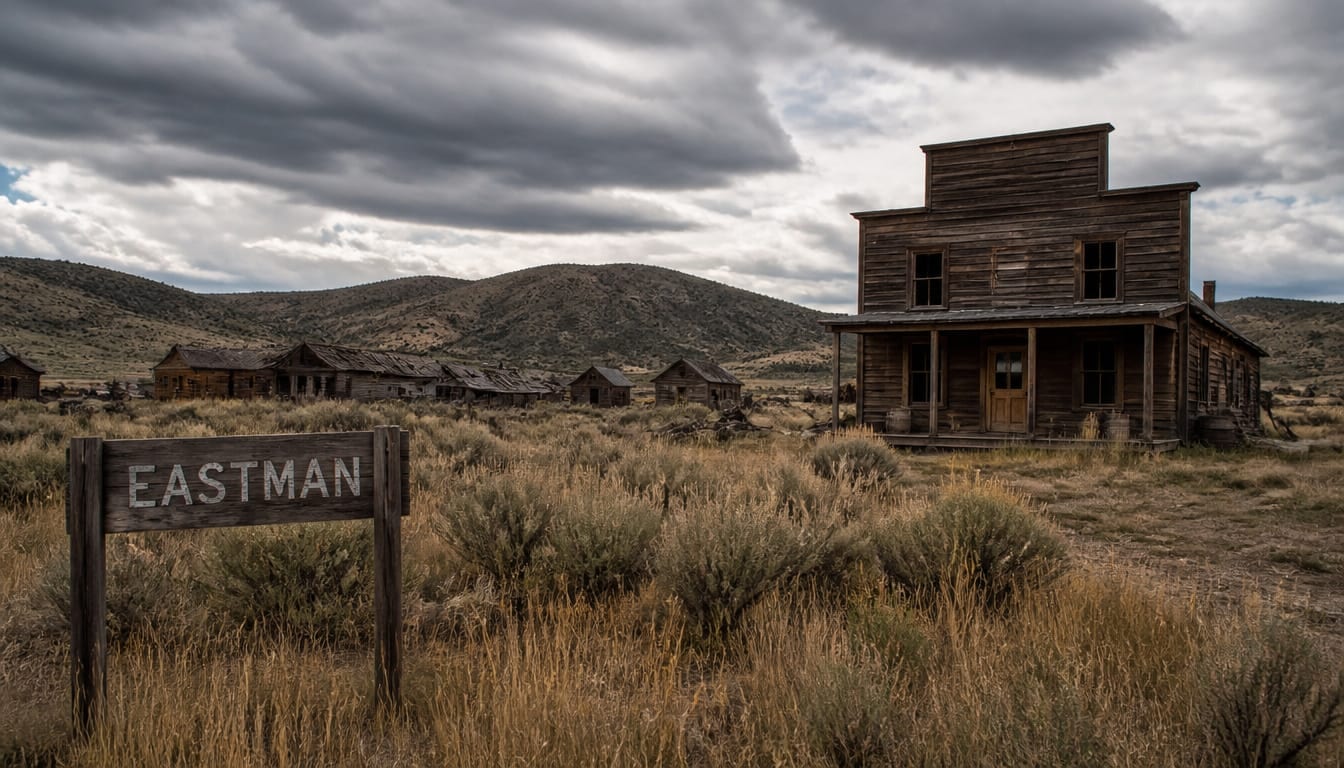 |
Artist's rendering created to accompany this article. |
Eastdale: The Town That Built the Road for Jaroso to Follow
In 1890, a group of Mormon settlers laid out a farming community on the high, flat land along the Colorado–New Mexico border in Costilla County and called it Eastdale.
The land was dry and demanding but workable. They filed claims, put in fields, and established enough of a settlement that the federal government opened a post office there on April 27, 1895.
For the next fourteen years, Eastdale existed as the only organized community in that corner of the county — a quiet agricultural outpost a long way from anywhere.
The post office closed on July 15, 1909. By then, the forces that would undo Eastdale and replace it with something else were already in motion.
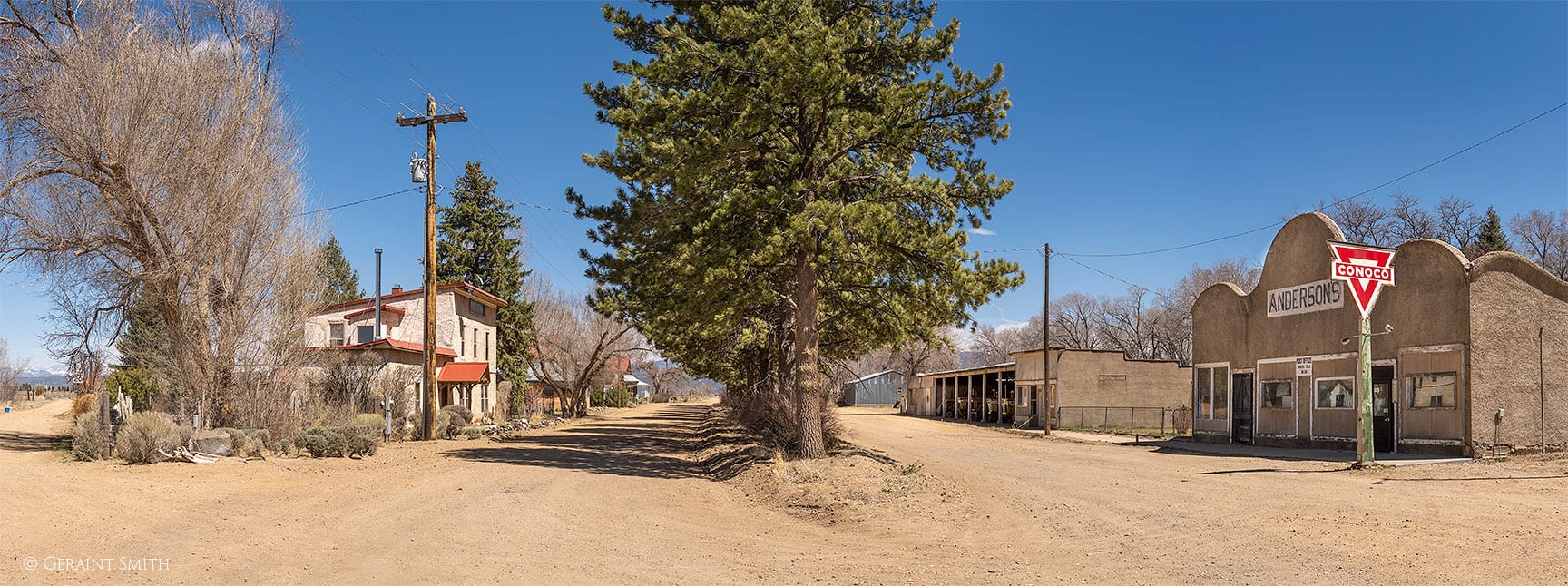
The San Luis Southern Railway was extending its line south from Blanca, pushing toward the New Mexico border. When the tracks were laid in 1910 and 1911, they did not run through Eastdale. They ran a couple of miles to the southeast, through what would become Jaroso.
That was the decision that ended one town and started another. The railroad determined where commerce happened, where freight moved, where people settled. Eastdale had no railroad. Jaroso did.
Within a few years, Jaroso had a commercial district that served as a hub for northern New Mexico — field peas, potatoes, hogs, a general store, banks, a bus service to Taos. Eastdale had none of it.
The settlers who had come to farm that corner of Costilla County found themselves in the wrong spot, two miles from where the future had decided to go.
Eastdale today is a name on old maps and in genealogy records — a post office designation that ran for fourteen years and then stopped. The land it sat on is still there, still flat, still dry in summer.
Jaroso, two miles away, is still a living community, still on the map, still a U.S. Post Office address. The distance between survival and disappearance in the early Valley was often that small.
"Two miles of track separated the town that lasted from the town that didn't. The railroad didn't know it was making that choice. It was just going where the grade was easy." |
 |
The University That Built the Valley — And Still Does
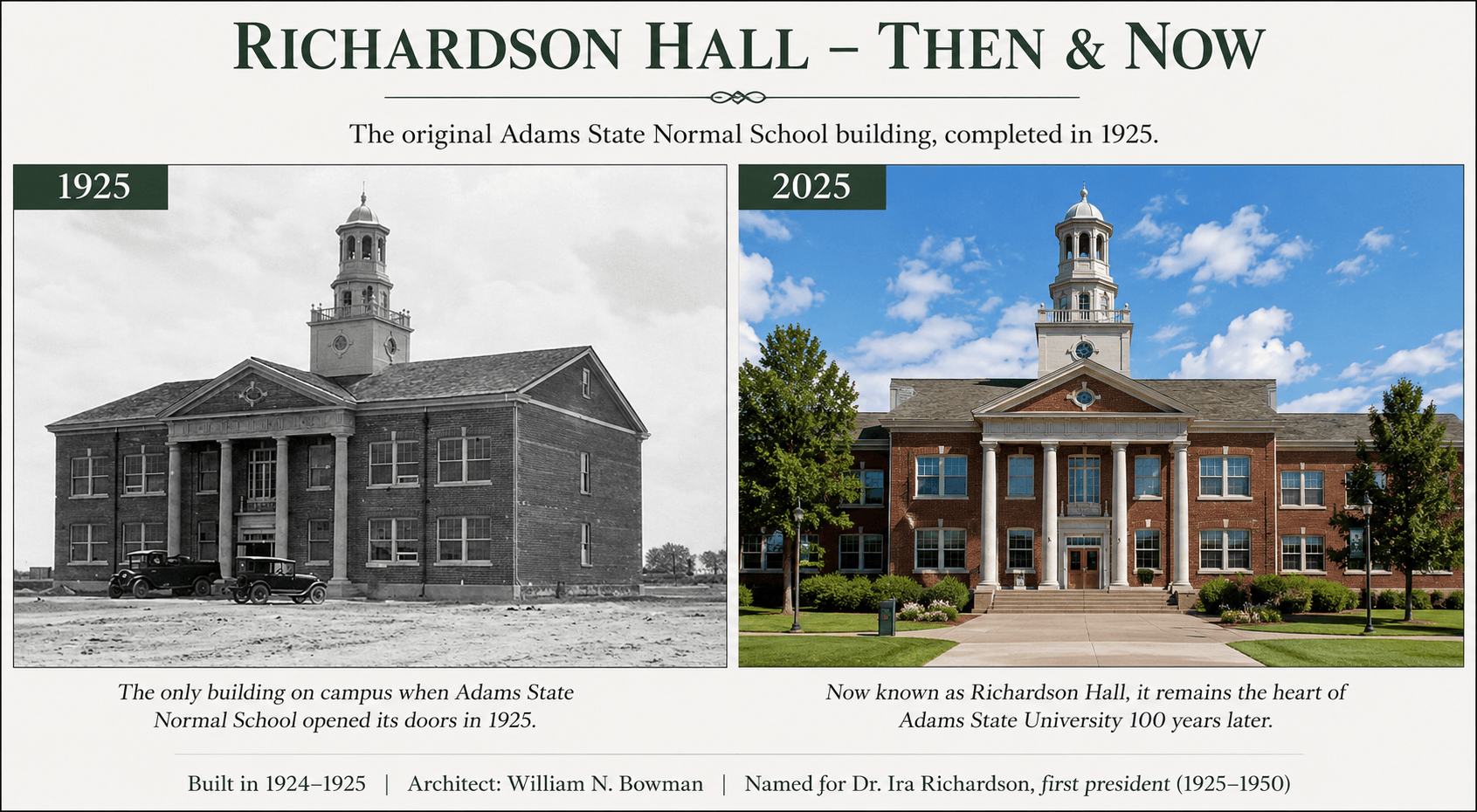
In 1921, Colorado State Senator Billy Adams — who would later become governor — pushed through legislation to establish a college in the San Luis Valley. His argument was simple: the Valley was remote, its communities were underserved, and its children deserved access to higher education without having to leave the place they called home.
The bill was signed on May 4, 1921. What came from it is Adams State University, and over the century that followed, it became something the senator probably didn't fully anticipate: the economic, educational, and cultural backbone of an entire region.
The numbers tell part of the story. Adams State contributes more than $107 million to the Valley economy every year. It employs 610 non-student employees and 247 student workers. It injects $60.9 million in annual spending into Valley communities — dollars that flow into Main Street businesses, rental housing, local services, and the tax base that funds schools and fire departments.
For a region with no major industry outside agriculture, that kind of anchor institution matters in ways that are easy to underestimate. But the deeper story is in the classrooms and the graduates. Over 70 percent of educators in the Valley's 14 regional school districts received their degree from Adams State's School of Education.
The university was built to train teachers for rural Colorado, and it has done exactly that — for over a hundred years. It has also been a Hispanic-Serving Institution since 1998, the first in Colorado, reflecting the demographic reality of the Valley it serves and the institution's commitment to that community.
Adams State has grown considerably from the 349 students enrolled in 1950 to over 2,000 by 1965, and it continues to evolve — adding graduate programs, expanding its reach through online education, and hosting events and cultural programming that make the campus a community resource well beyond its student population.
For a Valley that lacks many of the institutions larger metros take for granted, Adams State fills gaps that are very hard to fill any other way. It is not just a school. It is infrastructure.
|
 |
Creede Center for the Arts
Creede already has one of the most celebrated professional theaters in Colorado. The Creede Center for the Arts is the community's year-round complement to that — a nonprofit arts organization dedicated to gallery exhibitions, art education, community programming, and the idea that a town of 300 people deserves a full cultural life, not just a summer season.
The Center hosts rotating gallery shows featuring regional artists, offers classes and workshops for local residents, and runs programs that engage both the permanent community and the thousands of visitors who pass through Creede each summer.
In a town where the economy is largely seasonal, having an arts organization that works year-round is significant — it provides economic activity, community connection, and a reason to stay engaged with Creede beyond the tourist window.
If you're making the drive to Creede this summer — and between the Repertory Theatre and the Olive Oil Company, you have good reasons — the Center is worth a stop.
🌐 creedecenterforthearts.org |
 |
 |
JAROSO
The Border Town That Became a Crossroads — and Held On
Jaroso sits at the very bottom of Costilla County, close enough to the New Mexico state line that the two feel like they blur together.
The name comes from the Spanish word for willows — jaroso — and the community's roots run deep into the Hispano settlement patterns of the Costilla Creek corridor.
But Jaroso as it's known today is a product of the railroad, and of the particular combination of ambition, faith, and stubbornness that characterized early 20th century settlement on the high plains of southern Colorado.
The story begins with Eastdale, a Mormon farming community laid out two miles to the northwest in 1890. When the San Luis Southern Railway extended its line south from Blanca in 1910 and 1911, it bypassed Eastdale and terminated at what would become Jaroso.
The town plat was filed in 1914. Almost immediately, the Shedd Investment Company of Omaha — working with the Costilla Estates Development Company — began recruiting Seventh Day Adventist families to the area. By the spring of 1915, twenty-five to thirty families had settled.
Jaroso became a commercial center serving not just Costilla County but a wide swath of northern New Mexico. Field peas, potatoes, and hogs came out of the surrounding farms. The general store, two banks, and the railroad depot made Jaroso a legitimate hub.
The boom was short. In 1919, the Merchants Bank and the Mesita State Bank both failed. Welker's General Store burned to the ground. The San Luis Southern Railroad went bankrupt. The infrastructure that had made Jaroso viable collapsed in a matter of months. It was the kind of cascading failure that erased dozens of Valley communities in the 1910s and 1920s.
But Jaroso didn't disappear. George T. Kearns purchased the bankrupt railroad and restarted operations. A bus service launched between Jaroso and Taos — running in a 1924 V-63 Cadillac Suburban, which is the most stylish way anyone has ever connected southern Colorado to New Mexico.
Population declined through the 1930s, but Jaroso kept its post office, kept its people, and kept its place on the map. Today it remains an unincorporated community in Costilla County — small, quiet, and still very much there.
🧠 Did You Know? The name Jaroso comes from the Spanish word meaning "willows" — a reference to the willow trees that grew along the local creek corridors when Spanish-speaking settlers first moved through this corridor in the 19th century. |
 |
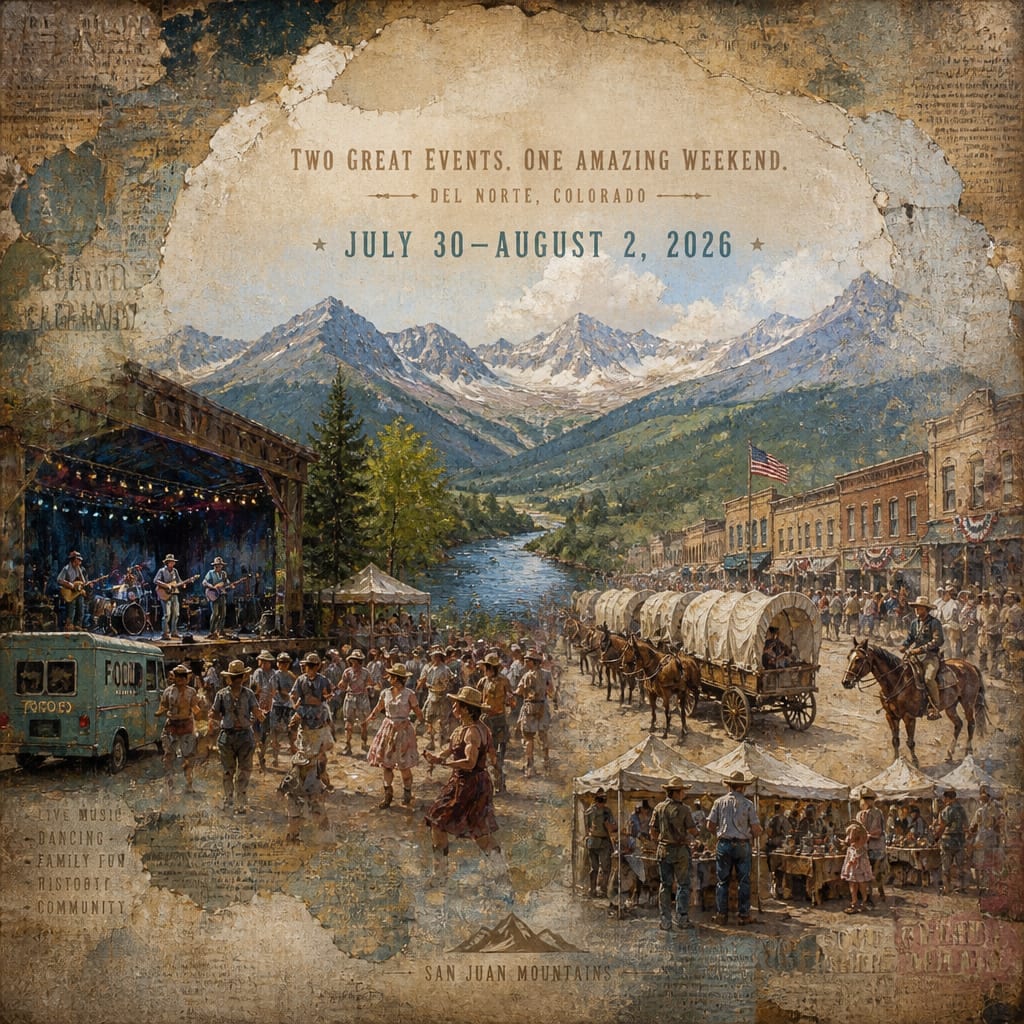 |
Del Norte Goes All In This Weekend 🎶🤠
The first weekend of August, Del Norte doesn't just host one celebration — it hosts two at the same time.
Rhythms on the Rio brings nationally touring acts to the banks of the Rio Grande while Covered Wagon Days fills Grande Avenue with parades, ice cream socials, and old-fashioned community fun.
If you've been looking for a reason to spend a long weekend in Del Norte, the Valley just handed you two of them.
Rhythms on the Rio has become one of the Valley's signature summer music events, drawing fans from across the region to camp along the river under big Colorado skies.
This year's lineup is headlined by Leftover Salmon — playing two sets, including a special Jerry Garcia tribute — alongside The Infamous Stringdusters and Moontricks.
The festival is organized by the South Fork Music Association, and proceeds go directly to music education programs for Valley kids. Kids 12 and under get in free, and camping is available on site.
Meanwhile, Covered Wagon Days celebrates Del Norte's pioneer heritage with a grand parade down Grande Avenue, a fly-in breakfast at Kent Rominger Airport, a BBQ hosted by the Del Norte Fire Department, an Ice Cream Social at the Rio Grande County Museum, a car show, and local vendors spread throughout town.
The community celebration is completely free and open to everyone. Two events. One weekend. One great little town. Del Norte is worth the drive.
🎵 Rhythms on the Rio
🤠 Covered Wagon Days |
 |
I'll Be On This Train — and You Should Be Too 🚂
There are train rides, and then there's this. On August 1st, I'll be boarding the Centennial State Limited at the Antonito depot for a once-in-a-generation excursion aboard a fully restored 1883 steam locomotive, marking Colorado's 150th birthday in the most fitting way I can imagine — riding the rails through the San Juan Mountains the same way people did when this state was brand new.
Engine 168 underwent a $508,000 restoration to bring it back to full operating condition, and this weekend it's running in spectacular fashion. Saturday's Statehood Day Doubleheader pairs two steam locomotives running simultaneously, with a traditional buffet lunch at the Osier station stop.
Friday and Sunday feature the High Plains Loop excursion. All three days are part of the official America 250 and Colorado 150 anniversary celebrations — and the Cumbres & Toltec Scenic Railroad, already a National Historic Landmark, has never had a better reason to pull out all the stops.
I'll report back on what it's like firsthand. But tickets are moving — if this is on your bucket list, don't wait for my review.
🚂 What: The Centennial State Limited — Colorado 150 Special Excursion |
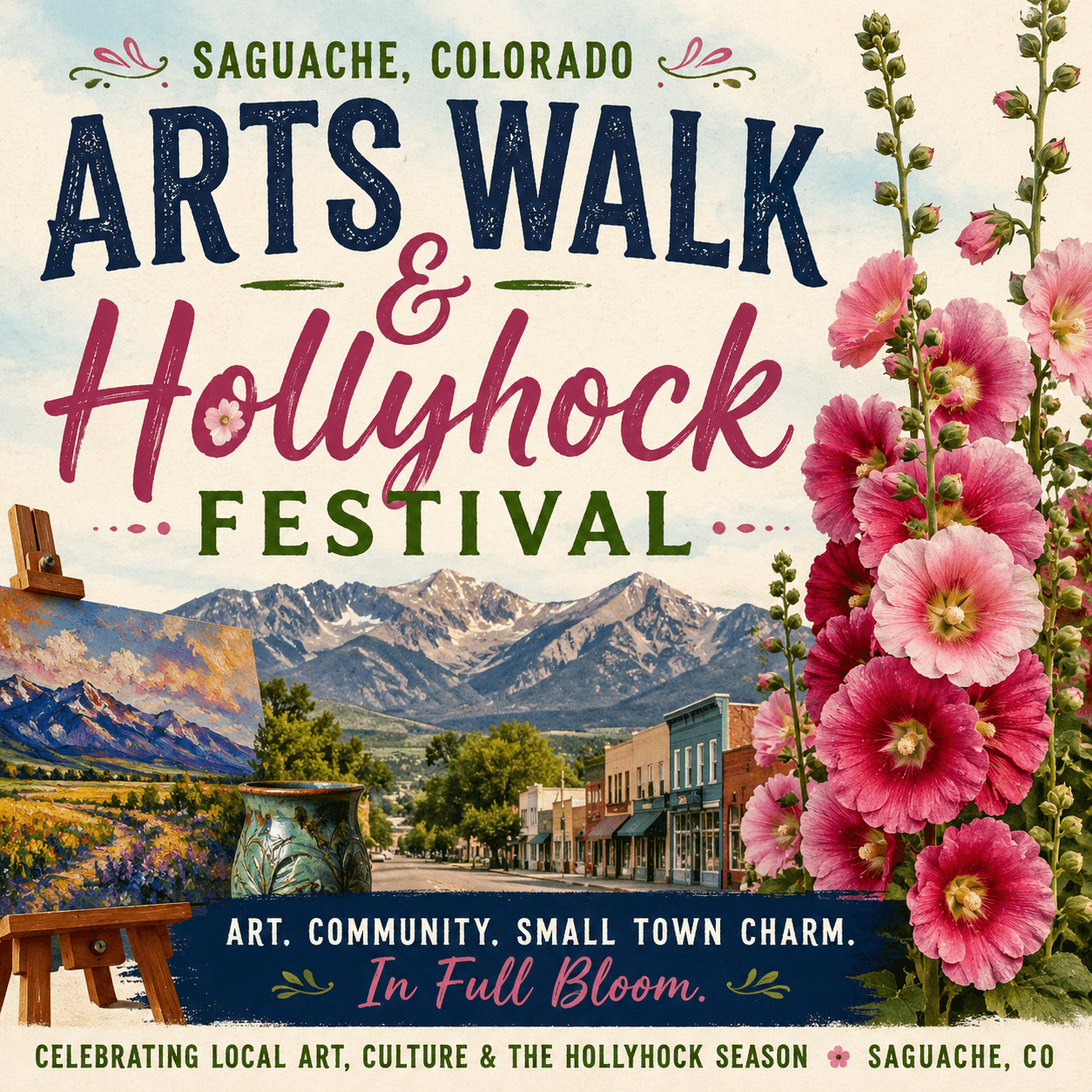 |
Downtown Saguache Blooms — Arts Walk & Hollyhock Festival 🌸 Once a year, the town of Saguache does something wonderful. Local gardens throw open their gates, artists line the historic courthouse lawn with their work, and downtown fills with the kind of slow, unhurried community energy that reminds you exactly why you live out here.
The Saguache Arts Walk & Hollyhock Festival is one of those events that's hard to describe and easy to love.
Held on the last Saturday of July, the festival celebrates both the creative spirit of the community and Saguache's signature flower — the hollyhock, which blooms in tall, colorful columns along fences and garden walls throughout town every summer.
The courthouse lawn becomes an outdoor gallery, with local artists and artisans displaying everything from painting and pottery to handmade jewelry and fiber arts.
Garden tours let visitors wander through private yards bursting with hollyhocks, and the beloved Fairy House Tour adds a little magic for the kids (and honestly, for the adults too).
It's free, it's local, and it's exactly the kind of thing the Valley does better than anywhere else.
If you haven't spent a Saturday morning in Saguache, this is your excuse.
🌸 What: Saguache Arts Walk & Hollyhock Festival |
 |
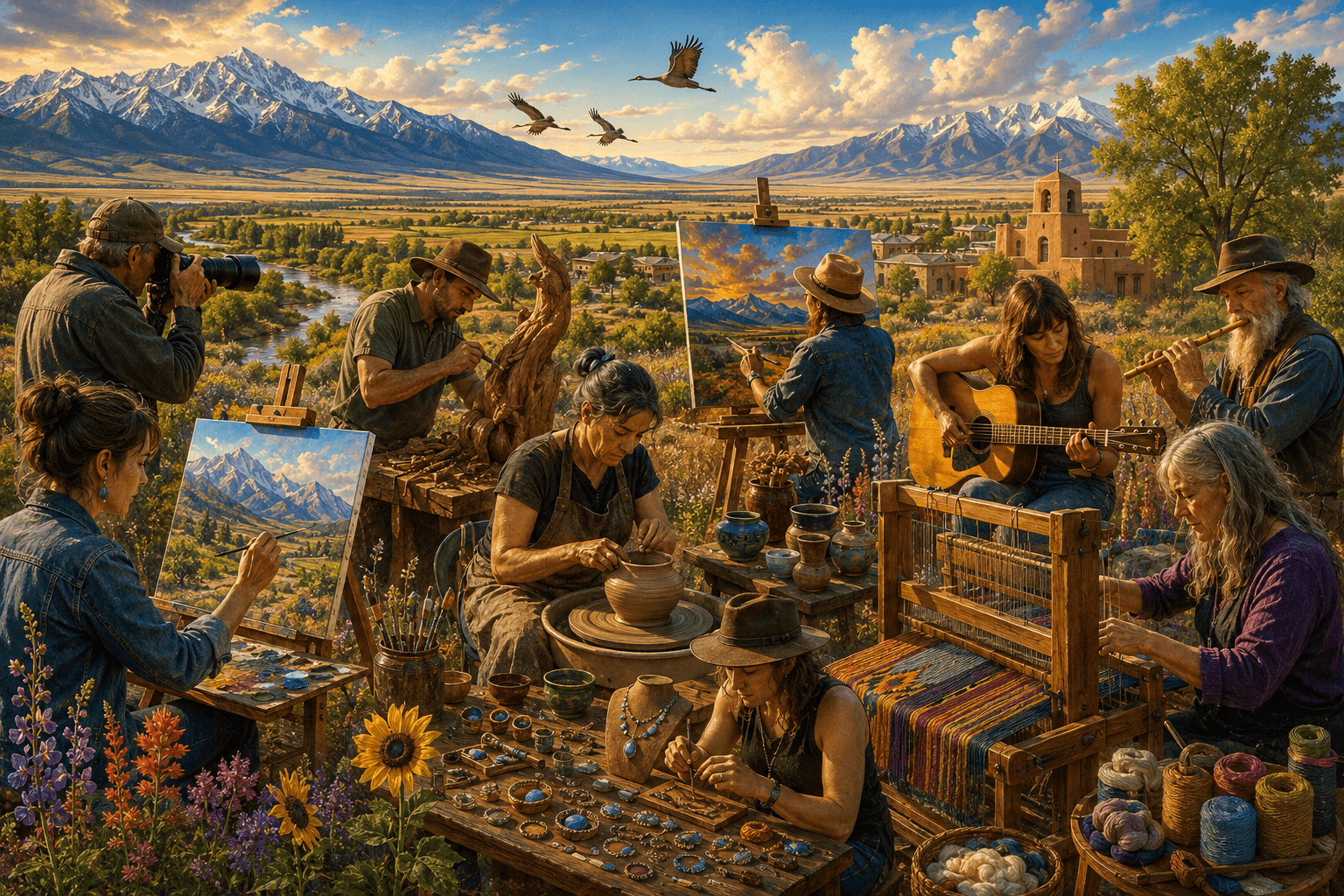 |
Artist's rendering created to accompany this article. |
From Creede to Crestone: The Valley's Creative Community Is Bigger Than You Think
It would be easy to look at a map of the San Luis Valley and conclude that the arts scene is sparse. Small towns, long distances, limited population.
But the Valley has always attracted a certain kind of person — someone who wants space to think, to make things, to live deliberately — and over generations that has produced a creative community that is quietly extraordinary. You just have to know where to look.
Start in Creede. The Creede Repertory Theatre is currently in its 61st season, making it one of the longest-running professional regional theaters in Colorado. Every summer, CRT recruits talent from Denver, Chicago, New York, and beyond — professional actors and directors who come to a town of 300 people to put on a season of productions that would hold their own in any mid-sized American city.
The Creede Center for the Arts adds to the mix, offering gallery space, workshops, and community programming that keep the creative energy alive year-round, not just during tourist season.
Drive north to Crestone and the character of the arts scene shifts completely. Crestone has long drawn artists, spiritual seekers, and unconventional thinkers — a combination that produces a gallery scene unlike anywhere else in Colorado.
Local artists work in copper, paper-making, watercolors, oils, encaustic, and upcycled materials. Crestone Performances Inc. brings culturally diverse music and entertainment to the Valley, including the annual Crestone Music Festival, which has become one of the most anticipated summer events in Saguache County . The Community Art Benefit Project, founded by Chris Manfield, provides support for visual artists and connects their work to community-centered causes.
In Alamosa, Adams State University runs arts programming that serves the entire region — galleries, performances, and the Richardson Hall murals that greet every visitor to campus.
The Sangre de Cristo Arts and Conference Center in Pueblo draws Valley artists and audiences across the county line. And scattered across all six counties, in studios and garages and spare rooms and community halls, Valley artists are making work that reflects the light, the land, and the specific quality of life in a place this big and this quiet.
The Valley doesn't have a single arts district. It has six counties of them.
|
💡 Tip of the Day: Logger Days in South Fork (July 17–19) is free to attend — but parking fills up fast on Saturday. Get there early, bring your own chairs, and plan to stay for the full day. The evening bull riding on Saturday is worth every minute of the wait. |
This newsletter sponsored by Kristi Mountain Sports — Alamosa, |
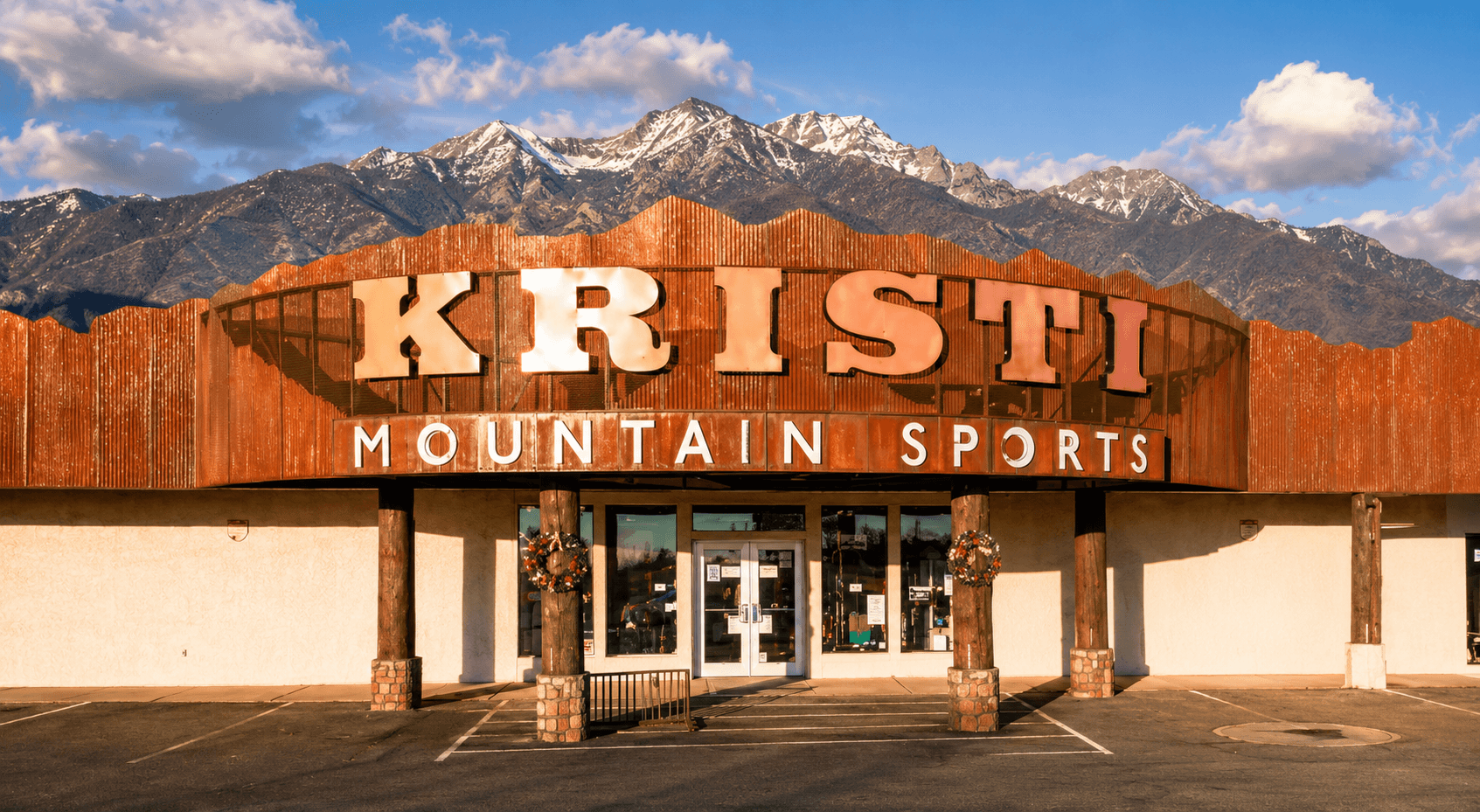
If you've ever rented a sandboard at the Great Sand Dunes, there's a good chance it came from Kristi Mountain Sports. The Alamosa shop was the first in the entire Valley to offer sandboard rentals — long before riding down those 750-foot dunes became the bucket-list experience it is today.
That kind of forward thinking has defined this place since it first opened its doors in 1969 as a humble ski rental shop tucked into a closet at the old El Sid's men's store downtown.
A lot has changed since then. Eric and Lisa Burt took over in 1984 and grew Kristi Mountain Sports into the Valley's go-to outfitter for just about every outdoor pursuit imaginable.
Today the shop carries top-tier gear for hiking, camping, backpacking, mountain biking, road cycling, skiing, and snowboarding — and their repair bench is one of the best around, handling everything from tune-ups on your trail bike to getting your skis dialed in before the first snowfall.
Whatever season it is in the San Luis Valley, Kristi Mountain Sports has something for it.
Over 55 years in business, right here on Main Street in Alamosa. That's the kind of staying power that only happens when a shop truly earns its community's trust — year after year, adventure after adventure.
Tell them The San Luis Valley Beat sent you! 💛
📍 3223 Main St, Alamosa, CO |
|
 |
 |
 |
 |
My First Smoked Brisket...and Why Smaller Was Better
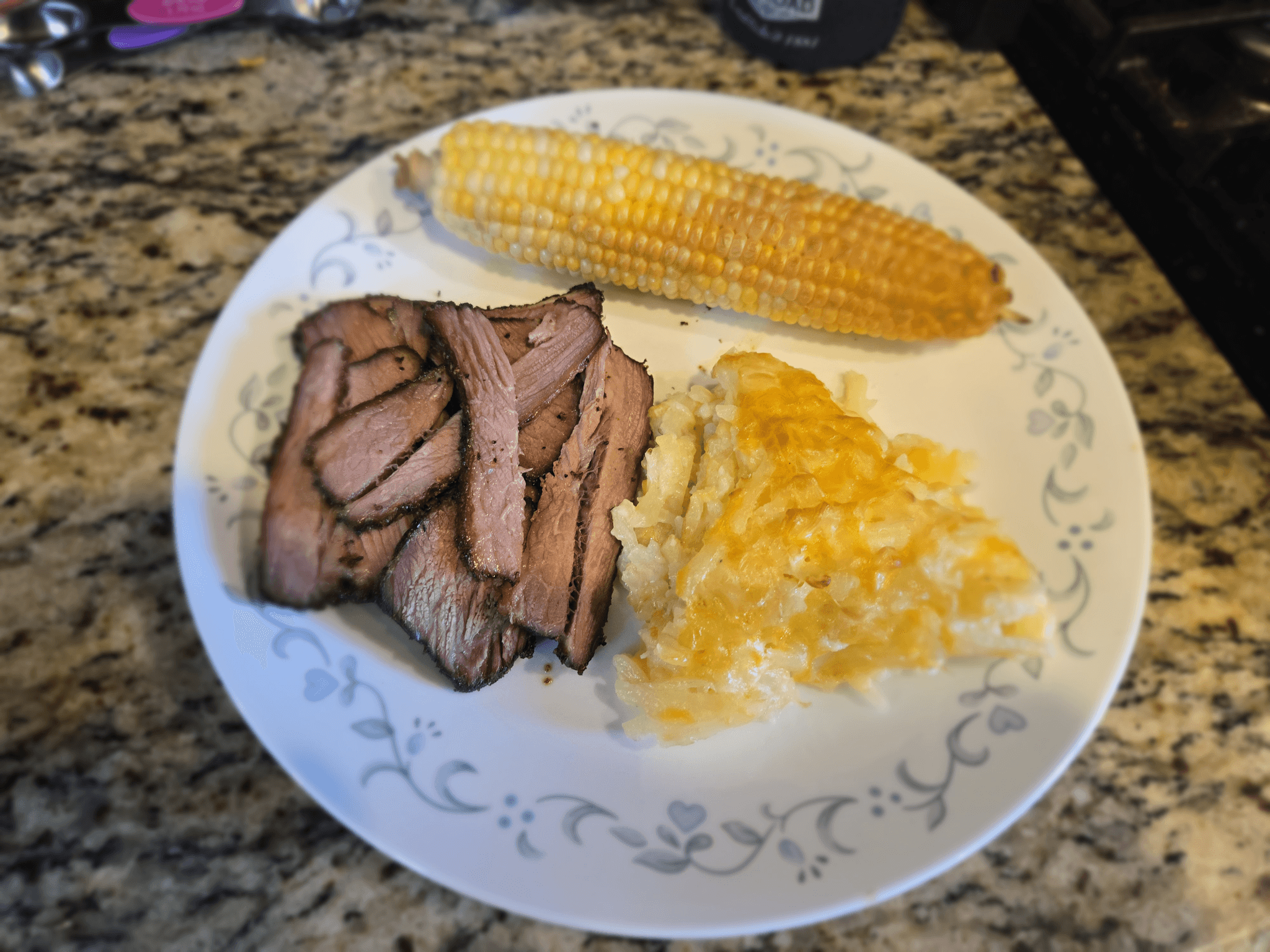
For years, I’d admired those beautiful smoked briskets that barbecue enthusiasts spend all night tending. You know the ones—12- to 15-pound briskets that cook for 12 hours or more and feed a crowd. The problem is, there are only two of us. I’ve always had a hard time justifying buying and smoking a giant brisket when it would leave us with more leftovers than we’d ever eat. So this Fourth of July, I decided to try something different. I picked up a small 2.24-pound beef brisket and fired up my Masterbuilt electric smoker to see if a smaller brisket could deliver the same great flavor. The night before, I kept things simple. I seasoned the brisket with kosher salt, coarse black pepper, garlic powder, and onion powder, then let it rest uncovered in the refrigerator overnight. Sometimes it’s tempting to throw every seasoning in the cabinet at a piece of meat, but brisket doesn’t need much. I wanted the beef and the smoke to be the stars of the meal. The next morning, I loaded the smoker with hickory wood chips, set the temperature to 250 degrees, and let the brisket do its thing. I resisted the urge to keep opening the smoker to check on it. About five and a half hours later, the brisket had developed a beautiful dark bark and was probe tender—the sure sign that it was ready to come off. Instead of slicing it right away, I wrapped it in butcher paper and let it rest for an hour. That gave me the perfect opportunity to put my cast iron skillet of hash brown casserole into the smoker, along with a few ears of fresh corn on the cob. By the time the casserole was bubbling and the corn had picked up a light smoky flavor, the brisket was ready. The result exceeded my expectations. The brisket was tender, juicy, and full of rich beef flavor with just the right amount of hickory smoke. It didn’t need barbecue sauce. In fact, we enjoyed it exactly as it came off the cutting board. Our Fourth of July dinner was simple: smoked brisket, smoked hash brown casserole, and fresh smoked corn on the cob. Sometimes the best holiday meals aren’t the most elaborate—they’re simply good food shared with the people you love. One of the biggest surprises was just how practical a smaller brisket turned out to be. It fit easily in my smoker, cooked in about five and a half hours instead of an overnight marathon, and provided exactly what we needed: a wonderful holiday dinner and enough leftovers for another meal. The next day, those leftover slices found a new life on top of a fresh garden salad. It was a completely different meal without feeling like leftovers at all. If you’ve been thinking about trying your hand at smoked brisket but have been intimidated by those giant cuts of beef, don’t overlook the smaller brisket flats. For couples or smaller families, they may just be the perfect size. This certainly won’t be the last brisket to come out of my smoker. In fact, I think I may have found a new Fourth of July tradition. |
 |
💡 Trivia Answer:
The Creede Repertory Theatre launched its first season in 1966 and has called the historic Creede Opera House home ever since — a building that started life in the 1930s as a movie house before Carl Helfin turned it into a venue for live melodramas. Today it's the CRT Mainstage at 124 N Main St, one of the longest-running professional regional theaters in Colorado. 🎭 |