Frank V Flohr
Sep 1, 2026
📧 Delivered to more than 1,000 inboxes every Tuesday 📱 Join us on Facebook — 2,900+ followers |
ISSUE #31 · TUESDAY, September 1, 2026
"Chasing Gold in the High Country, Monte Vista Clears Out for Fall, and Elk Season Opens Across the Valley"Aspens turn gold from Cumbres Pass to Conejos Canyon, Monte Vista's Cleanup Days return September 25-26, and archery elk season opens across the Valley 🍁🧹🏹
|
🎁 Subscriber Bonus: Your Free San Luis Valley Restaurant Guide
As a thank-you for being a subscriber to **The San Luis Valley Beat**, we've created a **free San Luis Valley Restaurant Guide** featuring local restaurants from communities across the Valley.
Whether you're searching for your next breakfast stop, a family dinner, a quick lunch, or a place you've never tried before, this guide makes it easy to discover great local dining options.
This is just the beginning. We'll continue updating the guide as new restaurants are added and information changes, so you'll always have access to the latest edition.
Thank you for supporting local businesses and The San Luis Valley Beat! |
Good Tuesday morning from the San Luis Valley!
September is here, and with it comes one of the best reasons to live in this corner of Colorado: the color show that's about to unfold across our mountains. We've got a full guide to where — and when — to chase fall color this year, from Conejos Canyon to Cumbres Pass to the Great Sand Dunes.
Closer to home, Monte Vista is getting ready for its annual Cleanup Days, a great excuse to finally clear out the garage.
And out in the field, Colorado's archery elk season opens this week, bringing hunters and a healthy dose of economic activity back to the Valley.
We're also taking a closer look at Mosca — a lot more than just the turnoff to the Sand Dunes — and a history trip out to the long-vanished mining camp of Jasper, tucked deep in the Conejos Mountains.
Let's get into it. 🌄 |
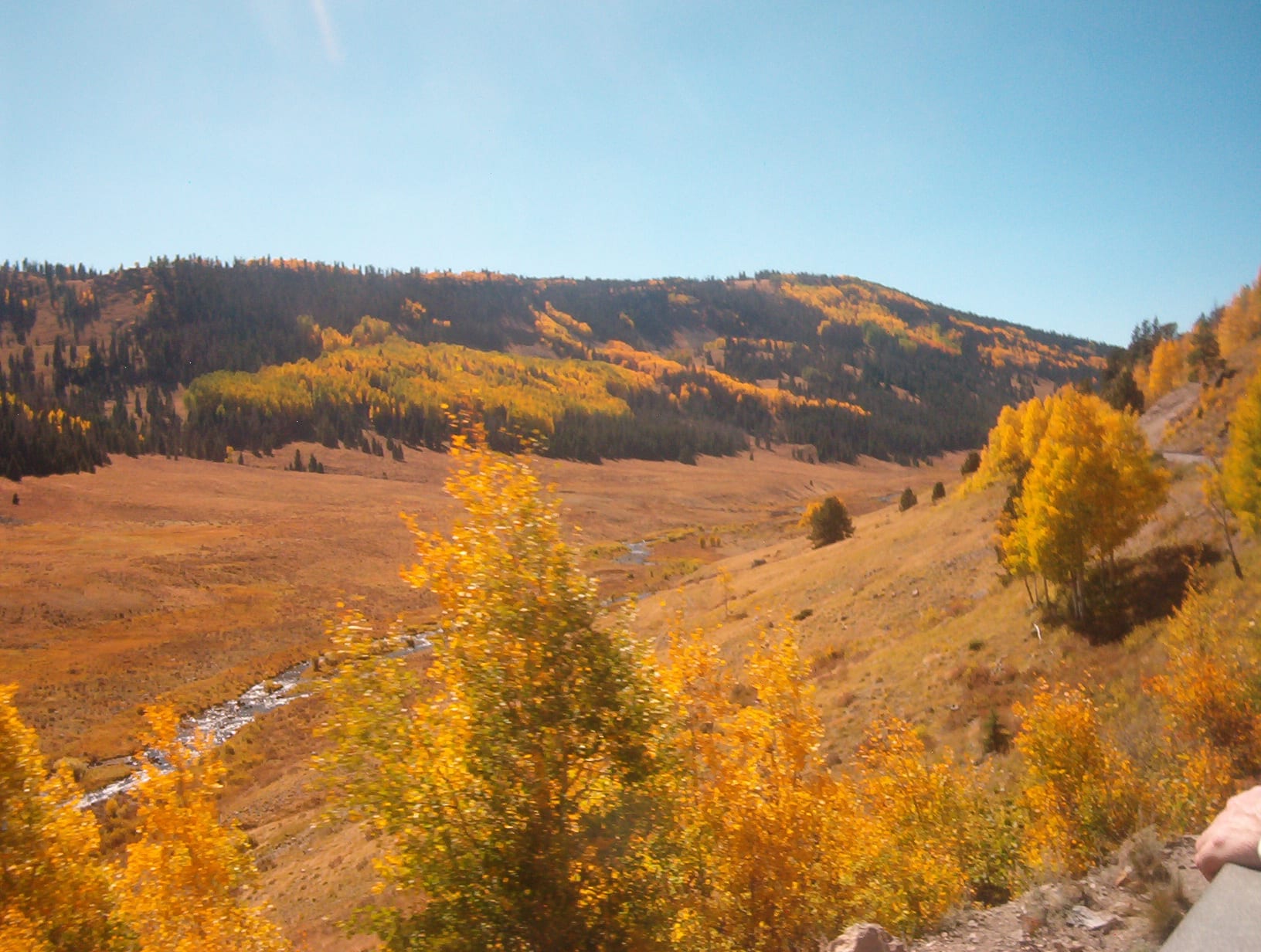
Each autumn, the San Luis Valley transforms into a vibrant display of gold, orange, and yellow, as aspens and cottonwoods brighten mountainsides and riverbanks.
The color show begins in mid-September at higher elevations like Cumbres and La Manga Passes and gradually travels down into the Valley floor, offering several weeks of spectacular scenery.
Popular drives include Highway 17 through Conejos Canyon, the Silver Thread Scenic Byway from South Fork to Creede, and the climb up Wolf Creek Pass on Highway 160.
For a unique view, the Cumbres & Toltec Scenic Railroad carries visitors through remote high-country landscapes blanketed in color.
Even the Great Sand Dunes National Park becomes striking, as golden trees contrast with the dunes and Sangre de Cristo Mountains.
Don’t wait — Colorado’s most breathtaking natural display only lasts a few precious weeks. Read More... |
 |
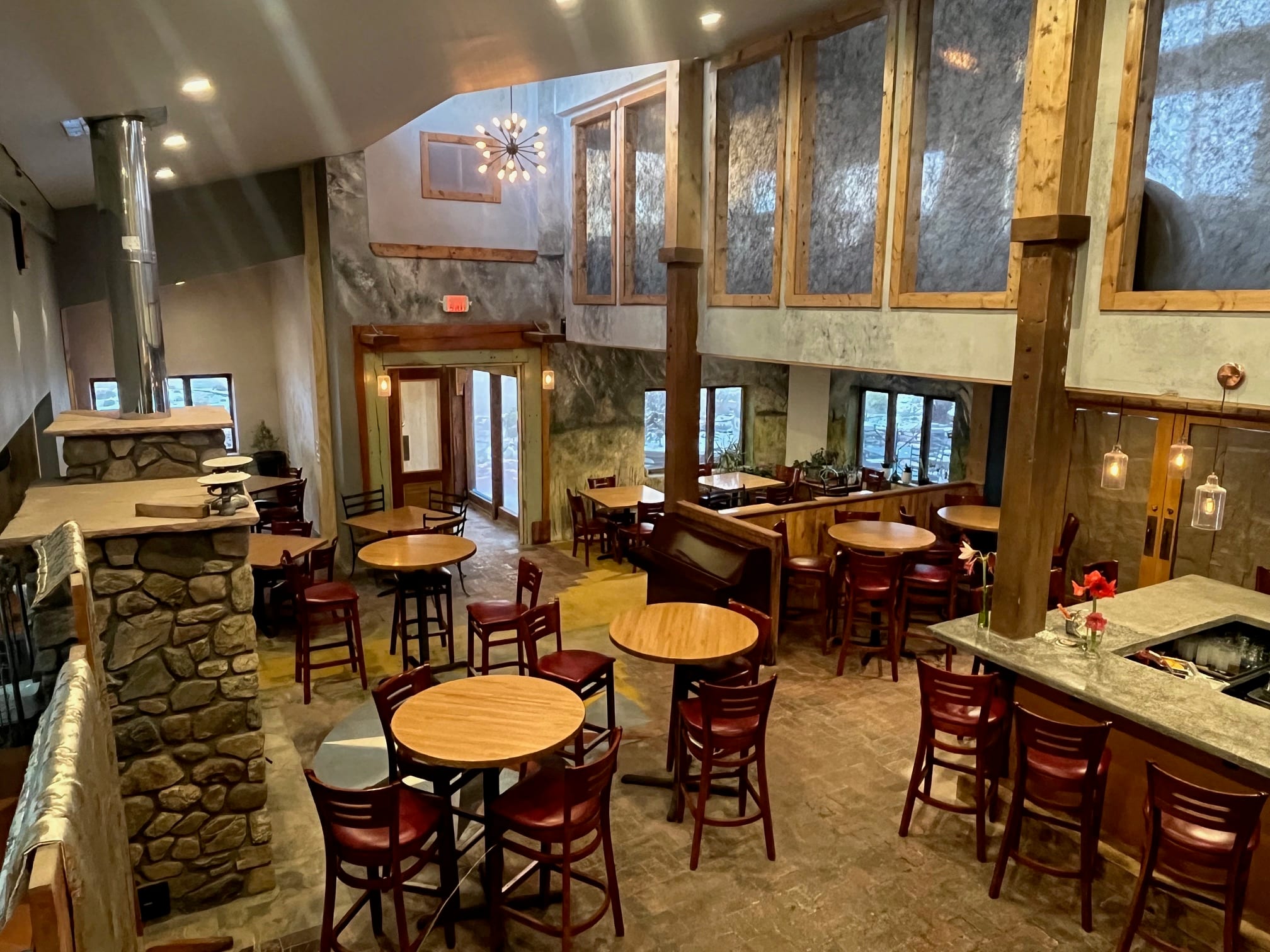
Sage's Hearth Restaurant is a special place where every detail feels intentional and inviting. Their handcrafted farm-to-table meals, artisan cocktails, and decadent desserts are a true celebration of local flavors, surrounded by stunning mountain views. Whether you're hosting an event or enjoying a cozy dinner by the fireplace, the warm hospitality at Sage's Hearth makes every visit memorable. It's the perfect spot in Crestone for both locals and visitors to gather, connect, and savor meaningful moments over delicious food. |
|
|
 |
 |
Preserving the stories of places time forgot. |
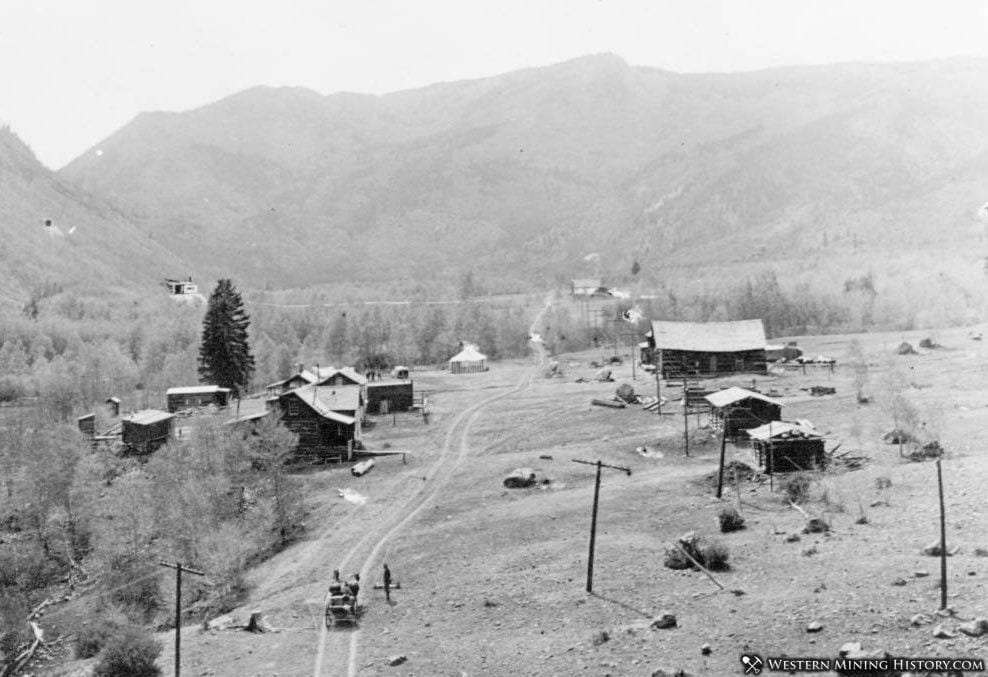
Jasper — The Mining Town That Never KnewHigh in the San Juan Mountains, far up the Alamosa River from the floor of the San Luis Valley, there was once a small mining community called Jasper. It was never as famous as Summitville. It never grew into a major Colorado mining center. Today, the original mining town is largely gone. But Jasper left behind one of the more intriguing stories from the Valley's mining era — the story of a town that may have disappeared before its residents realized what they had found. Two Camps in the MountainsThe beginnings of Jasper reach back to about 1874 or 1875, when prospectors began opening mineral claims along the upper Alamosa River near Cornwall Mountain. Two small settlements developed close together: Cornwall and Jasper. Cornwall initially appears to have been the more important of the two. Its post office operated until November 20, 1882, when it was discontinued and transferred to Jasper. As activity shifted, the two neighboring camps effectively became one community under the Jasper name. The country surrounding them looked promising. Gold and silver drew miners into the mountains, and claims including the Perry, Miser and Guadalupe mines were developed around Jasper. The Perry was reportedly the first mine located in the area. Among those associated with the early mining activity was Alva Adams, who would later serve three terms as governor of Colorado. For a time, there was reason to believe Jasper might have a future. A Town Waiting for an AnswerThen came 1887. According to historical mining accounts, Jasper's miners shipped approximately ten tons of ore to a smelter in Denver. They needed to know what they had. If the ore proved sufficiently valuable, the results could help attract investment and encourage additional development of the mines around Jasper. But the assay didn't happen. Before the ore could be tested, the Denver smelter burned. Jasper never received the answer it had been waiting for. Later, according to accounts of the district, it was discovered that the ore actually was valuable. By then, it was too late. Jasper had already declined. It is one of those strange turns of history that leaves behind an irresistible question: What might Jasper have become if the results had arrived in time? The Sanger Mine and a Tarnished ReputationJasper had another problem. About two and a half miles above town stood the workings of the Sanger Mine. When the Colorado Geological Survey examined the district in the early 20th century, it recorded an old story associated with the property. Promoters of the Sanger enterprise reportedly claimed to possess a mountain of ore worth about $10 per ton and used those claims to attract investors. According to the story, the promises proved greatly exaggerated and investors lost their money. Even the geologists writing in 1917 cautioned that some details of the story could not be verified. What they could say was that the reputation surrounding the Sanger property hurt Jasper. Suspicion surrounding the venture reportedly discouraged people from investing in other mining operations in the district — including legitimate prospects that may have deserved further development. For a small mining camp dependent upon outside money, a bad reputation could be devastating. Jasper Hangs OnJasper didn't disappear immediately. Mining continued intermittently in the surrounding mountains, and the community survived through several periods of renewed activity. At its height, historical estimates place Jasper's population at roughly 200 people. Its isolation, however, was always a challenge. This was a high mountain settlement at about 9,100 feet, tucked into the upper Alamosa River country. Winters were long, transportation difficult and the nearest larger communities were many miles away. Mining communities existed because of the mines. When investment and production declined, there was often little else to sustain them. Jasper's post office apparently closed and reopened at least once before finally closing for good in 1927. The old mining town slowly faded into the mountains. Jasper's Second LifeUnlike many of the places featured in Lost Places, however, Jasper has an unusual ending. People came back. Beginning in 1981, land encompassing the old Jasper townsite and surrounding area was developed as a recreational mountain subdivision. Today there are more than 80 cabins in the Jasper community, many used seasonally. The modern community even describes Jasper as a “Near Ghost Town.” That distinction is important. The Jasper that disappeared was the mining town — the collection of miners, prospectors, businesses and families whose lives depended upon the ore hidden beneath the surrounding mountains. The name survived. And eventually, people returned to the same beautiful stretch of the Alamosa River for an entirely different reason. Following the Alamosa River Into the PastJasper remains one of those places that demonstrates just how much history lies beyond the agricultural floor of the San Luis Valley. Travel into the mountains along the Alamosa River and today's quiet landscape gives few clues to the hopes once attached to the ground beneath it. More than a century ago, miners dug into Cornwall Mountain and the surrounding country believing they might uncover the next great Colorado mineral strike. They established claims. They built cabins. They created a community. And in 1887 they sent ten tons of ore away to discover whether their gamble had paid off. Then the smelter burned. The answer came too late. Jasper never became another Summitville or another great Colorado mining town. Instead, it became something perhaps even more interesting: A place forever connected to the question of what might have been. Lost Places of the San Luis Valley explores the communities, settlements and forgotten places that once helped shape the Valley we know today. ``` |
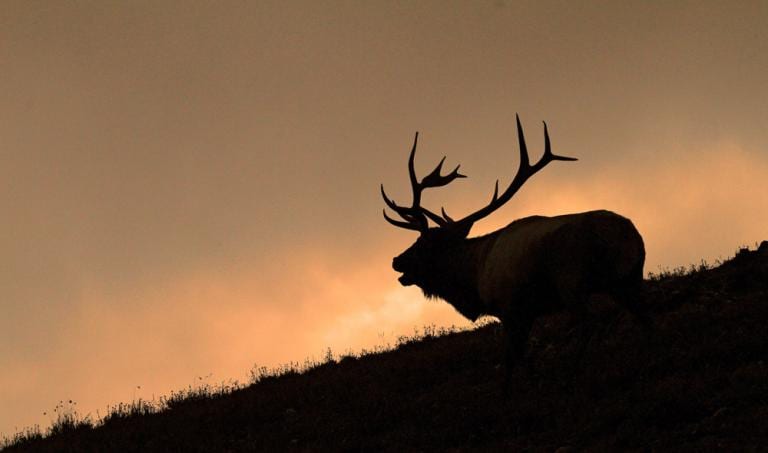
September in the San Luis Valley ushers in cooler mornings, golden aspens, and the arrival of elk archery season, which opens September 2.
Hunters eagerly anticipate the season, converging on public lands in the San Juan and Sangre de Cristo Mountains.
The Valley’s elk herds, managed by Colorado Parks and Wildlife, especially in GMUs 80 and 81, are thriving, drawing local and visiting sportsmen alike.
A major update this year restricts nonresidents from buying over-the-counter archery licenses west of I-25, shifting to a draw system due to overcrowding.
September’s archery hunt coincides with the elk rut, providing a unique, vibrant hunting experience.
Public lands remain shared spaces, so outdoor users are urged to stay visible, while hunters should exercise courtesy.
With the addition of muzzleloader and upcoming rifle seasons, local businesses benefit from the influx, reinforcing hunting as a cherished Valley tradition.
Always review the latest regulations and safety guidelines before heading out. Read More... |
 |
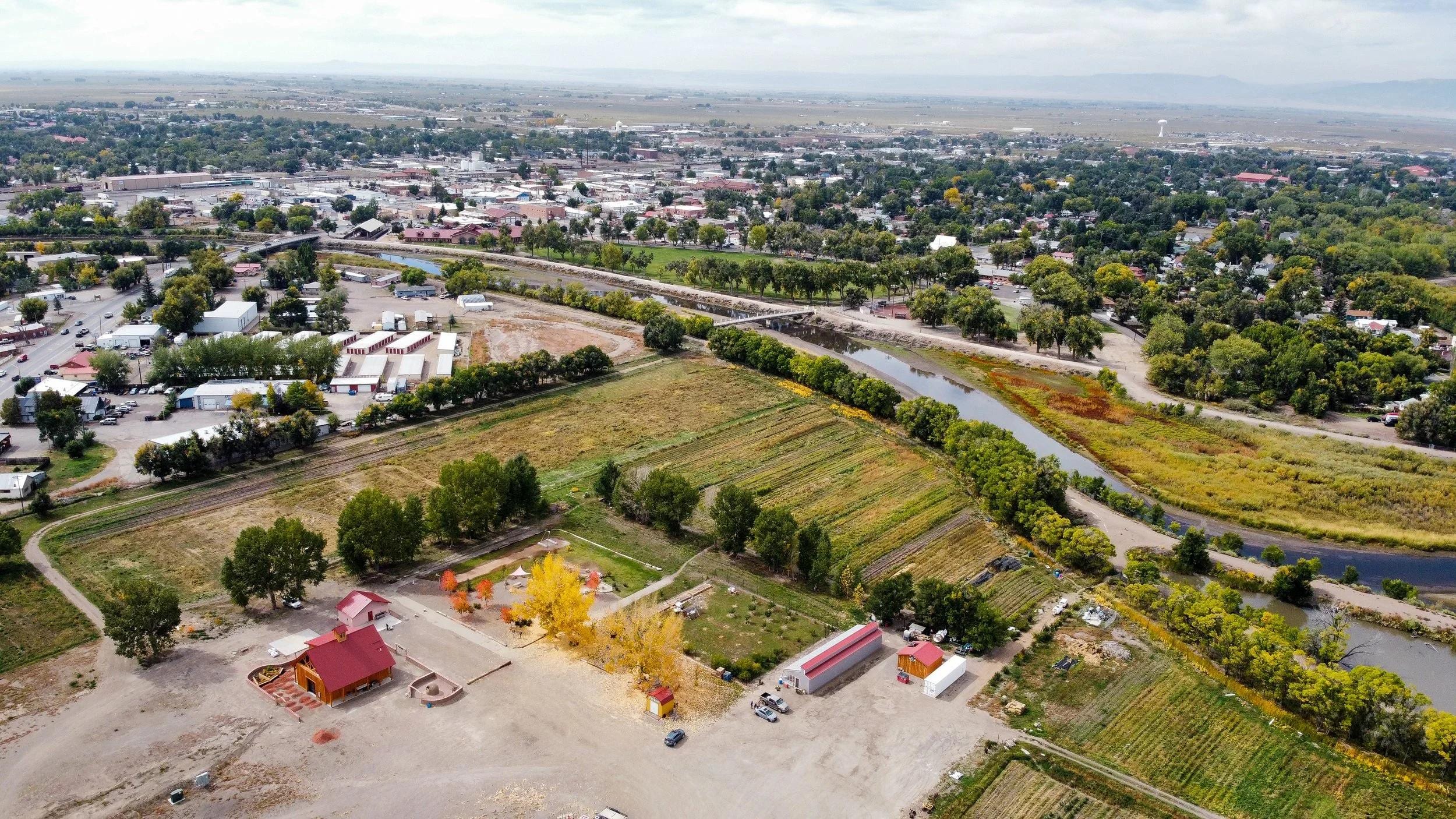
Rio Grande Farm Park — A Place to Learn, Grow and GatherAlong the banks of the Rio Grande in Alamosa sits a place where agriculture, education, recreation and community have come together in a uniquely San Luis Valley way. The Rio Grande Farm Park is a 38-acre community farm and public space that provides land for local growers, educational opportunities for young people, walking trails, recreation and a place for Valley residents to reconnect with where their food comes from. But the story of the Farm Park actually began long before it carried that name. From School Grounds to FarmlandThe property was once home to Polston Elementary School. In 1995, the Alamosa Community Gardens program began at the school, giving students hands-on experience growing, harvesting, preparing and eating vegetables. When the school closed in 2008, the agricultural connection didn't disappear. Members of Alamosa's Guatemalan and Mayan communities continued using the land to grow food for their families. At the same time, local residents began looking for a way to preserve the property rather than see an important piece of open land disappear to development. That effort eventually led the San Luis Valley Local Foods Coalition to purchase the property in 2014 with assistance from the Trust for Public Land, LOR Foundation, Great Outdoors Colorado and local supporters. Today, a conservation easement helps protect the property's agricultural, recreational and natural resources for the future. Growing Food — and FarmersFarming remains at the heart of the Rio Grande Farm Park. The park provides both community growing areas for families raising food for themselves and commercial plots for farmers producing crops for sale. Those farmers grow everything from peas, onions and lettuce to cucumbers, squash, beans, garlic, herbs and other vegetables. The Farm Park emphasizes regenerative agriculture and sustainable growing practices, including crop rotation, cover cropping, water conservation and growing without synthetic chemical fertilizers, herbicides or pesticides. The results reach well beyond the Farm Park's boundaries. In 2025, the Rio Grande Growers Co-Op produced more than $70,000 worth of food, supplying farmers markets, small grocers, local schools and food banks. Farm Park growers also help supply fresh produce to organizations serving families throughout the San Luis Valley. In other words, food grown on these few acres finds its way onto tables throughout the Valley. Learning Beyond the ClassroomEducation continues to be part of the property's mission, just as it was when schoolchildren first planted gardens here more than 30 years ago. The Farm Park's Education Center hosts workshops and training on subjects ranging from soil health and food preservation to regenerative agriculture and other hands-on skills. The park also offers youth programs that give young people experience with agriculture, food systems, ecology and outdoor careers. Growing Year-Round in the San Luis ValleyAnyone who has tried gardening in the Valley knows what a challenge the short growing season can be. The Farm Park's passive-solar greenhouse, constructed in 2023, helps overcome that problem. Sunlight enters through south-facing windows and heats black water barrels inside the greenhouse. After sunset, that stored thermal energy is slowly released, helping keep temperatures more stable for plants. The greenhouse is used for seed starting, extended-season growing and youth education — an innovative approach to producing food at more than 7,500 feet. More Than a FarmYou don't have to be a farmer to enjoy the Rio Grande Farm Park. Visitors can explore walking trails connected to Alamosa's trail system, enjoy the Nature Play Area, have a picnic or simply spend some time outdoors along the river. Then there's the laguna. Covering roughly nine acres of the property, the laguna provides opportunities for kayaking, fishing and enjoying the Rio Grande while also serving an agricultural purpose as part of the Farm Park's irrigation system. In June 2026, the laguna was stocked with 200 largemouth bass for future community fishing. Plans for additional fishing and accessibility improvements have also been moving forward. Mercadillo en el RíoOne of the most visible ways the Farm Park brings the community together is Mercadillo en el Río. What began as a small farm stand has grown into a summer market combining locally grown food with artisans, makers, music, performances and other community activities. Final Mercadillo of the 2026 Season The final Mercadillo en el Río of the season is scheduled for Wednesday, September 2, from 3 to 7 p.m. at the Rio Grande Farm Park. It's a chance to meet local growers, support Farm Park farmers and celebrate the end of another Valley growing season. A Place That Belongs to the CommunityPerhaps what makes the Rio Grande Farm Park special isn't any single program. It's the combination. A former elementary school has become farmland. Families have a place to grow their own food. Beginning farmers have an opportunity to build agricultural businesses. Young people can learn skills outside a traditional classroom. Locally grown vegetables make their way to markets, schools and food banks. And residents can walk, fish, kayak or simply enjoy a little open space beside the Rio Grande. It's a place where the San Luis Valley's agricultural past is being used to help build its future. Rio Grande Farm Park 6935 CO-17, Alamosa, Colorado Open seven days a week, sunrise to sunset. |
 |
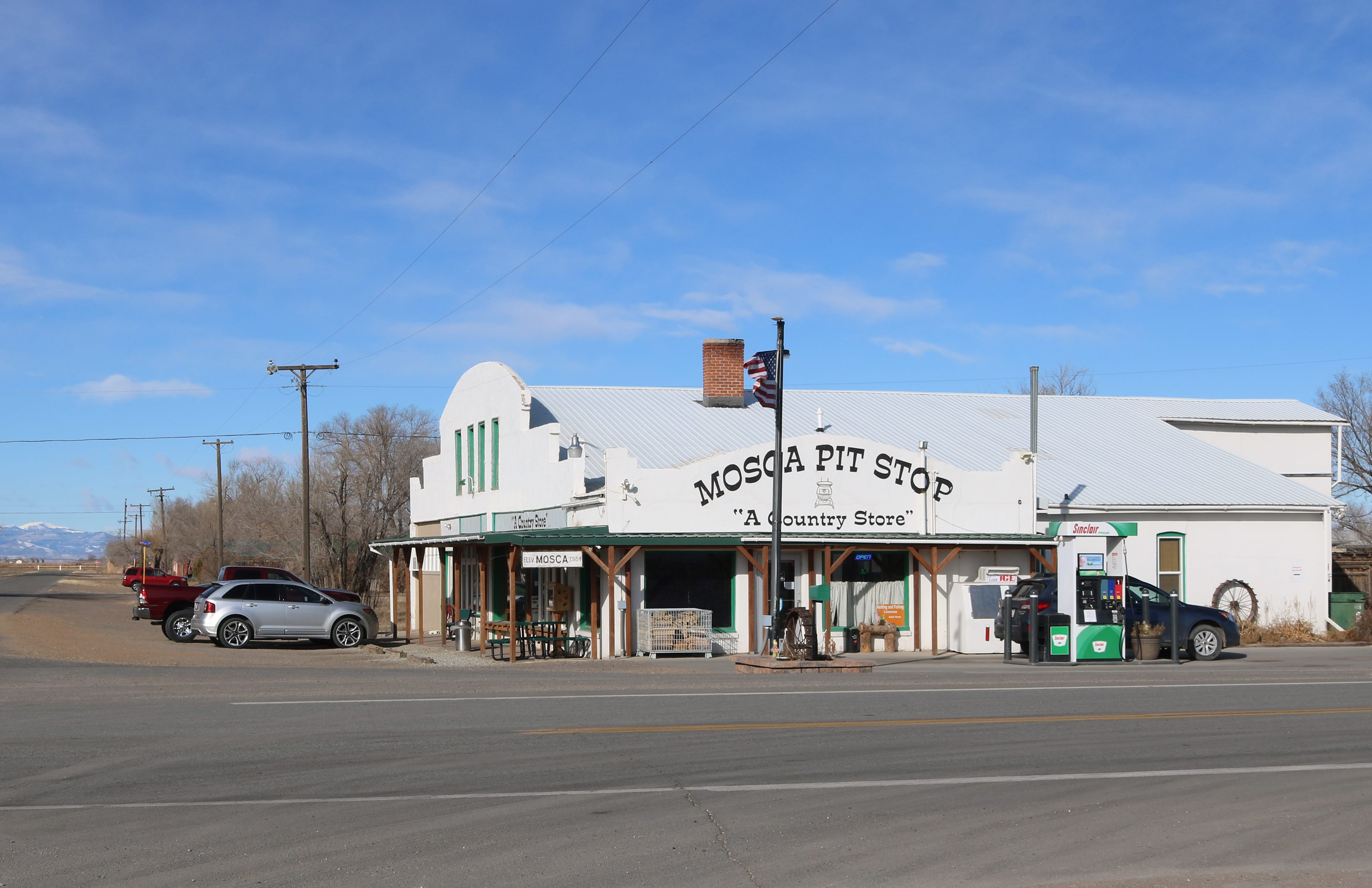
Mosca
|
 |
Plan Ahead: A Big Weekend Around the San Luis Valley — Sept. 11–13If you’re looking for something to do in the San Luis Valley, the weekend of September 11–13 is shaping up to be one of the busiest of the fall. From potatoes and chili to art, live music and sustainable living, communities around the Valley have a wide variety of activities planned. With several events happening at the same time, now is a good time to start deciding where you want to go. San Luis Valley Potato Festival — Monte VistaSaturday, September 12 One of the San Luis Valley’s signature harvest celebrations returns Saturday, September 12, with a full day of activities celebrating the crop that has helped make the Valley famous. The day gets an early start with Tater Trot 5K registration opening at 7:15 a.m. on the City Hall lawn, followed by the race at 8 a.m. The Potato Festival runs from 8 a.m.–4 p.m. with food and craft vendors, kids’ games, photos with agricultural equipment and FREE baked potatoes while supplies last. Two guided agricultural tours are scheduled during the day, departing at 8:15 a.m. and 1 p.m., with buses loading at the church parking lot. Other highlights include AIRBOUND large kids’ games from 9 a.m.–4 p.m., the Mashed Potato Dunk Tank at 10:30 a.m., Colorado Gators Reptile Park from 11 a.m.–3 p.m., and a live performance by the SLV Community Band at 11 a.m. in the pavilion. At 1 p.m., a Professional Chef Cooking Competition will feature Chef Tim Alfrey of The Windsor, Chef Jason Morse of 5280 Culinary, LLC, and Chef RJ Harvey of Potatoes USA. The competition will be held under the CPAC tent. The day wraps up with the Swoop of Cranes Live Auction at 3 p.m. under the CPAC tent. Saturday at a Glance: Tater Trot 5K • FREE baked potatoes • vendors • kids’ activities • agricultural tours • Mashed Potato Dunk Tank • Colorado Gators • SLV Community Band • professional chef competition • Swoop of Cranes Live Auction More information about the San Luis Valley Potato Festival Alamosa Creates: ARTsFest — Downtown AlamosaFriday & Saturday, September 11–12 Downtown Alamosa will turn its attention to the arts during the two-day Alamosa Creates: ARTsFest. The celebration begins Friday with a public artist reception. Saturday brings the Downtown Artwalk, live music, opportunities to meet local artists and the unveiling and tour of Alamosa’s newest public sculptures. The event is free and family-friendly. More information about ARTsFest Alamosa Open StudiosSaturday & Sunday, September 12–13 Art lovers can make an entire weekend of it with Alamosa Open Studios, a free, family-friendly, self-guided tour that gives visitors an opportunity to step inside the working spaces of area artists. Rather than seeing only the finished work, visitors can meet artists where they create and get a closer look at the people and processes behind the art. Because the tour is self-guided, visitors can choose which studios they want to visit and set their own pace throughout the weekend. Alamosa Open Studios information and map SLV Battle of the Bowls — AlamosaSaturday, September 12 Things will be heating up Saturday afternoon during the fourth annual SLV Battle of the Bowls. Competitors will put their best red chili, green chili and salsa before the public, with a $500 prize up for grabs in each category. Entry is $25 per chili or salsa, while $15 allows members of the public to taste the entries and vote for their favorites. Proceeds benefit the Care Camps Foundation, which helps children with cancer attend specialized oncology camps. New this year is a free Freedom Wagon shuttle operating from the Alamosa Visitor Center Depot, making it easier for people to attend without having to drive to the KOA. Battle of the Bowls information 37th Annual Crestone Energy Fair — CrestoneFriday–Sunday, September 11–13 The Crestone Energy Fair returns for its 37th year with three days devoted to sustainable and regenerative ideas involving construction, energy, land stewardship and community. The fair combines education with demonstrations, workshops, discussions, entertainment and opportunities to see alternative approaches put into practice. One of the weekend’s highlights is the popular alternative home tour, offered from 8 a.m.–noon Saturday and Sunday. The two days feature different homes, including completed projects and homes still under construction. Tickets are required for the home tours. Saturday afternoon also features the ScSEED Chili Cook-off from 1–3 p.m. — meaning chili lovers actually have two different cook-offs to choose from in the Valley that afternoon. Sunday includes a Crestone Fire Department pancake breakfast from 9 a.m.–noon and an EV Car Show from 10 a.m.–2 p.m. The main Crestone Energy Fair is free to attend. Crestone Energy Fair schedule and information The Show Before the Fall ’26 — AlamosaSaturday, September 12 For those who want to finish Saturday with live music, The Show Before the Fall ’26 brings together San Luis Valley performers and visiting artists for an evening of music in Alamosa. Local performers include The 11th Hour, Lamar and Custom Reaper, joined by visiting artists Tacet, Lobatomy and DAZED. The event is listed as all ages and runs from late afternoon into the evening. A Weekend With Plenty of Choices With major events taking place in Monte Vista, Alamosa and Crestone — and several happening simultaneously — September 11–13 is a weekend worth planning ahead for. Whether your interests run toward agriculture, art, chili, music or sustainable living, there is plenty happening around the San Luis Valley. Know of another event happening September 11–13? The San Luis Valley Beat welcomes event information from throughout the Valley. Send us the details and we’ll help spread the word. Event schedules can change. Readers are encouraged to check with event organizers for the latest information before heading out. |
 |
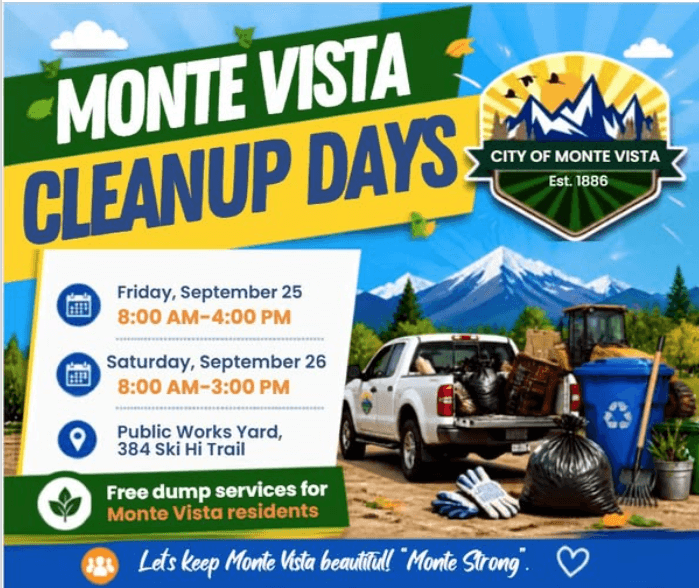
Monte Vista residents have a great chance to declutter with Cleanup Days returning on September 25 and 26.
This annual event allows local households to drop off unwanted items for free at the Public Works Yard, located at 384 Ski Hi Trail.
Dump hours run from 8:00 AM to 4:00 PM on Friday, and 8:00 AM to 3:00 PM on Saturday.
Some restrictions apply: hazardous waste, paint, electronics, and appliances with refrigerant are not accepted, though automobile batteries can be brought in during the event.
This is a perfect time to get yards and garages in shape before fall.
Residents are encouraged to double-check prohibited items before loading up and help keep Monte Vista neighborhoods clean and inviting. Read More... |
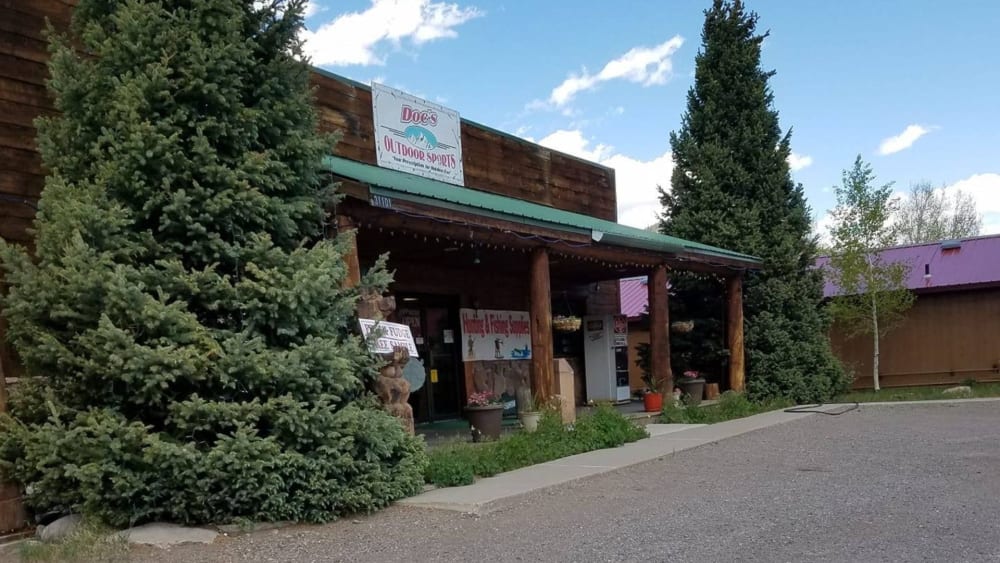
Looking for the best way to gear up for your next outdoor adventure? Doc's Outdoor Sports has you covered with everything you need, whether you’re hitting the trails or exploring the rivers. Their expert team will help you find exactly the right equipment to make your excursion unforgettable. Enjoy a warm, welcoming atmosphere and top-notch customer service every time you stop by. Trust Doc's to be your go-to spot for rentals, local tips, and premium gear in South Fork — your adventure starts here! |
|
|
💡 Tip of The Day
Heading into the mountains for fall color or archery season this month? Check the forecast and road conditions before you go, and don't count on cell service once you're off the highway. |
 |
🐾 Adoptable Pet of the Week — Meet TortelliniThis week we're introducing Tortellini, an adorable baby female German Shepherd mix waiting for a home through the Upper Rio Grande Animal Society's Conour Animal Shelter in Monte Vista. Born June 12, 2026, Tortellini is still very much a puppy. With those big dark eyes, floppy ears, and classic black-and-tan markings, she certainly has the kind of face that's hard to scroll past. Because Tortellini is so young and her shelter profile is still limited, there isn't much information posted yet about her personality, training, or how she does with children and other animals. Anyone considering adopting her should contact the shelter to learn more about her and what kind of home would be the best fit. Adopting a puppy means taking on all the fun and responsibility that comes with raising one — training, socialization, exercise, and plenty of patience as she grows. If Tortellini's little face has already won you over, perhaps it's time to arrange an introduction. 📍 Adoption InformationUpper Rio Grande Animal Society 👉 Contact the shelter directly to learn more about Tortellini or schedule a meet-and-greet. Quick Facts
Not ready to adopt? Sharing Tortellini's story may help this little pup find the family that's looking for her. |
 |
 |
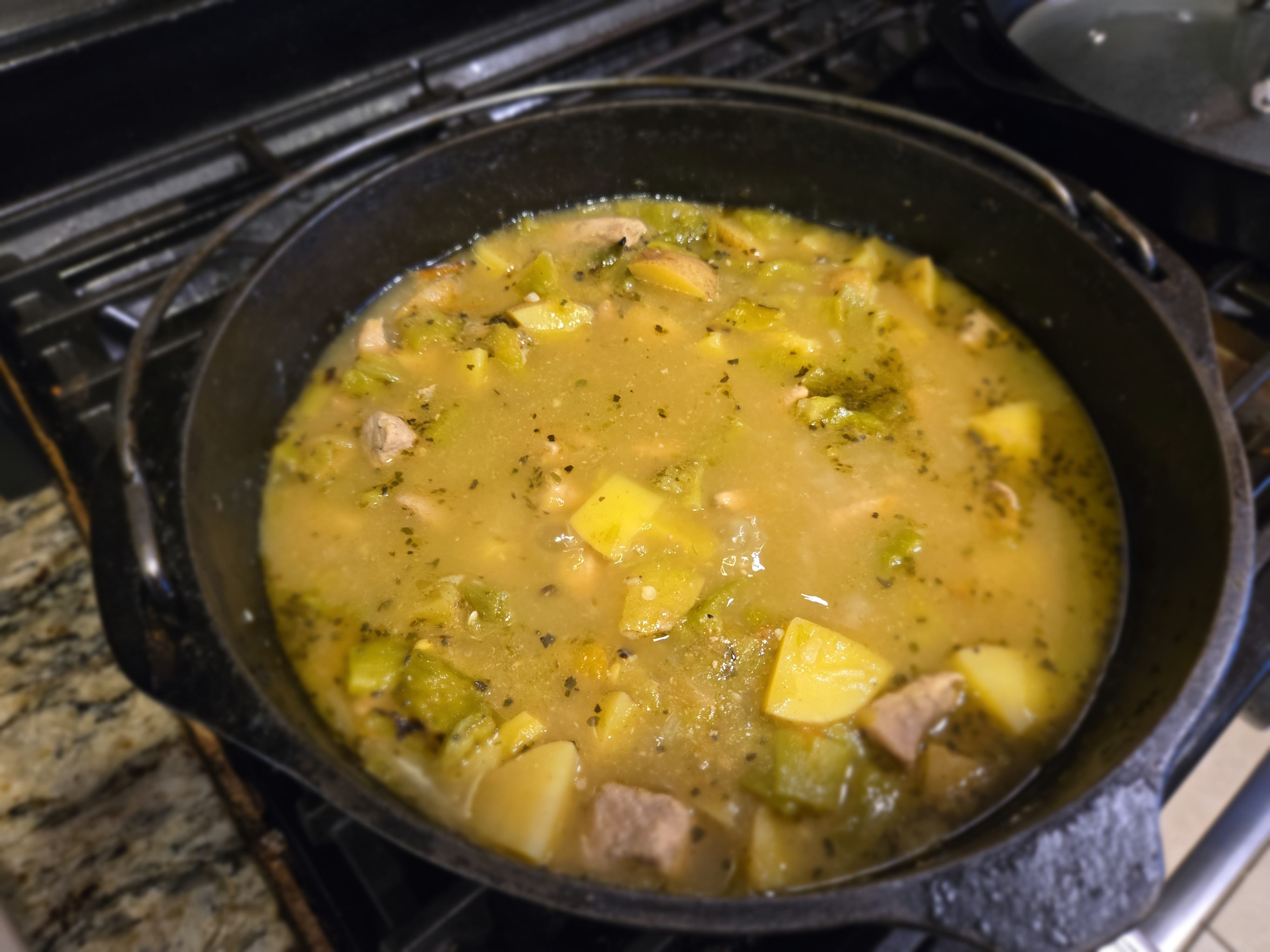 |
San Luis Valley Roasted Green Chile Stew
Green chile roasting season is here, and there's no better way to use that first fresh batch than in a big pot of hearty stew. This one leans on slow-braised pork, roasted green chile, and potatoes — because really, is it a San Luis Valley recipe if potatoes aren't involved? Ingredients
Instructions
|
 |
💡 ANSWER TO TRIVIA QUESTION: Zapata Ranch!
Purchased in part by Latter-day Saints settlers in 1889 for a colony that never took hold, the ranch is now managed by The Nature Conservancy alongside the Medano Ranch, bordering Great Sand Dunes National Park and Preserve. |