Wild Horses of the San Luis Valley |
A Living Piece of the West |
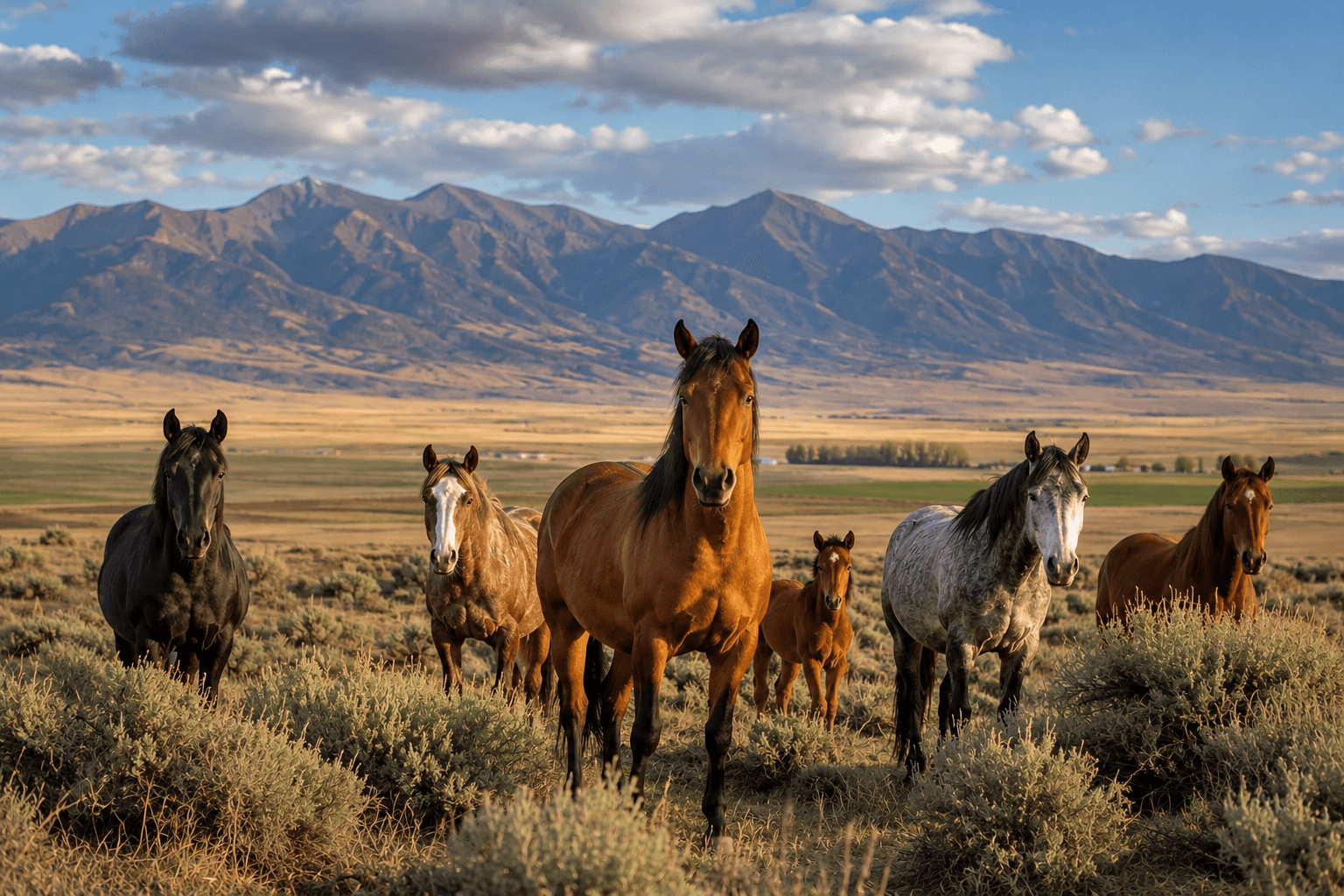
Across the wide-open country of the San Luis Valley, there are places where a driver may round a bend or look across a stretch of sagebrush and see something that seems pulled straight from another century: a band of horses moving freely across the landscape.
They are commonly called the wild horses of the San Luis Valley. For longtime Valley residents, their presence may not seem particularly unusual. Horses have been part of this landscape for generations. But for visitors — and even some people who have lived here for years — coming across free-roaming horses can be an unforgettable sight.
The story behind them, however, isn't quite as simple as calling them mustangs.
Colorado has four official wild-horse Herd Management Areas administered by the Bureau of Land Management: Little Book Cliffs, Piceance-East Douglas, Sand Wash Basin and Spring Creek Basin. None is located in the San Luis Valley.
That means the free-roaming horses seen in portions of the Valley don't necessarily have the same legal status or federal management structure as horses living in those designated areas. And that is part of what makes the Valley's horses so interesting.
Horses and the Valley
Horses have been woven into the human history of the San Luis Valley for centuries.
Spanish settlers brought horses north into what is now southern Colorado, while generations of ranchers, farmers and other residents relied on horses for transportation and livestock work. Over time, animals could escape, be released or join other free-ranging horses.
The result is a population whose exact ancestry can be difficult to trace.
Some people call them wild horses. Others prefer the technically more accurate term feral horses, referring to free-ranging descendants of domesticated animals.
Whatever name is used, seeing them against the Valley's enormous backdrop of sagebrush, mountains and open sky can make it easy to understand why they've captured people's imaginations.
Beauty — and a Complicated Question
Wild and free-ranging horses throughout the West also present difficult management questions.
Horse populations can grow quickly when food, water and weather conditions are favorable. Too many animals on limited acreage can put pressure on grasses, water sources and wildlife habitat. Federal wild-horse areas attempt to balance horse populations with the ability of the land to support them. The San Luis Valley's free-ranging horses present a different challenge because they aren't all living within a federally designated herd area.
Questions of ownership, private property, grazing, animal welfare and population control can become complicated very quickly. There are also strong feelings on nearly every side.
To some people, free-roaming horses represent independence and a living connection to the West's past. Others worry about overgrazing, competition with wildlife and the condition of horses during drought or severe winters.
Both concerns can exist at the same time.
Part of the Valley Landscape
Perhaps that's what makes the San Luis Valley horses worth talking about.
They don't fit neatly into a single category.
They're part history, part ranching legacy and part modern-day land-management question. They're also one more example of how the San Luis Valley can still surprise you.
You can drive roads you've traveled dozens of times, look across a piece of country you've seen for years and suddenly spot a stallion standing watch while several mares and youngsters graze nearby. For a moment, traffic, phones and everything else disappear. It's simply horses, mountains and a landscape that still feels remarkably wild.
And in the San Luis Valley, there aren't many sights more Western than that. ``` |
0 Comments
Join the conversation
Be the first to comment
Share your thoughts above.