
Tomorrow’s Ranchers Are Learning on the Land Today |
San Luis Valley FFA students put their skills to the test while learning how drought, grazing and good land management shape the Valley’s agricultural future. |
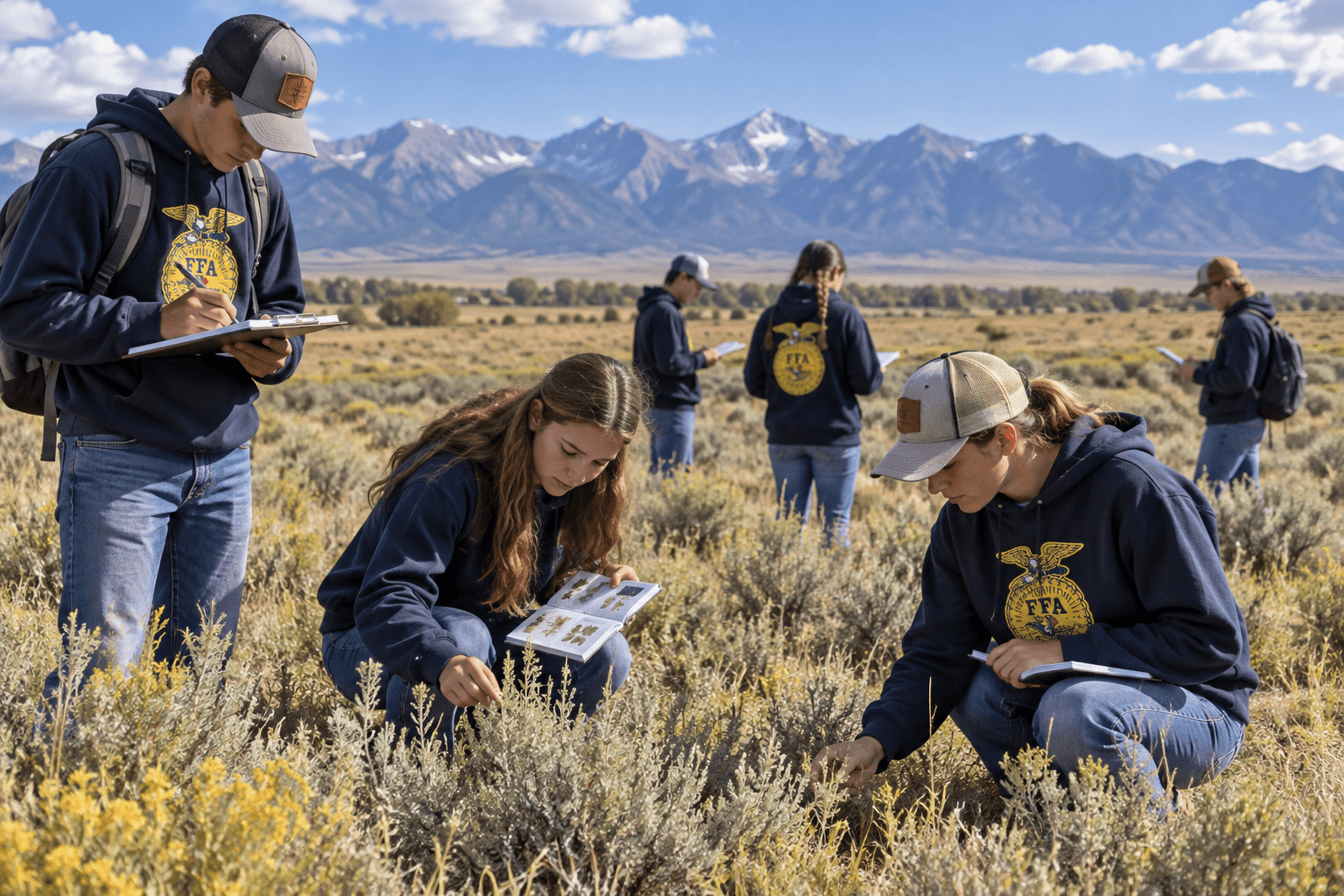
For generations, agriculture has helped define the San Luis Valley. Keeping that tradition strong will eventually fall to a new generation, and dozens of local students recently had an opportunity to put some of the skills they may someday need to the test. On September 15, 51 agriculture students representing six regional FFA chapters participated in the fifth annual San Luis Valley FFA Range Judging competition. Students stepped outside the classroom and onto the range, where they were challenged to look at the land much the way a rancher or range manager would. More Than Identifying PlantsRange judging requires students to understand an entire ecosystem. Competitors identified native range plants, evaluated the condition of the rangeland, estimated usable forage and considered how the land could be managed for grazing. Those are practical skills in a place like the San Luis Valley, where ranching remains an important part of the agricultural economy and where decisions about grazing can affect both livestock and the long-term health of the land. This year’s conditions added another challenge. Drought stress made identifying some plants more difficult because grasses did not always have the seed heads students normally use to help distinguish one species from another. Instead, competitors had to rely more heavily on the other characteristics they had learned. It was a real-world reminder that agriculture rarely takes place under perfect conditions. Sargent Takes the Top SpotWhen the scores were tallied, Sargent FFA captured first place in the team competition, followed by Sangre de Cristo in second. Sargent’s Madeline Mitchell earned the top individual score. But the value of an event like range judging goes well beyond a trophy or a final ranking. Students are learning how to read the landscape around them—recognizing which plants are present, determining how much forage may be available and understanding how grazing decisions made today can affect the range tomorrow. Those lessons are particularly meaningful in the San Luis Valley. Learning From the LandThe Valley’s high elevation, short growing season, limited precipitation and wide-open rangelands have always required farmers and ranchers to understand their environment. Good range management means balancing the needs of livestock with the ability of the land to recover and remain productive. For students considering careers in ranching, agriculture, natural resources or land management, experiences like range judging provide an opportunity to take lessons learned in the classroom and apply them to the landscape they see around them every day. Even for students who eventually choose another career, the competition provides something valuable: a better understanding of the land, water, plants and agricultural practices that have shaped the San Luis Valley for generations. The Next GenerationIt’s easy to talk about preserving the Valley’s agricultural heritage. Events like the FFA Range Judging competition show what that can look like in practice. It means giving young people opportunities to get their boots on the ground, ask questions, identify plants, study changing conditions and learn why responsible management matters. Some of the students competing this year may eventually become ranchers. Others may become farmers, veterinarians, conservation specialists, educators or natural-resource professionals. Whatever paths they choose, they’re gaining a better understanding of the land they call home. And in an agricultural community like the San Luis Valley, that’s knowledge worth passing along. ``` |
0 Comments
Join the conversation
Be the first to comment
Share your thoughts above.