
Ken Salazar Tapped to Help Resolve Decades-Long La Sierra Dispute |
New effort seeks a path forward in historic Costilla County dispute. |
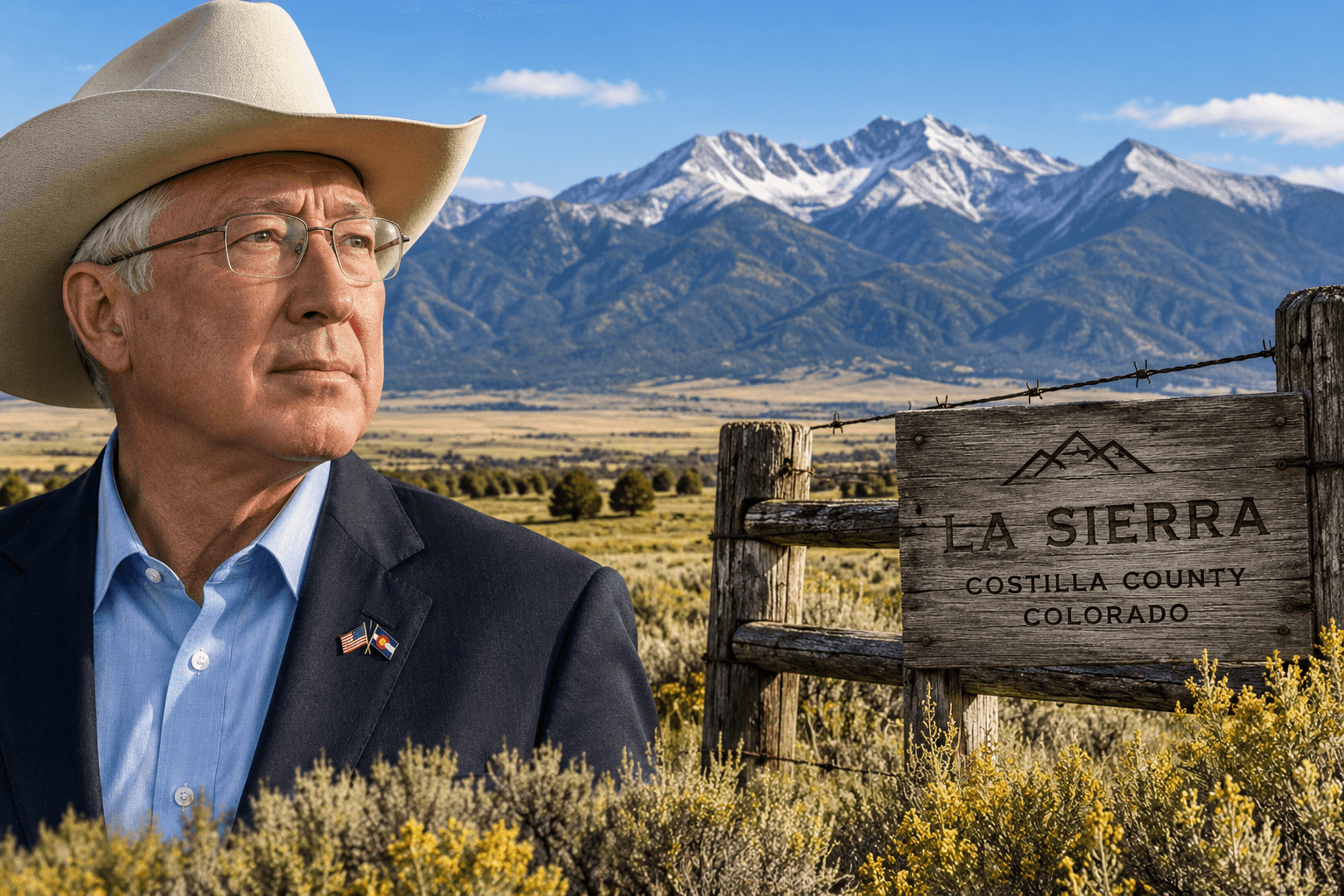
Former Interior Secretary and San Luis Valley native appointed special envoy in decades-long Costilla County dispute A dispute with roots reaching back generations in Costilla County is entering a new chapter, with Gov. Jared Polis turning to a familiar San Luis Valley figure to help bring the parties together. Polis signed an executive order Sept. 2 appointing former U.S. Interior Secretary, U.S. senator and ambassador Ken Salazar as a special envoy concerning Cielo Vista Ranch, traditionally known in the community as La Sierra. Salazar has been directed to facilitate discussions and develop recommendations aimed at finding a path forward in the long-running disagreements involving the ranch and the access rights of heirs of the original Sangre de Cristo Land Grant. A Dispute Rooted in Valley HistoryThe story of La Sierra stretches back to the 1844 Sangre de Cristo Land Grant, years before Colorado became a state. Over generations, descendants of the area's early settlers have asserted traditional rights associated with the mountain lands, including grazing livestock and gathering timber and firewood. Those rights have remained at the center of decades of litigation as ownership of the property changed hands. Today, the privately owned property encompasses roughly 80,000 acres east of San Luis and includes Culebra Peak. The legal questions surrounding the land have never been simple. Court proceedings have addressed who possesses access rights, how those rights may be exercised and how they coexist with the rights of the private property owner. Most recently, a May ruling allowed land-grant heirs to continue grazing sheep and cattle in an area surrounding the ranch owner's new homesite, while restricting firewood collection within a 233-acre buffer zone. The Fence Added Another DisputeThe controversy intensified after ranch owner William Harrison began constructing an approximately eight-foot-high fence around portions of the property in 2020. About 20 miles of the fence had been erected when construction was halted in 2023 after Costilla County commissioners obtained a temporary injunction. Wildlife impacts subsequently became another major concern. An 83-page wildlife assessment released publicly this summer concluded that the fence could negatively affect more than 30 species, including elk, mule deer, Canada lynx, eagles, hawks and Rio Grande cutthroat trout. The study recommended numerous modifications, including wildlife openings and jumps, changes to the wire grid and removal of barbed wire from portions of the fence. The Colorado General Assembly also became involved. In 2025, Polis signed HB 25-1023, providing local-government oversight of large fencing projects on the Sangre de Cristo Land Grant so environmental impacts can be considered. Why Ken Salazar?Salazar's appointment brings someone with both national experience and deep personal ties to the San Luis Valley into the discussion. A Valley native, Salazar has served as Colorado attorney general, U.S. senator, U.S. secretary of the Interior and U.S. ambassador to Mexico. In announcing the appointment, Polis described Salazar as a trusted Valley voice who could help bring together the land-grant heirs, the broader community and the property owner. Salazar emphasized his own connection to the region, saying that his experience growing up in the San Luis Valley gives him an understanding of how deeply the land matters to generations of local families. What Happens Next?The executive order calls for structured engagement sessions in the San Luis Valley involving the interested parties. The governor's office is also directed to retain a facilitator to assist Salazar with those discussions. Those conversations are expected to include the ranch owner, land-grant heirs and easement holders, Costilla County representatives, community members, conservation and land-trust organizations, and relevant state agencies. Key date: Salazar and the facilitator are expected to submit findings and recommendations for possible paths toward resolution to the governor by Oct. 7. The executive order itself does not settle the underlying court cases, establish new access rules or order the fence removed. Instead, it creates a process intended to determine whether common ground can be found outside the cycle of continuing disputes and litigation. A Story the Valley Will Be WatchingThere is no guarantee that a conflict stretching across generations can be resolved in a matter of weeks. What is significant is that the state is now making a formal effort to bring the people involved together, with someone who knows both the San Luis Valley and the workings of government leading the process. For Costilla County residents, land-grant heirs and the ranch owner, the next several weeks could provide the first indication of whether that effort can produce a workable path forward. For the rest of the San Luis Valley, it will be a story worth watching. The San Luis Valley Beat will continue following the process as the Oct. 7 deadline approaches. Sources: |
1 Comment
Join the conversation
The Mexican government stole it from the Natives and gave it to those they favored. Best solution: Give it back to the Natives.