
Can Ice Help Save Water? |
The Frozen Assets Project Is Putting an Old Valley Practice to the Test |
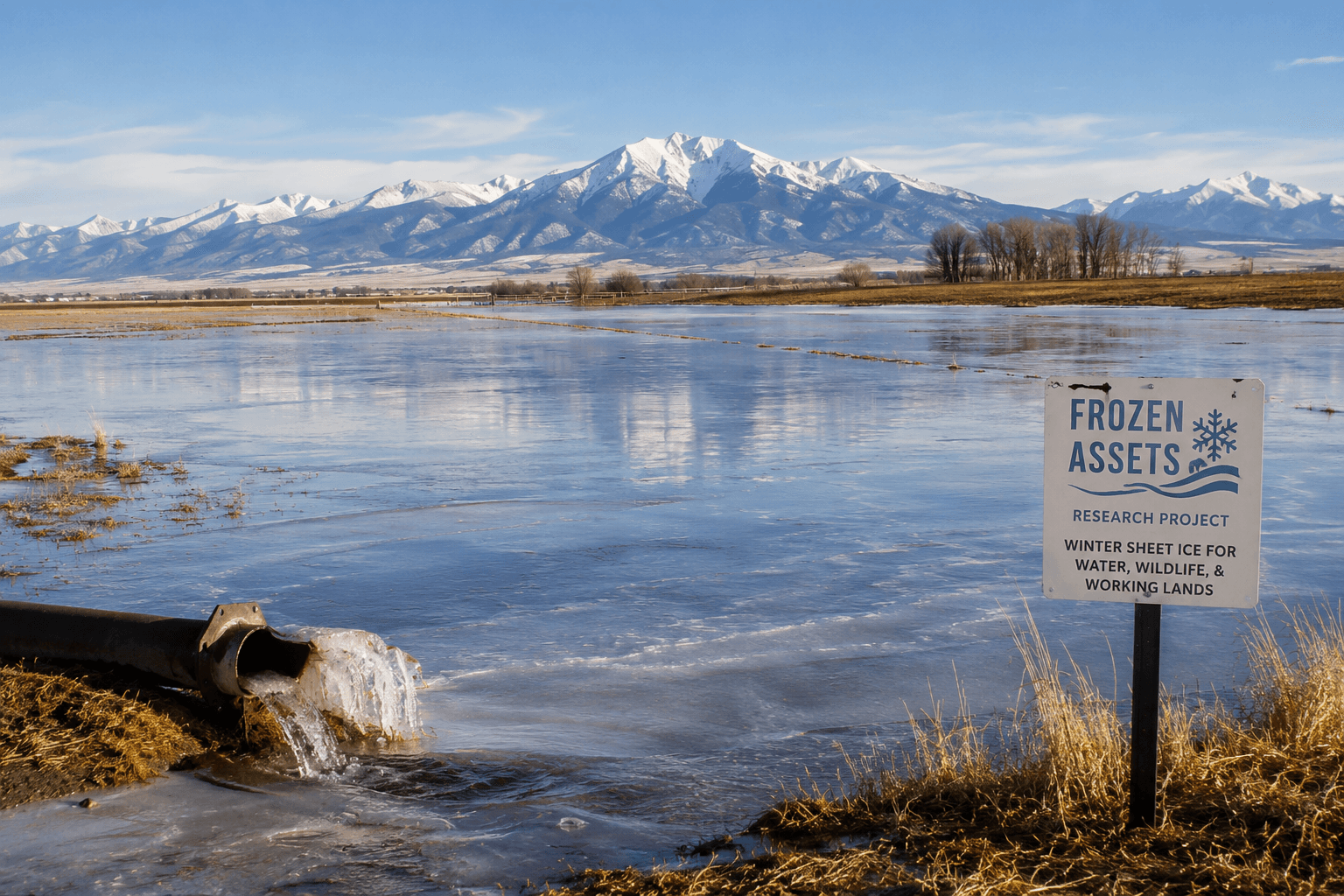
When most of us think about conserving water, we picture shorter showers, efficient irrigation systems, or reservoirs storing runoff for the summer months. But one project taking place here in the San Luis Valley is looking to the middle of winter for part of the solution.
Known as the Frozen Assets Project, the effort is studying whether a traditional ranching practice called winter sheet ice can help recharge groundwater while also providing benefits for wildlife and agriculture.
The idea is surprisingly simple. During periods of sustained freezing temperatures, a shallow layer of water is spread across a field. As the water freezes, it builds into a broad sheet of ice. Rather than melting all at once, the ice slowly releases water into the ground as temperatures warm in the spring.
Researchers hope that gradual melt allows more water to soak into the soil and eventually recharge the aquifer that supplies much of the San Luis Valley's irrigation water.
While the concept may sound innovative, it is actually rooted in the Valley's past. Many longtime ranchers remember creating winter sheet ice decades ago to provide early-season moisture for hay meadows.
The Frozen Assets Project combines that historical knowledge with modern science to better understand exactly how effective the practice can be.
The project brings together several organizations, including American Rivers, Ducks Unlimited, Colorado Parks and Wildlife, the Rio Grande Water Conservation District, Wetland Dynamics, the Bureau of Reclamation, and participating landowners.
Researchers are monitoring groundwater levels, soil moisture, the timing of snow and ice melt, and how wildlife uses these temporary frozen wetlands.
Birds such as sandhill cranes, ducks, and shorebirds may benefit from the shallow water created as the ice melts during spring migration.
The work is currently focused in Saguache County, but the information gathered could help determine whether winter sheet ice could become another tool for improving groundwater recharge throughout the San Luis Valley.
The project is supported in part through funding from the Colorado Water Conservation Board's Water Plan Grant Program and represents a partnership between conservation organizations, scientists, and local agricultural producers.
No single project will solve the Valley's water challenges, but exploring practical ideas grounded in local history may provide valuable pieces of the larger puzzle.
By taking a closer look at a technique that many ranchers once considered routine, researchers hope to better understand whether a little winter ice can make a meaningful difference months later when water becomes one of the Valley's most precious resources.
Sources: American Rivers and the Colorado Water Conservation Board. |
12 Comments
Join the conversation
A little skeptical only because I wonder how much the practice depends on having a consistently cold enough winter. With the weather being so unpredictable lately, is there a threshold temperature or freeze duration that makes it worthwhile?
Mirabel OrtegaThat's a fair concern. I'd imagine a winter like last year's with those warm spells in February would really test the method. Hopefully the researchers are tracking exactly that — which winters produce good results versus which ones just don't cooperate enough to make it viable.
Been watching the water table drop for years out here. Not getting my hopes up too fast, but I'd rather see ten small practical ideas like this one than keep waiting on one big fix that never comes.
tom_saguacheThat's exactly the right mindset honestly. One big silver bullet solution has never materialized and probably won't. Ten small things that each move the needle a little — that's actually how problems like this get managed over time.
I appreciate the honest closing line — no single project solves everything. Too often these things get oversold. This feels like a realistic, locally grounded approach and that's refreshing.
Patrice LlewellynThat closing line caught my attention too. Refreshing to see a project that isn't promising to save the aquifer single-handedly. If it adds even a measurable fraction back, that's worth knowing about.
Curious how much water you actually need to spread per acre to build a decent sheet. And do you need a pretty flat field for this to work, or can it be done on ground with a little slope? Genuinely interested in trying this.
RioGrandeRancherGood questions. From what I've read on similar projects, pretty flat ground definitely helps a lot — even a slight grade can cause the water to sheet off before it freezes evenly. Might be worth reaching out to the Rio Grande Water Conservation District directly, they'd probably know the specifics for our conditions.
Love that Ducks Unlimited and Colorado Parks and Wildlife are both involved. The sandhill cranes along the Valley floor in spring are already something special — a little extra shallow water habitat during migration would be wonderful for them.
Sonja K.Agreed on the cranes — there's nothing quite like watching them stage out on the Valley floor in March. Even a handful of extra wet acres could make a real difference for them during that window. Fingers crossed this expands.
My grandfather used to flood his meadows every January for exactly this reason. We thought it was just an old-timer habit, but turns out there was real wisdom behind it. Really glad to see someone actually studying it properly.
Dale MortensenSame story with my family's old place near Center. Dad always said January flooding was just 'what you did' but nobody really explained why. Funny how a lot of that generational knowledge turns out to have solid reasoning behind it once someone bothers to look.