
Fire Suppression Ponds |
Could They Help Protect the San Luis Valley |
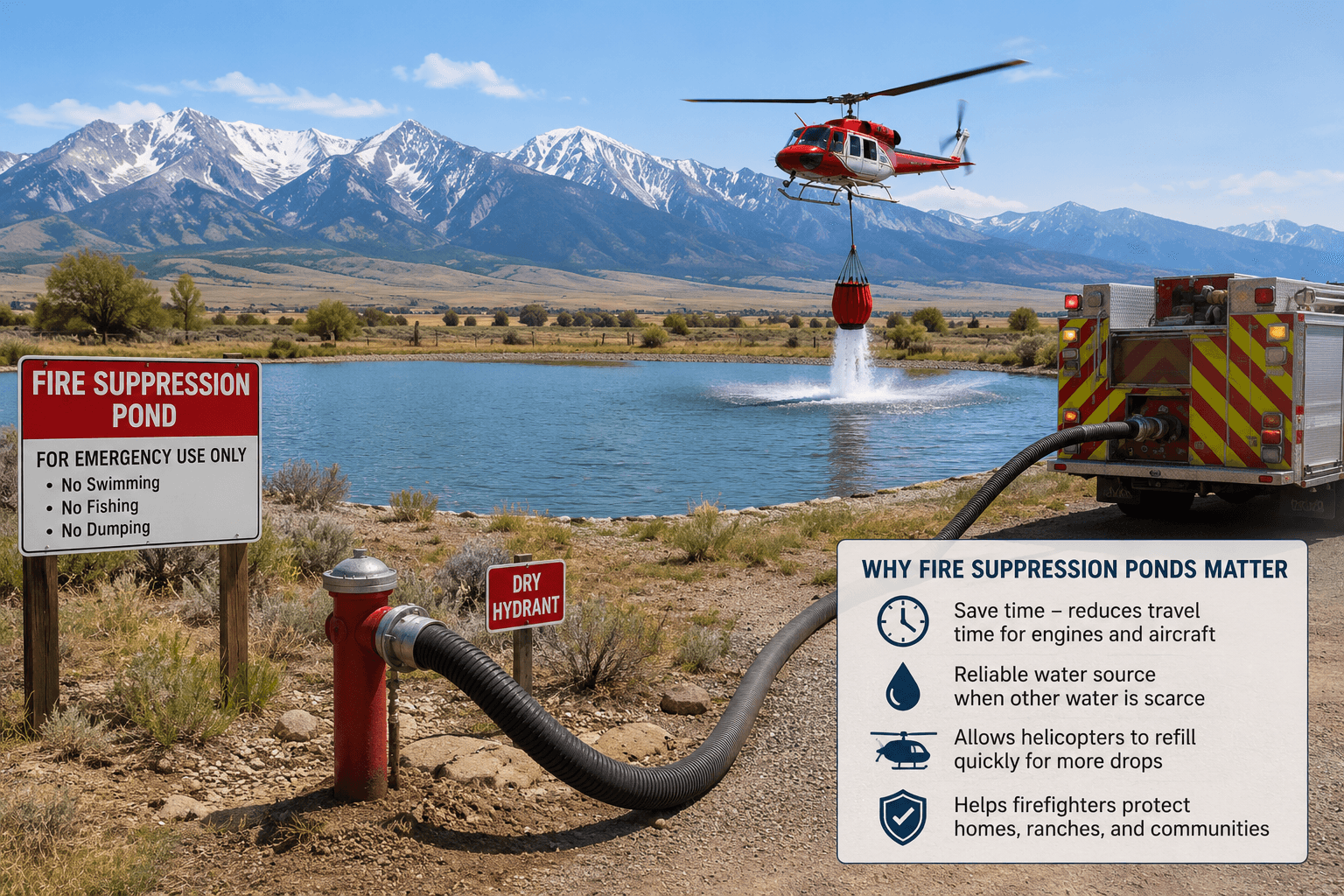
Artist’s rendering created to accompany this article.
When most people think about fighting a wildfire, they picture fire engines, helicopters, and air tankers. What many don’t think about is one of the most important tools behind the scenes: having enough water close to the fire.
That’s one reason Saguache County officials have begun exploring the idea of strategically located fire suppression ponds as drought continues to affect much of southern Colorado.
The concept is simple but potentially important: create dependable water sources where firefighters can refill quickly instead of spending valuable time traveling to the nearest hydrant, reservoir, or stream.
In a region as large and rural as the San Luis Valley, every minute matters.
Why Water Access Matters
Unlike cities, much of the Valley has no municipal fire hydrant system. Rural firefighters often rely on water carried in their engines, portable water tanks, irrigation canals, stock ponds, or water tenders that shuttle back and forth to refill.
During a fast-moving grass or brush fire, those extra travel miles can mean the difference between containing a fire at a few acres or watching it spread across hundreds.
A strategically placed fire suppression pond gives firefighters another reliable source of water much closer to where it is needed.
More Than Just a Pond
A fire suppression pond isn’t simply a hole filled with water.
Many are designed with all-weather access roads so fire engines can safely reach them throughout the year. Some include a dry hydrant—a permanent pipe extending into the pond that allows firefighters to connect directly to the water without having to deploy large drafting hoses.
If the pond is large and deep enough, helicopters may also be able to use it to refill their water buckets in just minutes, allowing them to make more frequent drops on an active wildfire.
A Growing Need
The San Luis Valley has always lived with wildfire risk, but prolonged drought, dry vegetation, and changing weather patterns have increased concerns across much of Colorado.
Dry grasses, reduced stream flows, and longer periods of fire danger mean emergency responders are continually looking for ways to improve their readiness before the next fire starts.
Fire suppression ponds are one tool that could help strengthen that preparedness, especially in remote areas where natural water sources may be scarce or unreliable during late summer.
Benefits Beyond Firefighting
Properly designed suppression ponds can serve more than one purpose.
Depending on their location, they may also provide water for livestock, support wildlife habitat, offer emergency water reserves during drought, or supplement irrigation systems. Combining multiple uses could help communities receive greater value from the investment while strengthening local resilience.
Challenges to Consider
Building a suppression pond isn’t as simple as digging a basin.
Projects require careful planning, engineering, and ongoing maintenance. Water rights, environmental concerns, funding, evaporation, sediment buildup, and year-round access all play important roles in determining whether a location is practical.
Even so, rural communities across the West are looking for ways to improve emergency water supplies as wildfire seasons become longer and more unpredictable.
Looking Ahead
Saguache County’s discussions appear to be in the exploratory stage, but they reflect a broader question facing communities across Colorado: How do rural areas prepare for increasing wildfire risk while also living with limited water?
For the San Luis Valley, the answer may involve a combination of better planning, stronger partnerships, improved emergency infrastructure—and perhaps a network of strategically placed fire suppression ponds.
No single project can eliminate wildfire risk. But having water available where firefighters need it most could one day make all the difference. |
0 Comments
Join the conversation
Be the first to comment
Share your thoughts above.