
Colorado Parks and Wildlife Is Asking Anglers to Fish Early |
Here's Why |
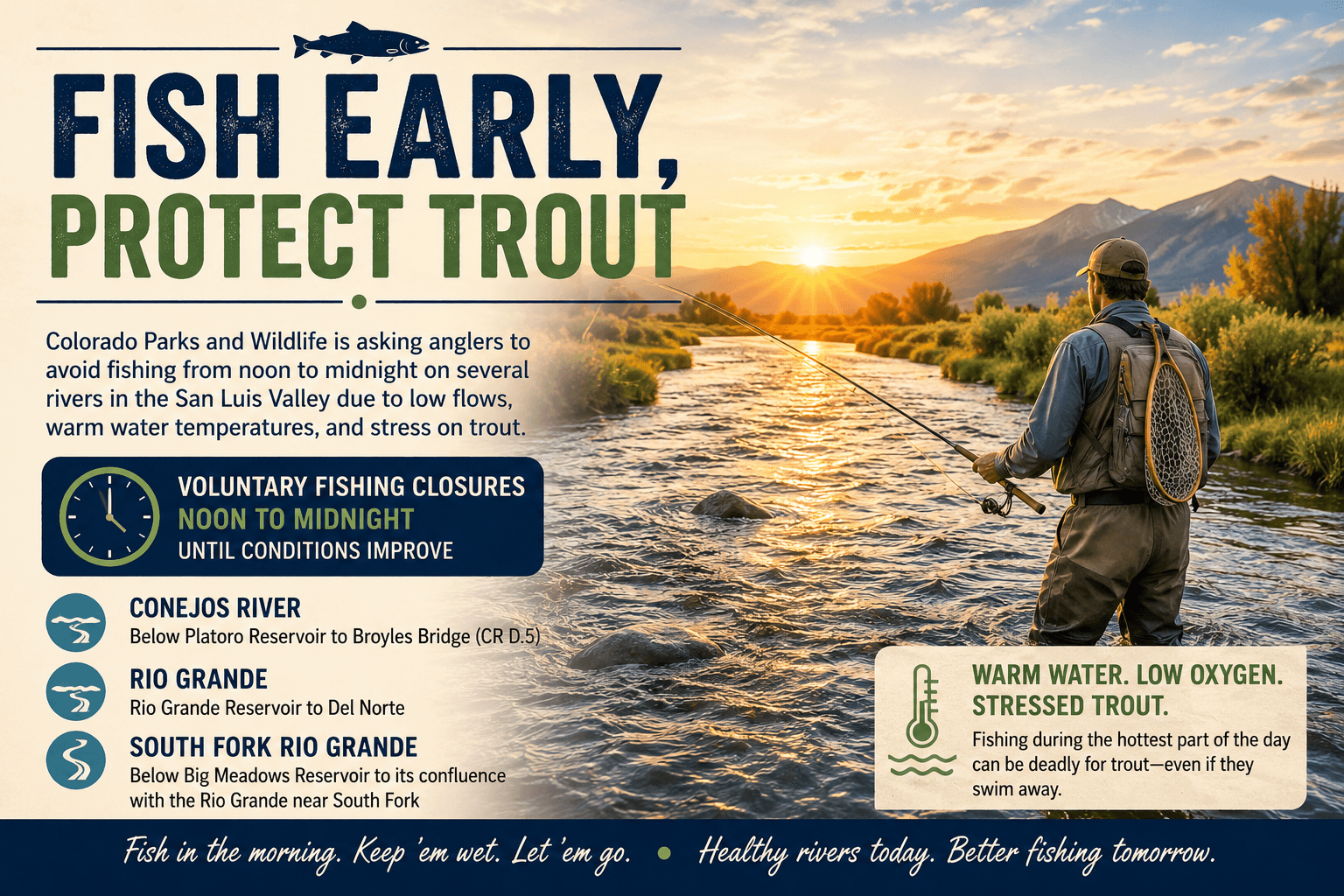
If you've been planning a fishing trip on the Rio Grande or Conejos River, you may notice something different this summer.
Colorado Parks and Wildlife (CPW) has issued **voluntary afternoon fishing closures** on several stretches of these rivers—not because fishing is unsafe, but because the fish themselves are under stress.
The request is simple: **avoid fishing from noon until midnight** until conditions improve.
Unlike a mandatory closure, these restrictions rely on the cooperation of anglers who understand that a healthy fishery depends on protecting trout during periods of extreme heat and low water.
What's Happening?
The San Luis Valley continues to experience drought conditions, and many streams are running well below their historical averages. Lower water levels warm more quickly under the summer sun, reducing the amount of dissolved oxygen available for fish.
For trout, that combination can be dangerous. Even if a fish is carefully caught and released, the physical stress of the fight—combined with warm, oxygen-poor water—can make recovery difficult.
A trout that swims away may still die later from the effects of heat and exhaustion.
Affected Rivers
The voluntary closures currently include sections of both the **Rio Grande** and the **Conejos River**, some of the Valley's premier trout fisheries.
These measures are intended to protect fish during the hottest part of the day, when water temperatures are highest. Morning hours generally provide cooler water and better conditions for catch-and-release fishing.
How Anglers Can Help
If you're heading to the river this summer, a few simple steps can make a real difference:
* Fish during the early morning whenever possible. * Keep fish in the water while removing the hook. * Minimize the amount of time spent handling fish. * Use tackle that allows fish to be landed quickly. * If water temperatures become unusually warm, consider giving the river a break for the day.
Many experienced anglers already follow these practices, especially during hot, dry summers.
Protecting Tomorrows Fishing
The San Luis Valley is fortunate to have outstanding trout waters that attract both residents and visitors. These voluntary closures are designed to ensure those fisheries remain healthy for years to come.
While no one enjoys having their time on the water limited, a few weeks of extra care during the hottest part of the summer can help protect trout populations until cooler temperatures and higher flows return.
Whether you cast a line every weekend or simply enjoy seeing healthy rivers throughout the Valley, this is one small way everyone can help care for one of our region's most valuable natural resources.
|
0 Comments
Join the conversation
Be the first to comment
Share your thoughts above.