Frank V Flohr
Jun 2, 2026
The San Luis Valley Beat was created out of a love for the San Luis Valley and the communities that call it home. Rather than focusing on negativity or politics, the newsletter highlights the people, businesses, events, history, food, and everyday stories that make life in the Valley special.
From Monte Vista and Alamosa to Creede, San Luis, South Fork, and beyond, each weekly edition brings readers a blend of local features, community spotlights, weather, events, regional trivia, outdoor living, recipes, and small-town stories designed to inform, entertain, and encourage community connection.
Whether it’s spotlighting a family-owned business, sharing a local fundraiser, exploring forgotten places, or covering a weekend festival, The San Luis Valley Beat is about celebrating the Valley and the people who live here. |
Trivia Question❓Saguache, Colorado is known for being the "Gateway to the _________?" Answer at the bottom of the newsletter |
Farmers Market Season Returns to the San Luis Valley |
Discover the rich Latino heritage along Colorado's Cumbres & Toltec Scenic Railroad route! |
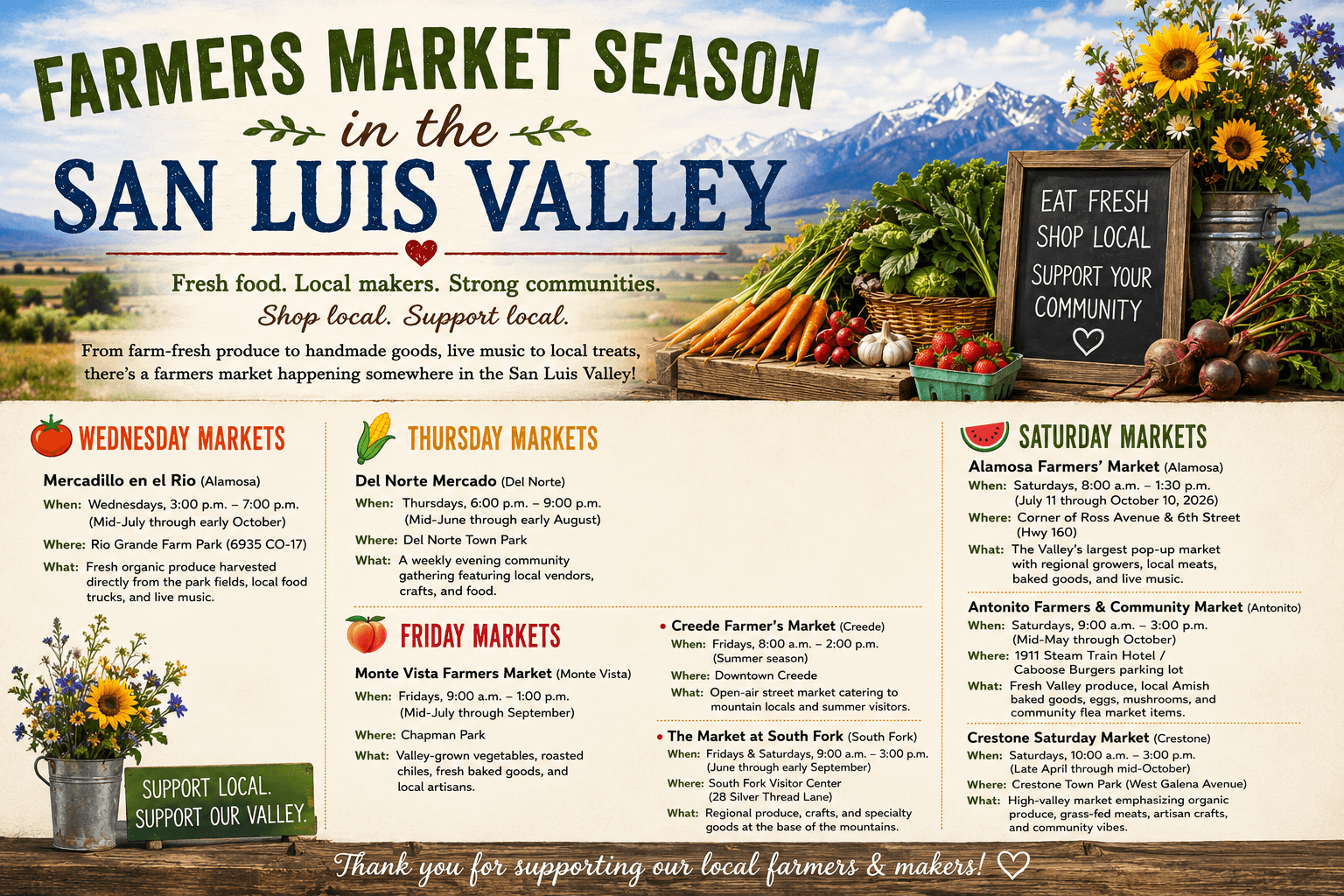
There’s something special about summer mornings and evenings in the San Luis Valley when folding tables begin filling with fresh vegetables, homemade baked goods, roasted chile aromas, flowers, jams, local honey, and handmade crafts. Farmers market season has become one of the Valley’s best traditions — bringing together growers, makers, families, and neighbors in nearly every corner of the region.
From the mountain towns of Creede and South Fork to the open farm country surrounding Monte Vista, Alamosa, Antonito, and Crestone, local markets offer more than just shopping. They’ve become weekly gathering places where residents reconnect, visitors discover the Valley’s agricultural roots, and small local businesses get a chance to shine.
Many of the produce stands feature vegetables grown right here in the Valley’s rich high-altitude soil. Shoppers can often find freshly harvested lettuce, potatoes, onions, carrots, garlic, herbs, sweet corn, and the roasted green chile Colorado is famous for. Alongside the produce are homemade breads, pies, jams, local meats, eggs, artisan soaps, woodworking, handcrafted jewelry, and food vendors serving everything from tacos to kettle corn.
What makes San Luis Valley markets unique is the variety from town to town. Some markets feel like lively community festivals with music and food trucks, while others offer a quieter small-town experience where neighbors catch up over coffee and fresh baked goods.
Whether you’re looking for farm-fresh produce, homemade treats, handcrafted gifts, or simply a reason to spend a summer afternoon outdoors, farmers market season across the San Luis Valley offers plenty of opportunities to shop local and support the communities that make the Valley special.
Weekly Farmers Markets Across the San Luis Valley
🍅 Wednesday MarketsMercadillo en el Rio — Alamosa 🌽 Thursday MarketsDel Norte Mercado — Del Norte 🍑 Friday MarketsMonte Vista Farmers Market — Monte Vista Creede Farmer's Market — Creede The Market at South Fork — South Fork 🍉 Saturday MarketsAlamosa Farmers' Market — Alamosa Antonito Farmers & Community Market — Antonito Crestone Saturday Market — Crestone
Tip: Market times and vendor lineups can change with weather, harvest schedules, and community events, so it’s always a good idea to check local pages before heading out. |
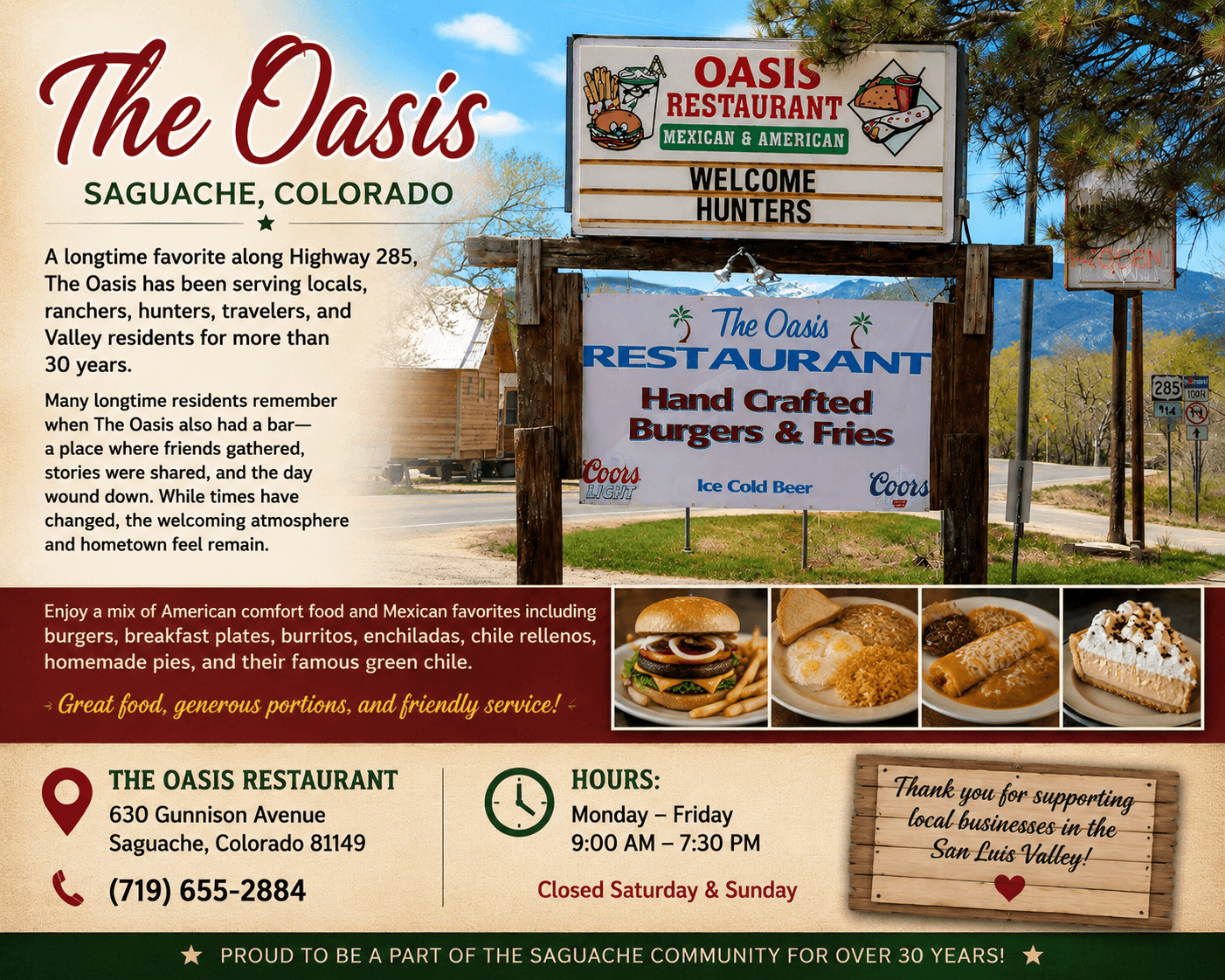
Small Business Spotlight The Oasis |
Serving a mix of American comfort food and Mexican favorites |
If you’ve spent any time in Saguache over the years, chances are you’ve stopped at The Oasis.
Located along Highway 285 in the heart of town, The Oasis has been a longtime gathering place for locals, ranchers, hunters, travelers, and Valley residents for decades. For many people, it’s more than just a restaurant — it’s one of those familiar hometown places tied to memories of road trips, coffee with friends, family dinners, and conversations that lasted a little longer than planned.
Longtime residents may also remember when The Oasis had more of a classic small-town bar atmosphere alongside the restaurant, serving as one of the community’s social gathering spots after a long day of work or time spent in the mountains. While times have changed over the years, the restaurant still carries that welcoming hometown feel that has made it a Saguache staple for generations.
Today, The Oasis continues serving a mix of American comfort food and Mexican favorites, including burgers, breakfast plates, burritos, enchiladas, chile rellenos, homemade pies, and their well-known green chile. Whether you’re stopping in for breakfast before heading into the mountains or grabbing dinner while traveling through northern San Luis Valley, you’ll still find the kind of relaxed atmosphere and friendly service that small-town restaurants are known for.
For visitors passing through Saguache, The Oasis offers a reminder of the slower pace and strong community connections that continue to define life in many Valley towns. The Oasis
630 Gunnison Avenue Saguache, Colorado 81149 (719) 655-2884 Hours: Monday–Friday: 9:00 AM – 7:30 PM Closed Saturday & Sunday Supporting longtime local restaurants like The Oasis helps preserve the businesses and gathering places that continue to give the San Luis Valley its unique character and charm.
Tell them The San Luis Valley Beat sent you! 💛 |
|
 |
Preserving the stories of places time forgot. |
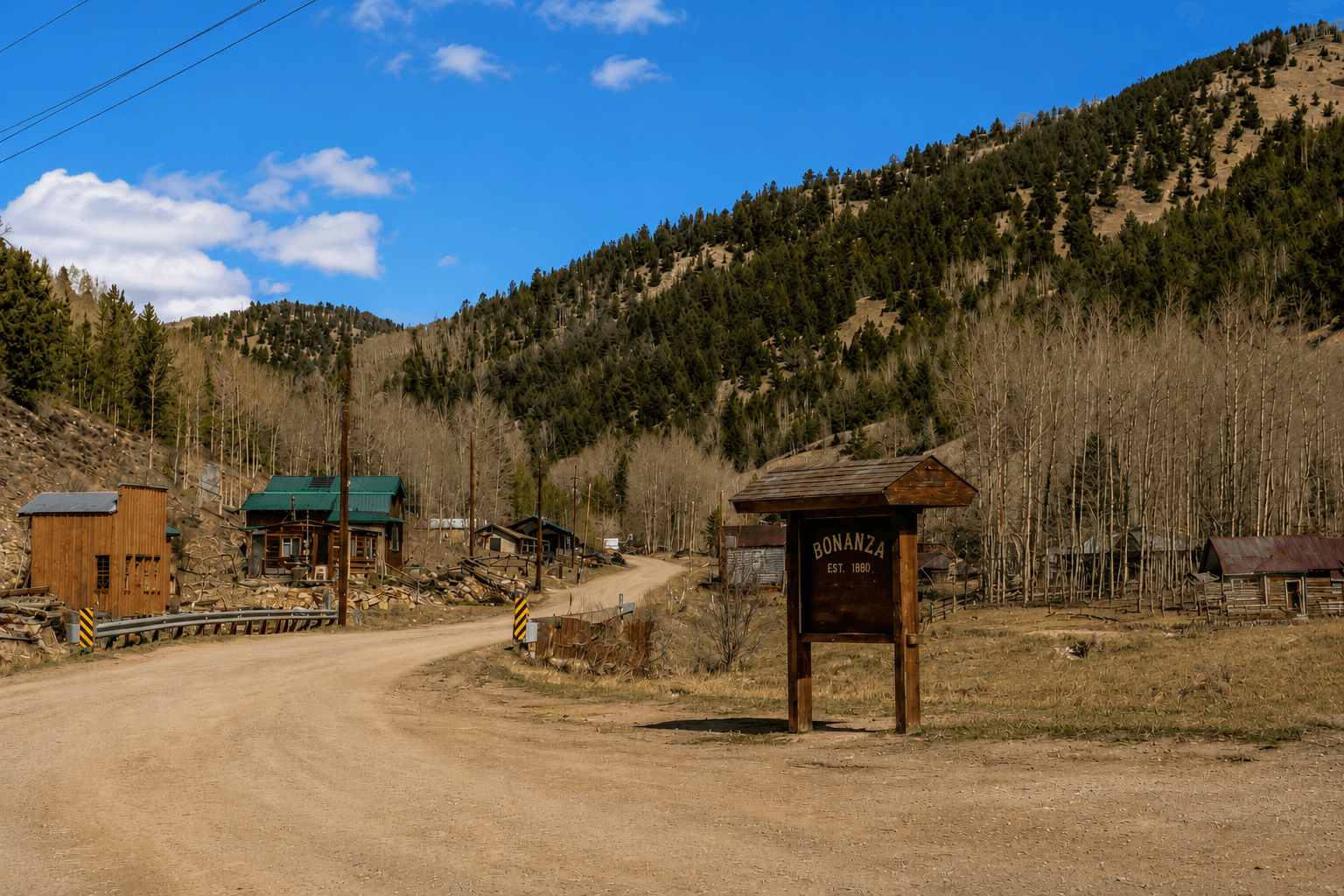 |
Bonanza
Tucked high in the mountains north of Saguache and west of Villa Grove sits one of Colorado’s most fascinating nearly-forgotten mining communities. Today, Bonanza is a quiet place with only a handful of residents, but in the early 1880s it was one of the fastest-growing mining camps in the state.
The story of Bonanza began in 1880 when rich silver deposits were discovered in the surrounding mountains. Prospectors rushed into the area, convinced they had found Colorado’s next great mining district. Almost overnight, tents gave way to buildings, businesses opened their doors, and a bustling mountain town was born. A Boomtown Is BornThe town earned its optimistic name from the Bonanza Mine, with early prospectors believing they had struck an exceptionally rich silver deposit. Within just a few years, Bonanza grew to between 1,000 and 1,500 residents. During the height of the boom, the town reportedly boasted dozens of saloons, dance halls, hotels, stores, and businesses serving miners and travelers alike.
The excitement surrounding Bonanza was so great that thousands of people traveled through the district hoping to make their fortunes. Even former President Ulysses S. Grant visited the area during the frenzy as rumors spread that Bonanza might become the next Leadville. Silver Dreams Meet RealityLike many Colorado mining towns, Bonanza's prosperity depended on the mines. While several mines continued producing ore for years, the initial excitement proved difficult to sustain. The population began declining by the mid-1880s as some of the richest deposits were exhausted and investors turned their attention elsewhere.
Bonanza managed to survive longer than many boomtowns and settled into the role of a smaller mining community. However, the district never again experienced the explosive growth of its early years. Fire and DeclineA devastating fire in 1937 destroyed much of Bonanza’s business district. By that time, most of the mining activity had already faded, and the town never fully recovered. Many of the remaining buildings were abandoned, and the population continued to shrink through the decades. What Remains TodayUnlike many ghost towns that disappeared entirely, Bonanza still survives—barely. A few historic buildings, old mine structures, and reminders of its silver-mining past can still be found scattered around the community. The town's population today is tiny compared to its boom years, making it one of Colorado’s smallest incorporated municipalities.
Visitors driving the backroads of northern Saguache County can still see traces of the optimism that gave Bonanza its name. The mines may be quiet now, but the mountains continue to hold the stories of the prospectors, merchants, and dreamers who once believed they had found prosperity in the high country. “Bonanza was built on silver dreams. Though the boom faded long ago, the town remains as a reminder of one of the San Luis Valley’s most ambitious mining eras.” |
 |
 |
CASA del ValleThis week’s Community Spotlight highlights CASA del Valle, a nonprofit organization serving children, youth, and families throughout the San Luis Valley. CASA stands for Court Appointed Special Advocate. The organization recruits and trains community volunteers who advocate for children involved in dependency and neglect cases, helping ensure their voices are heard and their best interests are represented. While CASA volunteers participate in court proceedings, much of their impact comes from being a consistent, caring adult in a child’s life during challenging times. Their work helps connect children and families with resources, support services, and opportunities for greater stability. CASA del Valle's mission is centered on helping break cycles of abuse and neglect through advocacy, intervention, and community support. By training local volunteers to serve as advocates, the organization helps create brighter futures for some of the Valley’s most vulnerable children. |
 |
 |
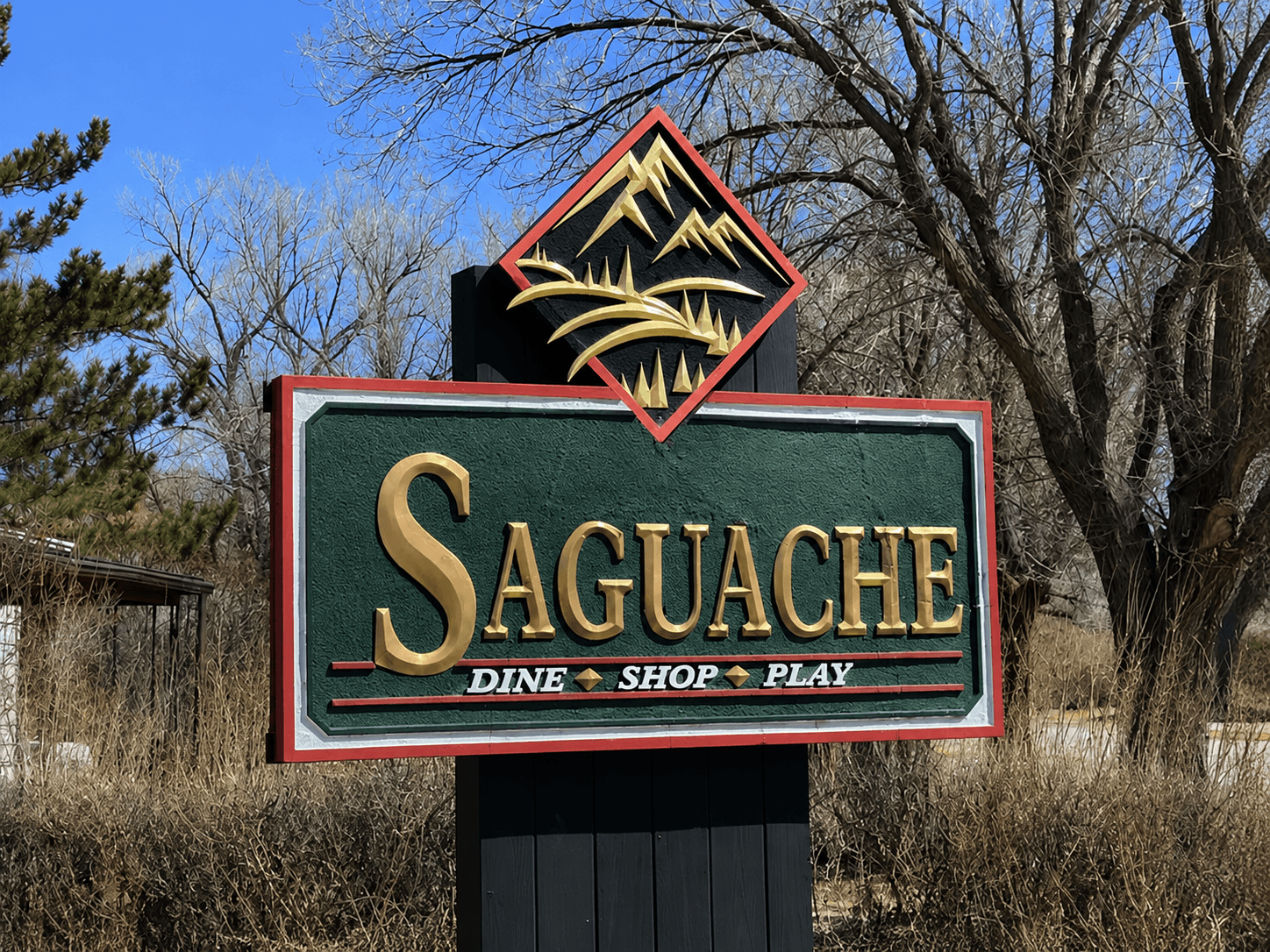 |
Saguache, Colorado
Nestled at the northern gateway to the San Luis Valley, Saguache is one of Colorado's oldest frontier communities and a town where history still feels very much alive. Pronounced "suh-WATCH," Saguache serves as the county seat of Saguache County and has welcomed travelers, ranchers, miners, and settlers for more than 150 years. Today, it remains a quiet community surrounded by some of the most spectacular landscapes in Colorado.
Long before modern highways crossed the Valley, the area around Saguache was an important gathering place for the Ute people. Later, Spanish shepherds, traders, and travelers followed routes that eventually became part of the Old Spanish Trail. Permanent settlement began in the mid-1860s, and the town quickly developed into a supply center for nearby ranches and mining camps throughout the San Juan Mountains.
One of the most influential figures in Saguache's history was Otto Mears, often called the "Pathfinder of the San Juans." Arriving in the area in the late 1860s, Mears helped establish mills, roads, businesses, and transportation routes that connected the San Luis Valley to booming mining communities farther west. His efforts helped transform Saguache from a frontier settlement into a thriving regional hub.
Visitors strolling through downtown today will find historic brick buildings, local shops, public art, and reminders of the town's colorful past. The community has also become known for its vibrant arts scene, welcoming atmosphere, and easy access to outdoor recreation.
Nearby attractions include the Sangre de Cristo Mountains, the San Juan Mountains, Penitente Canyon, and the unique landscapes that make northern Saguache County a favorite destination for photographers, hikers, and nature lovers.
The name "Saguache" is believed to come from a Ute word that has been variously interpreted as "water at the blue earth," "blue earth," or "green place." Whatever its exact origin, the name reflects the area's deep Indigenous roots and long connection to the land.
With a population of just a few hundred residents, Saguache offers a slower pace of life while preserving a remarkable piece of Colorado history. Whether you're passing through on Highway 285, exploring the surrounding mountains, or simply enjoying a walk down its historic Main Street, Saguache remains one of the San Luis Valley's most fascinating and enduring communities.
Did You Know? Saguache County was created in 1866, making it one of Colorado's oldest counties. The town itself was established shortly afterward and has served as the county seat ever since. |
 |
 |
 |

The Cumbres & Toltec Scenic Railroad has received national acclaim, being named the #1 Best Scenic Train Ride in the 2026 USA TODAY 10Best Readers’ Choice Awards.
The historic narrow-gauge railway, stretching between Antonito, Colorado and Chama, New Mexico, transports passengers across 64 miles of breathtaking alpine views, rugged canyons, and timeless high-mountain meadows.
Steam-powered locomotives cross the Colorado-New Mexico border several times, scaling the dramatic 10,015-foot Cumbres Pass.
For many in the San Luis Valley, this railroad is more than just a scenic ride—it is woven into the very identity and heritage of the region.
This year, a commemorative journey on August 2nd will honor both the 250th anniversary of the United States and the 150th anniversary of Colorado statehood.
The national award puts the spotlight on a true Southwestern treasure—and a legacy that continues to delight generations. Read More... |
Tip of The Day |
Explore the Great Sand Dunes National Park and Preserve near Saguache for a unique and breathtaking experience among the tallest sand dunes in North America. |
Small Business Spotlight: Colorado Farm Brewery |
The only brewery in the world where every ingredient in its estate beers comes from the farm in which they brew. |

Tucked among the farm fields south of Alamosa, Colorado Farm Brewery is one of the San Luis Valley’s most unique local businesses — a true farm-to-glass brewery where the ingredients are grown, malted, and brewed right here in the Valley. The brewery is part of a long family farming tradition in Alamosa County. For generations, the Cody family has worked the land, and today that agricultural heritage continues through Colorado Malting Company and Colorado Farm Brewery. What makes this place special is how closely the beer is connected to the farm itself. Barley grown in San Luis Valley soil, hops from the farm, and a hands-on brewing process all come together to create beer with a strong sense of place. It is not just locally made — it is rooted in the land, water, and farming culture of the Valley. Visitors will find a relaxed rural setting with wide-open views, live music, special events, and a friendly atmosphere that feels unmistakably local. Whether you are a craft beer fan or simply looking for a memorable Valley experience, Colorado Farm Brewery is a place worth knowing about. Location: 2070 County Road 12 South, Alamosa, Colorado From field to glass, Colorado Farm Brewery is a reminder that some of the most original and meaningful small businesses in Colorado can be found right here in the San Luis Valley. Tell them The San Luis Valley Beat sent you! 💛
|
|
 |
 |
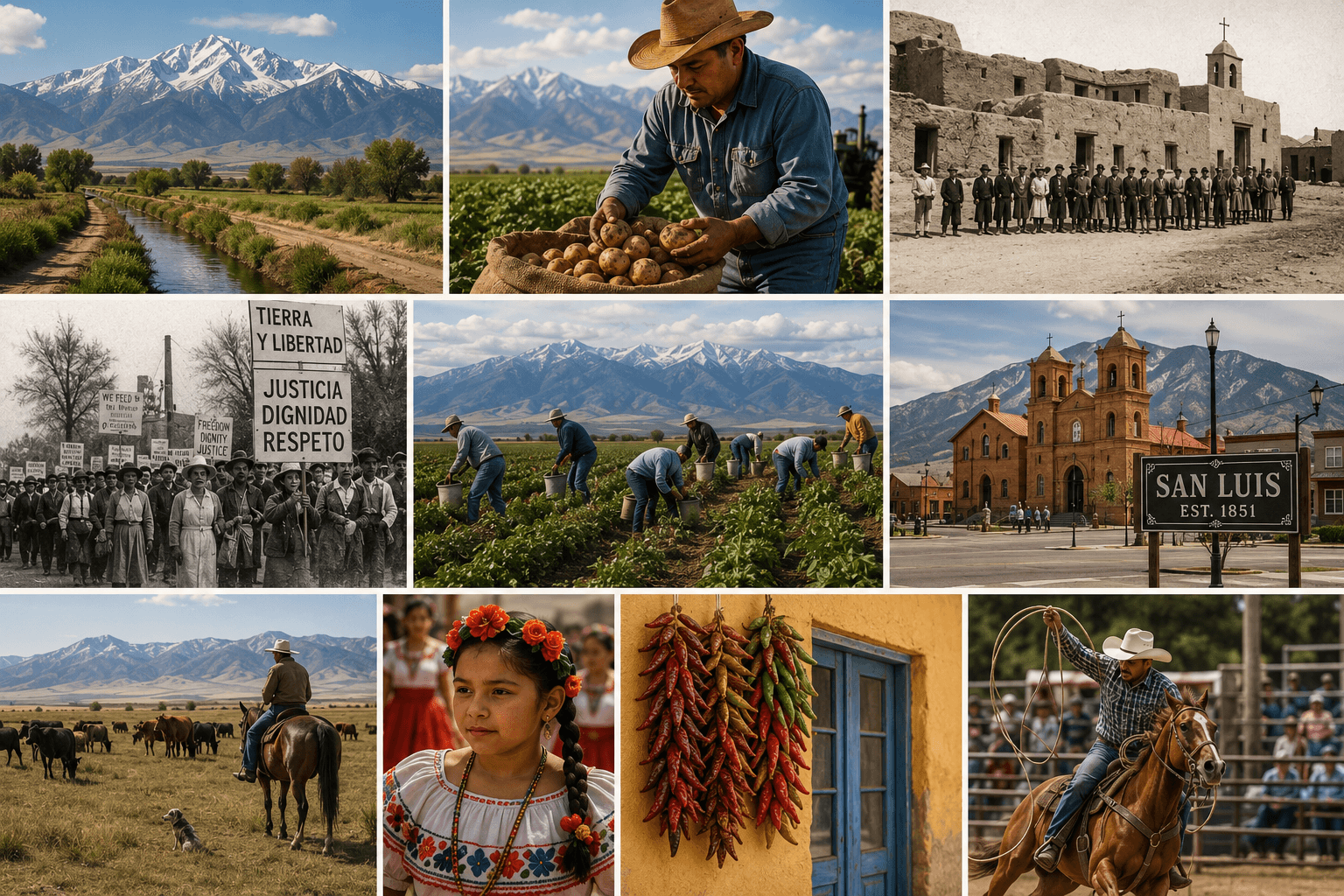 |
San Luis, Colorado's oldest continuously inhabited town, was founded in 1851 by Hispanic settlers from northern New Mexico, cementing its role as a beacon of Latino heritage.
Generations of Latino families have shaped the San Luis Valley, introducing agricultural traditions and establishing vibrant, lasting communities.
Today, San Luis is home to about 560 residents, with Latinos making up over 80%. This enduring presence reflects the vital influence of Latino culture across the region.
From the labor-intensive sugar beet fields of the early 1900s to modern roles in agriculture, tourism, and construction, Latino workers have fueled the valley’s economic growth.
Yet, economic challenges persist, including low median incomes and a high poverty rate, underscoring ongoing disparities.
Still, local resilience shines as second-generation Latinos pursue higher education and new careers, weaving hope and progress into the heart of the community’s future. Read More... |
 |
 |
 |
Green Chile Corn Chicken Wing Rice Bake
Creamy, cheesy, hearty, and packed with Southwest comfort-food flavor, this baked casserole combines tender chicken wings, jasmine rice, sweet corn, green chiles, and melted Mexican blend cheese into one satisfying meal. Finished with crushed tortilla chips, scallions, and crema, it is perfect for a cool San Luis Valley evening. Ingredients
Chicken Wings
Rice Casserole
Optional Toppings
Instructions
1. Bake the wings. 2. Build the rice mixture. 3. Assemble the casserole. 4. Bake. 5. Finish and serve. |
 |
💡 Answer to Trivia Question: San Luis Valley. |