
The Fight Over La Sierra: A Land Battle Still Shaping the San Luis Valley |
"Unearthing the Roots of Conflict: The Epic Battle for La Sierra's Legacy" |
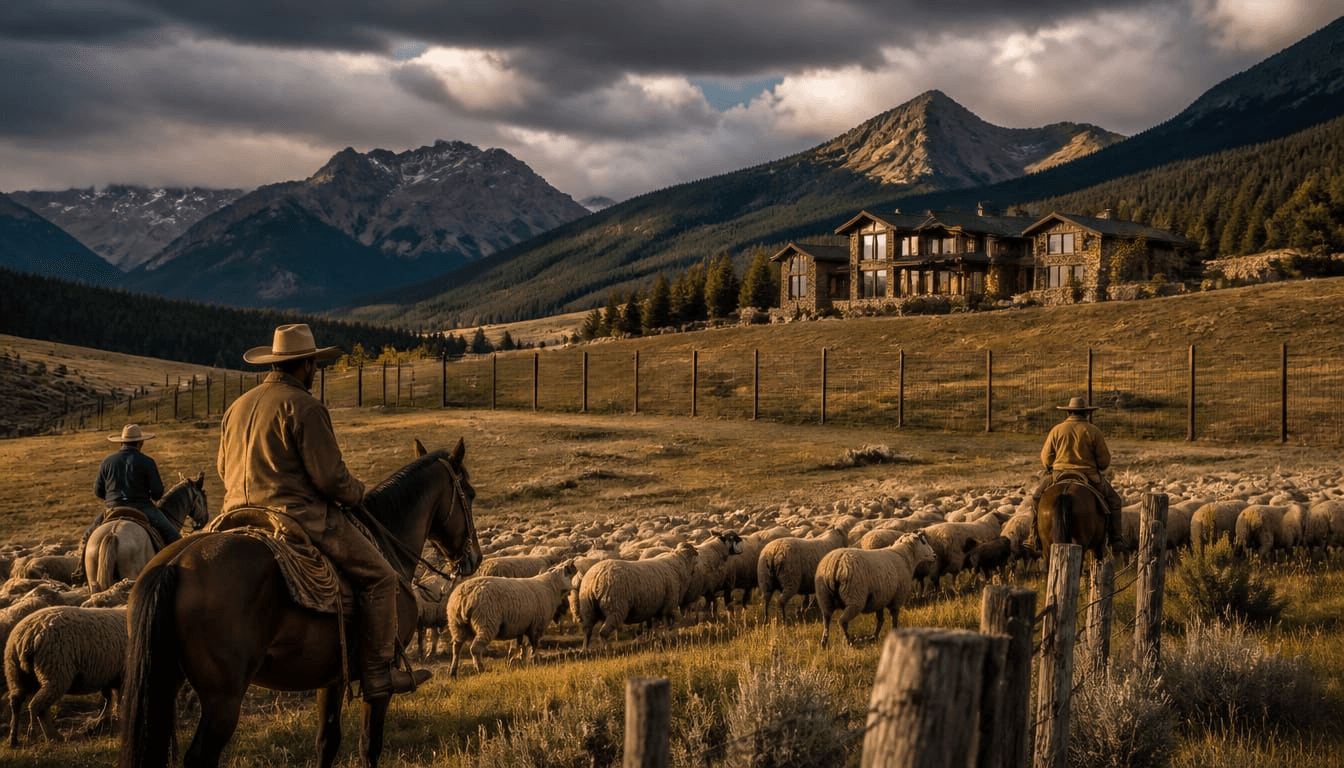
In the mountains east of San Luis, a centuries-old struggle over land, livestock, and legacy is once again making headlines.
What began generations ago as a dispute over historic land rights has evolved into one of Colorado’s most emotional modern battles — pitting descendants of the Valley’s original settlers against billionaire ranch owner William Bruce Harrison.
And in the latest chapter, sheep won.
A recent ruling tied to the historic Cielo Vista Ranch affirmed that descendants of the original Sangre de Cristo Land Grant settlers can continue grazing sheep and cattle on portions of the land known locally as “La Sierra,” despite objections connected to Harrison’s new luxury mountain home.
A Conflict Older Than Colorado
The roots of the battle stretch back to the 1844 Sangre de Cristo Land Grant, established when this region was still part of Mexico. Families settling the area were promised access to the mountain lands for grazing livestock, gathering firewood, collecting timber, and supporting daily life.
Those rights became central to the culture and identity of southern Colorado’s Hispano communities. Over time, ownership of the enormous ranch changed hands, eventually becoming the privately owned Cielo Vista Ranch — an 83,000-acre property that includes forests, alpine meadows, and Culebra Peak.
But descendants of the original settlers never stopped fighting to preserve the access rights they believed were guaranteed to their families generations earlier.
The Mansion, the Fence, and the Sheep
Tensions escalated after Harrison purchased the ranch in 2017. In recent years, controversy grew around a miles-long, 8-foot-tall fence built along portions of the ranch. Critics argued the fence disrupted wildlife movement, affected water flows, interfered with traditional access, and changed the character of the region.
The dispute intensified further when Harrison sought a protected buffer zone around a newly built 7,000-square-foot mountain home and associated buildings. Ranch representatives argued nearby grazing created concerns over noise, odors, predators, and privacy.
Local land-rights advocates opposed the request, saying grazing livestock on La Sierra is not simply an economic activity — it is part of a centuries-old cultural tradition.
After a multiday hearing in Costilla County, a special master ruled largely in favor of the land-grant heirs. The ruling allows continued livestock grazing near the property, while limiting firewood gathering within a smaller buffer area surrounding Harrison’s home.
A Symbol of the Changing West
The Cielo Vista conflict has become symbolic of a larger struggle across the rural American West: wealthy private landowners seeking privacy and control, and long-established agricultural communities fighting to preserve traditional ways of life.
In Costilla County and across the southern Valley, many families still see La Sierra as part of their heritage. Grazing sheep in the high country is tied to family history, cultural survival, and identity itself.
At the same time, supporters of private landowners argue there are real concerns involving security, conservation, liability, and property management.
The fight has also led to political action. Colorado lawmakers approved legislation giving local governments more authority to regulate disruptive fencing projects after backlash over the ranch fence controversy.
Why the Valley Keeps Watching
For outsiders, the story may appear to be a simple property dispute. But for many in the San Luis Valley, this fight cuts much deeper. It touches on ancestry, culture, grazing traditions, water, land access, and the survival of rural communities whose roots predate Colorado statehood itself.
And as new court rulings continue to emerge, one thing remains clear: In the San Luis Valley, land is never just land. |
0 Comments
Join the conversation
Be the first to comment
Share your thoughts above.