The First Settlers of the San Luis Valley |
Uncovering the untold stories of the pioneers who shaped the San Luis Valley - a forgotten chapter in American history. |
Long before towns, highways, or irrigation pivots dotted the landscape, the San Luis Valley was home to Native peoples who lived with the rhythms of the land for thousands of years. The Ute people, along with tribes such as the Navajo, Apache, and Comanche, used the valley seasonally for hunting, trade, and travel.
The first Europeans to enter the region were Spanish explorers in the late 1500s. In 1598, an expedition led by Juan de Oñate passed through the valley, claiming the Rio Grande watershed for Spain. However, despite early exploration, permanent settlement did not take hold for more than two centuries. The valley remained largely untouched due to its harsh climate, remote location, and conflicts with Native tribes.
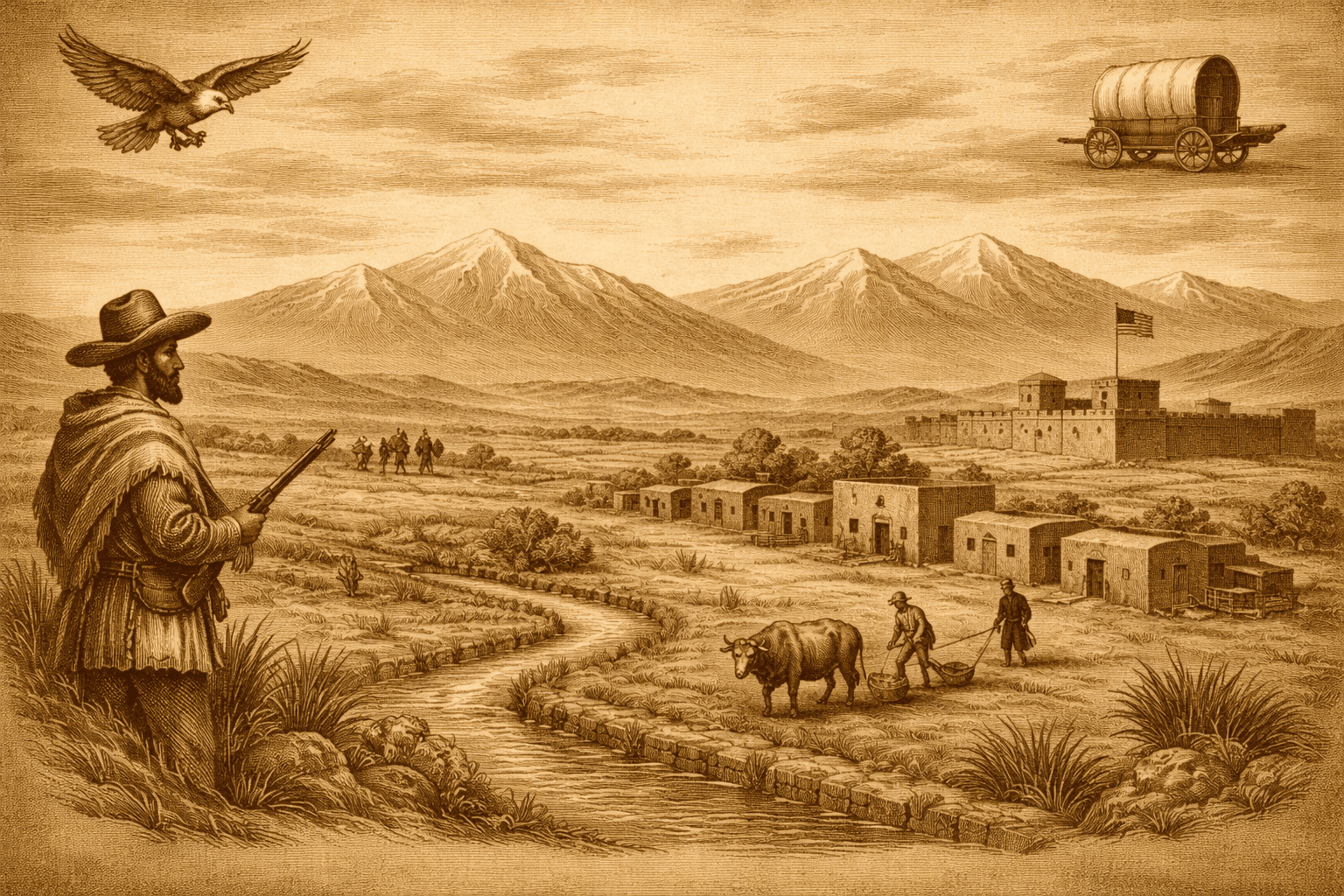
Everything changed in the mid-1800s. After Mexico gained independence from Spain and later ceded the region to the United States in 1848, land grants opened the door for settlers to move north from New Mexico. In 1851, Hispanic settlers from the Taos area established the town of San Luis along the Culebra River—the first permanent European settlement in what is now Colorado.
These early settlers brought with them a deep sense of community and a system of shared resources. They constructed acequias—community irrigation ditches—that allowed them to farm the dry valley floor. The San Luis People’s Ditch, built in 1851, remains the oldest recorded water right in Colorado.
Life was not easy. Settlers faced a rugged environment, limited water, and ongoing tensions with Native groups. To provide protection, the U.S. Army established forts such as Fort Massachusetts and later Fort Garland. Despite these challenges, small villages began to spread along the valley’s rivers and streams, forming the foundation of many communities that still exist today.
What makes the San Luis Valley unique is that many families living here today can trace their roots directly back to these original settlers. Their traditions—farming practices, architecture, language, and culture—continue to shape the identity of the valley.
The story of the first settlers is not just history—it’s a living legacy still visible across the San Luis Valley today. |
0 Comments
Join the conversation
Be the first to comment
Share your thoughts above.