
Frank V Flohr
Jul 7, 2026
ISSUE #23 · TUESDAY, July 7, 2026
Drought & Fire Danger Grip the Valley, Colorado's Oldest Rodeo Turns 104 & The Fastest Animal in the Valley Might Be in Your PastureStage 2 fire restrictions are in effect, the Ski Hi Stampede is this week, and the pronghorn have been here longer than we have 🔥🤠🐾 TRIVIA QUESTION ❓
The pronghorn is the fastest land animal in North America — but how fast can it actually run at top speed? And here's the harder part: what's the scientific name of its family, a group found only in North America that once had 12 different species and now has just one? (Answer at the bottom!) |
Good Tuesday morning from the San Luis Valley, where this week the land is dry, the sky is watching, and the best rodeo in Colorado is four days away.
Stage 2 fire restrictions are in effect across most of the Valley right now, and this week we're taking a serious look at what this drought is actually doing to farmers, ranchers, and communities who are trying to hold on through one of the driest summers in recent memory.
We're also celebrating something that has survived 104 years of Valley summers — the Ski Hi Stampede, which returns to Monte Vista this Thursday and runs through Sunday.
And we're spending some time with the animal that's been running across the Valley floor since long before any of us got here: the pronghorn, North America's speed champion and one of the Valley's most iconic residents.
Plus: an olive oil shop in Creede that shouldn't exist but absolutely does, a tiny Alamosa County community that lives in the shadow of the tallest dunes in North America, and a rural Rio Grande County neighborhood from 1908 that had a debating society, a schoolhouse, and a Tug of War team — but never made it onto the map.
Let's go. 🌄 |
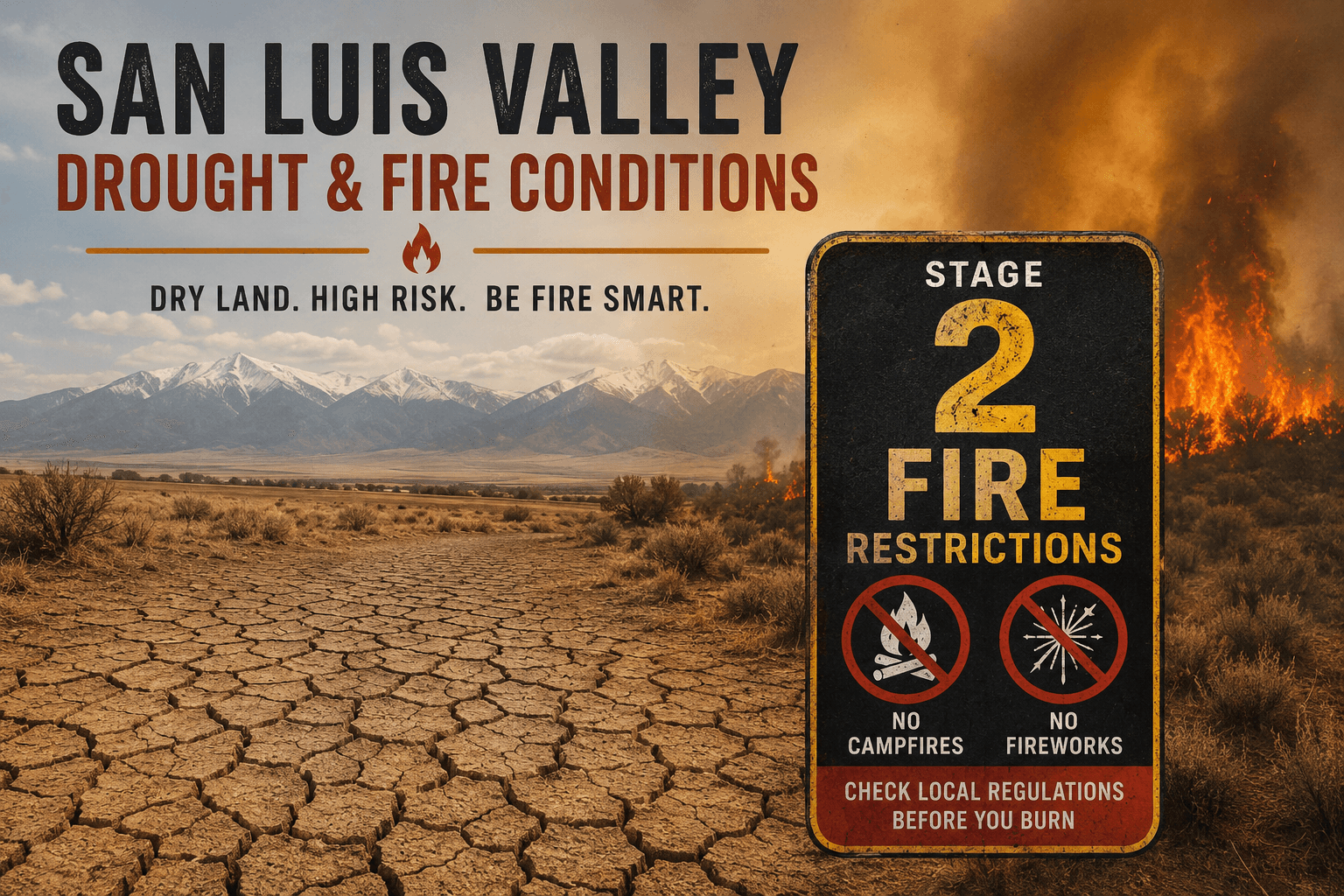
Rio Grande County is under Stage 2 fire restrictions after Sheriff Anne Robinson’s order on June 29, quickly followed by the San Juan National Forest doing the same.
Several counties across the San Luis Valley now face strict fire rules, with authorities warning that even a single spark could lead to a devastating wildfire threatening homes, crops, and livestock.
Ongoing drought has left soil and grasses extremely dry, while low irrigation flows worsen the risk.
Alamosa’s Fourth of July fireworks, among others, are canceled.
The area is officially a Natural Disaster due to drought, opening up emergency loan options for farmers and ranchers through the USDA Farm Service Agency.
Stage 2 rules ban open flames, campfires, charcoal grilling, and all fireworks.
Check local restrictions before heading outdoors to protect both land and community. Read More... |
 |
This newsletter sponsored by The Village Pub |
Pizza and Spirits, Saguache |

Saguache is not a town you expect to find a great pizza — or a cinema, or an artisan cheesecake company — but Joel Johnson had other ideas.
Johnson is the founder behind three connected businesses that have quietly transformed a corner of downtown Saguache: The Village Pub, Pizza and Spirits, The Cozy Castle Cinema, and Cobblestone Cheesecake. The pub is the anchor, and it's a good one.
The pizza is made on hand-crafted dough with house sauces and a menu that runs from the Southwest Pizza to a jalapeño popper chicken bacon ranch, with calzones and salads rounding things out.
There are vegetarian and vegan options, a kids' menu, and local beers, wine and spirits. The cheesecakes — made through Johnson's own Cobblestone Cheesecake operation — are the kind of thing people mention unprompted when they talk about this place.
If you're passing through Saguache on a weekend, it's worth timing your drive around a stop here. Not many towns this size have someone building all of this from scratch.
📍 401 4th Street, Saguache, CO 81149
Tell them The San Luis Valley Beat sent you! 💛 |
|
 |
 |
Preserving the stories of places time forgot. |
 |
Twin Mountain: The Community That Had a Schoolhouse, a Debating Society, and a Tug of War Team — But Never Made the Map
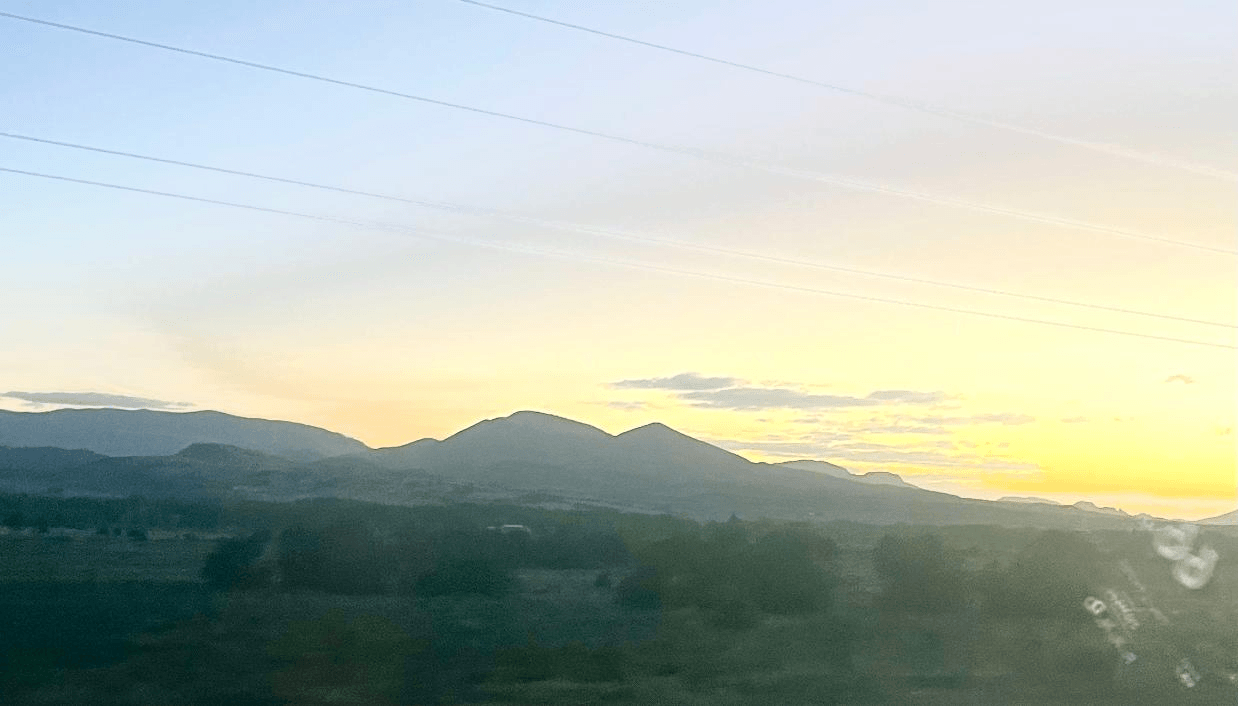
Somewhere west of Del Norte, in the rolling terrain that rises toward the San Juan Mountains, there was once a neighborhood. Not a town with a post office and a main street, but a neighborhood in the truest Valley sense — a cluster of homesteading families who shared a schoolhouse, looked out for each other's horses, and showed up together at the Del Norte Fourth of July.
They called it the Twin Mountain section, named for the mountain that rose above their ranches and fields, and for a handful of years in the first decade of the 20th century, they had enough of a community to fill the Rio Grande County newspapers with their news.
The Monte Vista Journal ran a regular column called "Twin Mountain and Granger News" — the kind of column that recorded the texture of rural life in fine-grained detail.
Carl Beiger lost a valuable horse one week. The Misses Velita and Edna Pfeiffer spent a few days at their Granger home. Mrs. Henry Hanna and children visited the Gap.
And there would be a basket social at the Twin Mountain schoolhouse on Friday evening, August 17 — "Come, everybody." These were not the headlines of a mining boomtown or a railroad hub. They were the notes of a farming community living its life, quietly, in the foothills west of Del Norte.
The Twin Mountain Debating Society was formal enough to publish its topics in the San Juan Prospector. In March of 1908, they took up the question of whether Washington was a greater general than Napoleon. The speakers were named. The event was announced. Somewhere out there in the Twin Mountain section, ranchers and farmers and their families gathered on a weeknight to argue about military history, which is perhaps the most quietly dignified thing a homesteading community can do.
By July of 1911, the community was still going strong enough to field a team in the Del Norte Fourth of July celebration — five o'clock, Tug of War, Pinos Creek Men versus Twin Mountain Men.
A 1908 article in the Prospector noted that contractors working on the state bridge west of Del Norte had been delayed by high water, and that it was hoped the bridge would be completed "so that the farmers of the Twin Mountain section may be able to load their produce at the Hanna switch this fall."
They were farming land, hauling produce to the railroad, competing in county celebrations, and holding debates. They had a schoolhouse. They had a Ladies Aid Club.
What they never had was a post office. And without a post office, you don't exist in the historical record the way towns do. No Twin Mountain appears on the county map. No Twin Mountain shows up in the official lists of Rio Grande County communities. The families drifted, the school consolidated, the homesteads changed hands. The mountain is still there. The neighborhood is not.
"They debated Napoleon, hosted basket socials, and pulled a rope at the county Fourth of July. They just never made it onto the map — which is how most neighborhoods end."
Source: Colorado Historic Newspapers Collection →
A special thanks to reader Cathy G. for bringing this Valley History to our attention. |

The Ski Hi Stampede returns to Monte Vista this week, reviving a tradition that began in 1919 when local ranchers first gathered to celebrate their ranching heritage through rodeo.
Drawing more than 10,000 visitors to a town of just under 5,000, the event remains a cornerstone of the San Luis Valley’s summer, defined by its close-knit community and enduring spirit.
This year, from July 9–12, Colorado’s oldest pro rodeo offers a packed lineup: a Thursday concert with Chace Rice and Joe Nichols, morning parades, and a carnival running daily.
Afternoon amateur events let local riders compete, while PRCA-sanctioned rodeos showcase top-tier cowboys in events like bareback riding, steer wrestling, and bull riding.
Evening dances and a Sunday Christian Cowboy Service round out the festivities. The Stampede continues, a testament to Monte Vista’s volunteer spirit and ranching pride. Read More... |
 |
Great Sand Dunes Association
The Great Sand Dunes are one of the most visited places in Colorado — over half a million people make the drive to Mosca each year to stand at the base of 750-foot dunes and try to make sense of what they're looking at.
The Great Sand Dunes Association is the nonprofit partner to Great Sand Dunes National Park & Preserve, and it's the organization that makes the educational and interpretive side of that experience possible.
The Association funds junior ranger programs, educational resources, research partnerships, and the bookstore and visitor center programs that help visitors understand what they're actually seeing — which is one of the most geologically complex and ecologically rich landscapes in the American West.
They also support the park's science and stewardship work, helping document and protect the dunes, the surrounding wetlands, and the Sangre de Cristo wilderness that frames the whole scene.
If you've never been to the dunes in summer, the best time to go is early morning or evening — Medano Creek typically runs strongest in May and June, and the sand surface temperature in afternoon July sun can exceed 150°F. The dunes are extraordinary at any time of year, and the Association helps make sure that's still true for the generations coming after us.
🌐 greatsanddunes.org |
 |
🏘️ Discover Mosca
The Quiet Gateway to the Tallest Dunes in North America
There is a spot on Colorado Highway 17 in Alamosa County where the road bends east and the Sangre de Cristo Mountains fill the windshield in a way that makes drivers slow down involuntarily.
The dunes appear in that same view — an unlikely golden mass rising at the foot of 14,000-foot peaks, looking like something dropped there from a different planet. The town at the entrance to all of it is Mosca, and it has been quietly occupying this position — gateway to something extraordinary — for well over a century.
The name comes from Mosca Pass, the historic crossing through the Sangre de Cristos above town, which was named for Luis de Moscoso Alvarado, a Spanish explorer who passed through the region in the 16th century.
The pass was used by Ute and earlier peoples for thousands of years before Spanish colonizers arrived, and evidence of human presence at and around the dunes — the oldest layer of which dates back nearly 11,000 years — makes Mosca one of the longest continuously visited landscapes in what is now Colorado.
In the 1930s, the community built its Mosca Community Hall and Gymnasium with support from New Deal programs — an adobe and wood structure designed to serve the local school district and provide a gathering place for everything from plays to political speeches.
The building was damaged by fire in 1947, but the Hall itself remained central to community life. The Trujillo Homestead nearby stands as a tangible reminder of the Hispanic settlers who established roots in this corner of Alamosa County in the latter half of the 19th century, building the kind of quiet, persistent agricultural presence that shaped the entire Valley.
Today Mosca is small — unincorporated, sharing a combined population with neighboring Hooper of just over 1,000 — and that's largely what it's always been: a working community at the edge of something bigger.
The Great Sand Dunes National Park and Preserve sits just east of town. The San Luis Lakes State Wildlife Area stretches to the west. Zapata Ranch, one of the oldest and largest cattle ranches in the region and now a working bison ranch managed by the Nature Conservancy, borders the dunes to the south.
Mosca doesn't compete with any of it. It just keeps doing what it has done for generations — living quietly in one of the most spectacular landscapes in Colorado.
🧠 Did You Know? The sand in the Great Sand Dunes doesn't stay put — it's in constant motion, carried northeast by the prevailing winds and then returned by Medano and Sand Creeks, which flow seasonally around the base of the dune field. The dunes are a closed system, continuously recycling the same sand for thousands of years. |
 |
This week's big one: the Ski Hi Stampede runs July 9–12 in Monte Vista — four days of parades, carnival, PRCA rodeo performances, and post-rodeo dances at Colorado's oldest professional rodeo. Thursday evening opens with a concert featuring Chace Rice and Joe Nichols. Tickets and full schedule at skihistampede.com.
Coming up July 17–19, Logger Days returns to South Fork — competitive chainsaw carving, ax throwing, two-man crosscut sawing, kids' log rolling, pie eating, and a Saturday evening bull riding rodeo by Burris & Sons Bucking Bulls. Free to attend. southfork.org
Mark your calendar for the end of the month: the San Luis Valley Fair runs July 30 through August 9 at the Ski Hi Complex in Monte Vista — livestock shows, 4-H exhibits, carnival, entertainment, and all the fair food the Valley can produce. It's the biggest community gathering of the summer and a Valley tradition worth planning around. facebook.com/slvfair |
 |
 |
The Fastest Animal in North America Has Been Running Across the Valley Floor Since Before Colorado Was a State
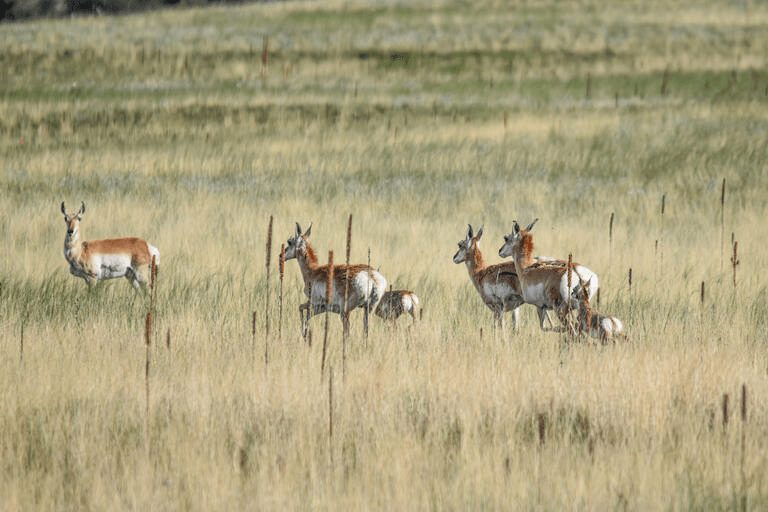
If you've driven CO-17 between Moffat and Alamosa, or cut across the flats between Monte Vista and the dunes, you've probably seen them — a flash of white rump, a head that comes up fast, and then a burst of speed that makes everything else on the landscape look slow.
The pronghorn has been doing that in the San Luis Valley since long before any of us arrived, and it remains one of the most extraordinary animals on the continent even now, when most people drive past without quite realizing what they're looking at.
The numbers are worth sitting with. A pronghorn can reach 55 miles per hour. It can sustain 40 miles per hour for miles — not a sprint, a cruise. No predator in North America can catch a healthy pronghorn in open terrain, which is why pronghorn evolved on the open plains rather than the forest edge.
They have the largest eyes relative to body size of any North American ungulate, with a 320-degree field of vision. Their windpipe, heart, and lungs are oversized for their body, built for endurance rather than a single explosive effort.
They are speed machines, and the San Luis Valley — wide, open, unobstructed — is exactly the habitat they were built for.
Colorado Parks and Wildlife manages two pronghorn herds specifically in the Valley: the Northern San Luis Valley herd and the Southern San Luis Valley herd. Statewide, Colorado's pronghorn population sits around 73,000 animals, with the southern part of the state — including the Valley — holding a significant share.
CPW has been placing GPS collars on 120 to 140 Valley pronghorn to track their winter movements and habitat use, building the research base needed to manage the herds as land use and drought conditions change.
Here is the thing about pronghorn that most people don't know: they are not antelopes. The name "pronghorn antelope" stuck because early European settlers used the vocabulary they had, but pronghorn belong to their own family — Antilocapridae — found only in North America, with no living relatives anywhere else on Earth.
Twelve species once roamed this continent; today only one survives. What you're seeing when you watch a pronghorn cross the Valley floor is the last of a lineage that evolved here over millions of years, running at 55 miles an hour, looking at you with those enormous eyes, and clearly not particularly concerned.
|
💡 Tip of the Day: With Stage 2 fire restrictions in effect across much of the Valley, now is a good time to create or update a home defensible space — clear dead vegetation, leaves, and debris within 30 feet of your home. A few hours of work now can make a significant difference if fire approaches. Colorado State Forest Service has free resources and can connect you with local assistance programs. |
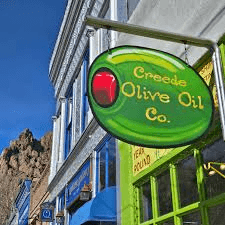
There are not a lot of businesses in Creede, Colorado that have been operating since 2010. There are even fewer that describe themselves as a gourmet olive oil and balsamic vinegar tasting gallery. The Creede Olive Oil Company is both, and it is exactly as unexpected and delightful as that sounds.
Dave and Becky Liss packed up and left Austin, Texas at the turn of the millennium, landed in Creede, and have been building something here ever since. Becky started selling handmade jewelry out of a cabin on the south end of town before the couple opened the shop on Main Street in 2010 — the first business of its kind in southern Colorado.
Today the store carries more than 90 extra virgin olive oils from around the world, dark and white balsamics from Modena, Italy, baked goods from Sunflour Café down the valley in Monte Vista, premium bison from northern Colorado, and Pappardelle's Pastas from Denver.
They also carry kitchen gifts, pantry staples, and olive oil skin care products, and they'll put together a custom gift basket that will genuinely impress whoever receives it.
One more thing worth knowing: the Creede Olive Oil Company is one of the very few businesses in Creede that stays open year-round. Dave and Becky are there when the summer tourists are gone and the canyon is quiet. That kind of commitment to a small mountain town is its own story.
📍 104 N. Main Street, Creede, CO 81130
Tell them The San Luis Valley Beat sent you! 💛 |
|
 |
 |
🍽️ San Luis Valley Potato Salad with Roasted Green Chile
This is the potato salad the Valley deserves — built around the crop that defines this place, with roasted green chile in place of relish and a dressing that actually has something to say for itself. Make it the night before; it gets better as it sits.
INGREDIENTS
3 lbs San Luis Valley red or Yukon Gold potatoes, scrubbed and cut into 1-inch chunks
INSTRUCTIONS
1. Place potato chunks in a large pot, cover with cold salted water, and bring to a boil. Cook until just tender when pierced with a fork — about 12 minutes. Do not overcook; you want them to hold their shape. Drain and spread on a baking sheet to cool completely. 2. While potatoes cool, whisk together the mayonnaise, sour cream, apple cider vinegar, mustard, garlic powder, and smoked paprika in a large bowl. Season generously with salt and black pepper. 3. Add the cooled potatoes to the bowl and fold gently to coat. Add the roasted green chile, bacon, hard-boiled eggs, green onions, and celery. Fold again until everything is combined, being careful not to break up the potatoes. 4. Taste and adjust salt and pepper. Cover and refrigerate for at least 2 hours, or overnight. 5. Serve cold, garnished with a little smoked paprika and fresh cilantro if you like. Pairs well with grilled carne asada, barbecue ribs, or anything coming off a grill — and it holds up well outdoors on a summer table.
Makes 8–10 servings. Keeps refrigerated for 3 days. |
 |
💡 ANSWER TO TRIVIA QUESTION: . A pronghorn can reach a top speed of 55 miles per hour — making it the fastest land animal in North America and the second fastest in the world, behind only the cheetah. But unlike the cheetah, a pronghorn can sustain speeds of 40+ miles per hour for several miles. And the scientific family name? Antilocapridae — a group unique to North America that once included 12 species. Today, the pronghorn you see crossing the San Luis Valley floor is the only surviving member of that entire family. They've been running this landscape for millions of years. They're very good at it.
|