
Before Colorado Was a State, These Farmers Were Already Watering Their Fields |
Uncovering the untold history of Colorado's pioneering farmers and their irrigation innovations. Keep reading for a glimpse into our state's agrarian roots. |
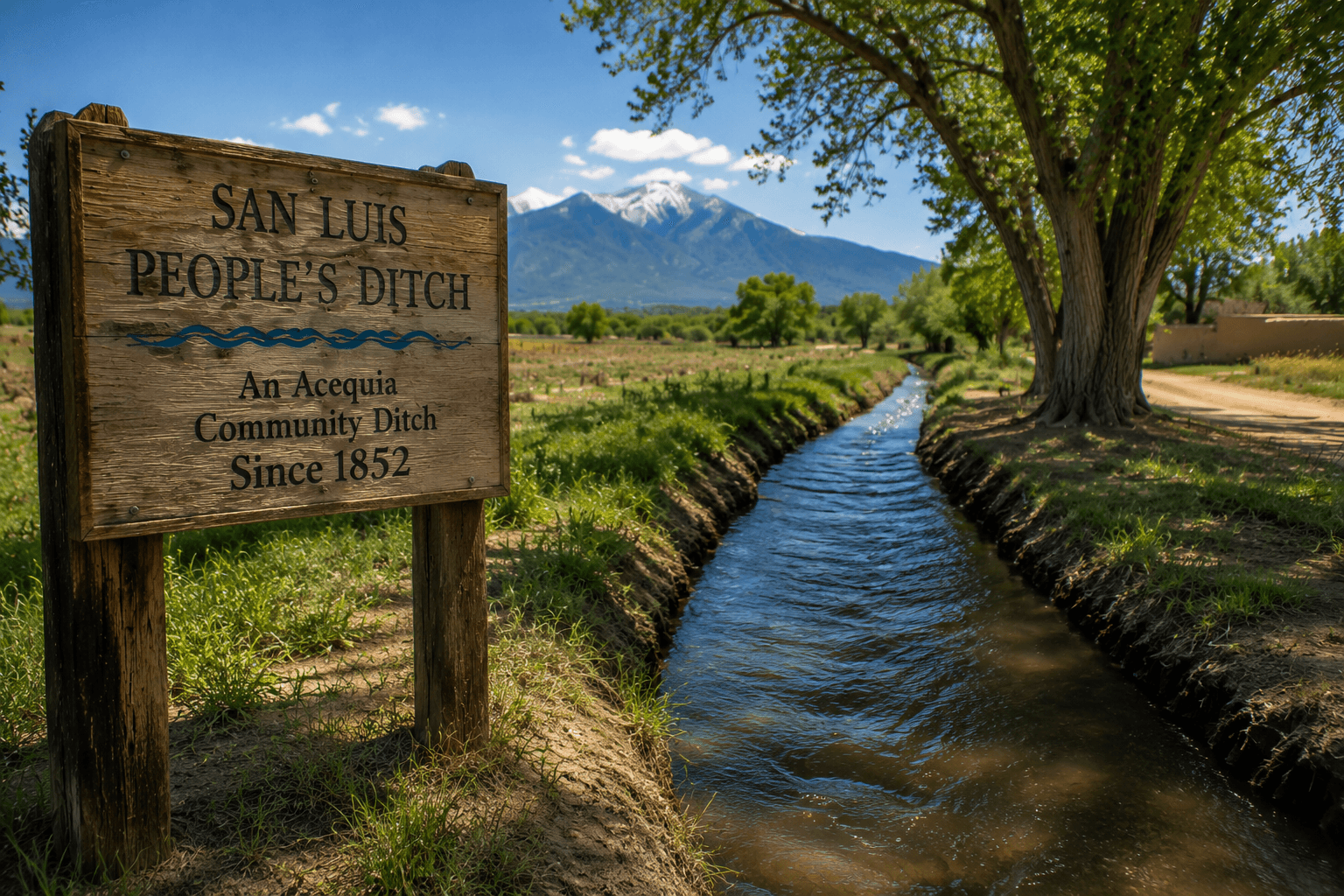
On April 10, 1852 — twenty-four years before Colorado achieved statehood, and just 370 days after the town of San Luis was established — a group of ten Hispano settlers put shovels in the ground along Culebra Creek and began digging. They were building an acequia: a communal irrigation canal, a tradition carried north from New Mexico and Spain over centuries of farming in the high desert. When they were done, they had created what is now known as the San Luis People's Ditch — and it holds court decree priority No. 1, the oldest adjudicated water right in the entire state of Colorado.
An acequia is more than a ditch. The word comes from Arabic, carried into Spanish during the Moorish era, and the concept traveled across the Atlantic and up through New Mexico into Colorado with the first Spanish-speaking settlers. Every landowner along an acequia is a parciante — a member of the community with a share of the water.
There is no bidding, no market pricing, no buying your neighbors out. When water is scarce, every parciante takes a proportional cut. The ditch itself is managed collectively, maintained collectively, and governed collectively. In a valley where water has always been the difference between survival and ruin, the acequia system embedded a philosophy of shared fate into the landscape.
The San Luis People's Ditch runs 4 miles from Culebra Creek and today provides water for about two dozen farms — the same narrow vara strips the founders laid out in 1852, where each family would have access to water for a garden, a pasture, and domestic use. The vara strips were surveyed to guarantee everyone a share of the creek, not just those lucky enough to hold the upstream end.
The next time someone tells you Colorado's water history begins with mining or statehood, you can set them straight. It begins with a group of farmers from New Mexico who built something right, built it to last, and built it to share — and whose ditch is still carrying water to the same land 174 years later.
|
1 Comment
Join the conversation
its nice that this artcle is in a legit place becoude as the decendent of the pacheco family the countys i have to address this information on to rectify any and a;; thier bad faith as a county administration will do ti try to keep the water rights and land to them selves my onvestigation on the county invoves facts not lies as they have to put in to keep thier county alive as i have the documents from the county of huerfano colorado where they are buried todasy i will have the town name changed and the administration off the private estate once i have the courts undersatnd who i am and what i represent as the judgement i st wait but in doing so i let every one know what they are fighting and really its a fight for thier own selves not mine as they adressed only faulse statments and i have the deathe certs they did not record in the records dept infact ignacio pachecos death cert i found in the recorders own vault and armenios and josephe and josephs son armenio pacheco jr as he is my father\ the name change of the family the county put in a book in the library under lock and key well the name jose in the records have my family as jose ignacio and jose armenio pacheco just like the book did by molly baily from la veta co. also the maldondonaado name has altered the headstone of franciscos by addind a letter a to it thinking the records would flag this as not being the true pascheco liniage the county let them do the ultimate and stole my family land as the administrator eoday i do not have any respect for thr county alterations when a county has the land patent of my familys and changes it from a section 25 to a section 14 has a legal merrit not when huerfano county judges has land on the pacheco estate ih no they as o wait ignored the subject of the section shift and cet an acuusation with a woman who lied under oauth and the judge then has me with a rubber stamp signature from the judge that i need an escort now to do my job welll as i wait and wait for the judgment from the district judge i will tell the world how the county that after the murder of juan b pacheco the county put up a land sale threw out the county and put a fake probate together to get the land and water and with no judge in the probate case yes thats right no judge in a probate case the couty recorders just began selling land that was never thierws in the first place thatnk you so mich and of amy one like to hear more ill be waiting on a corrupted county for a decition of who knows i will have the blm take care of the rest as they will have nothing ronald james pacheco administrator and next of kin of the pacheco estate