Japanese American Farmers |
Discover the untold stories of resilience and success among Japanese American farmers. |
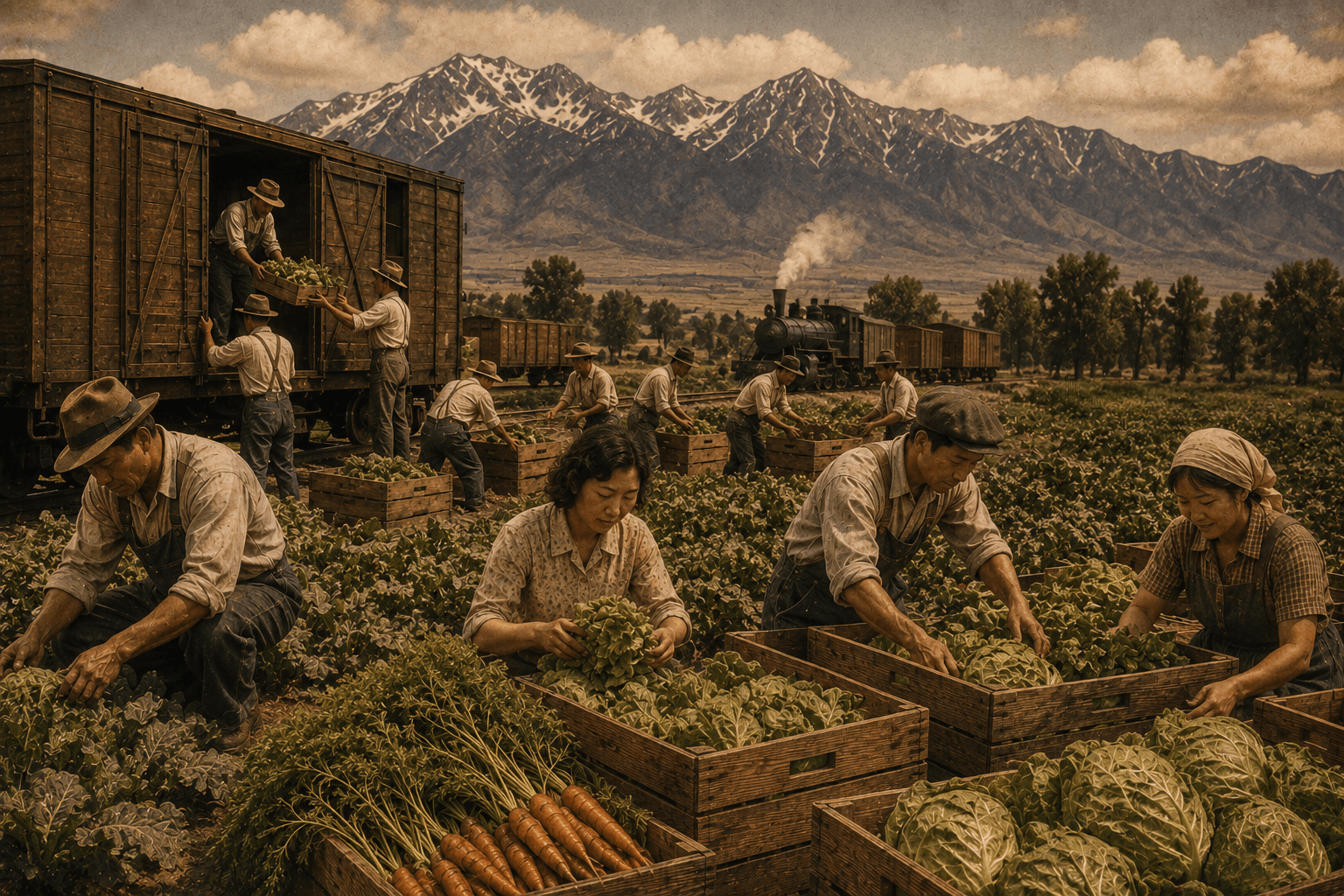
In the 1920s, land sales companies began recruiting Japanese farmers from California to the San Luis Valley, promising fertile high-altitude soil and a chance to build something of their own. Many came. They brought with them a style of farming the Valley hadn't seen before — intensive small-plot truck farming, growing lettuce, spinach, carrots, peas, cauliflower, broccoli, and cabbage for shipment by rail.
Large packing sheds rose up in Fort Garland, Blanca, San Acacio, and La Jara to handle the volume. By the 1930s, the Japanese American community had woven itself into the fabric of the Valley's agricultural economy in ways that are still not widely known outside the region.
In 1936, the community built something lasting: the La Jara Buddhist Temple, constructed for $4,000 raised partly from the farmers themselves and partly from 133 non-Japanese neighbors who contributed to the project. A local rancher named William Braiden donated the land, accepting $1 in exchange to meet legal requirements. The temple was dedicated on February 6, 1937, and became the spiritual and social center of a community that had made the Valley its home.
Then came the war. Executive Order 9066, signed in 1942, didn't send most San Luis Valley Japanese Americans to internment camps — but it reshaped their lives in devastating ways.
They were barred from traveling more than 20 miles from their homes. Cameras and guns were confiscated. They were prohibited from gathering in groups, which meant the temple's doors were shuttered. A community that had spent fifteen years building something together was told it could no longer assemble.
The farmers stayed, worked, and endured. After the war, some families remained in the Valley. The temple still stands in La Jara today, and in 2025, it was nominated for the Colorado State Register of Historic Properties — a formal recognition that the story of Japanese American farmers in the San Luis Valley is part of Colorado's story, not a footnote to it.
Their legacy is at risk of fading with each generation, but the ditch-irrigated fields and the small white temple in La Jara remain as evidence of what they built here.
|
0 Comments
Join the conversation
Be the first to comment
Share your thoughts above.