Frank V Flohr
Jun 23, 2026
ISSUE #21 · TUESDAY, JUNE 23, 2026
The Water Right That Predates Colorado, the River Anglers Won't Tell You About & Alamosa's Railroad Golden AgeThe Valley's oldest ditch is still running, the Conejos is the best trout river nobody talks about, and Platoro had three lives on the same mountain 🌊🎣🚂 TRIVIA QUESTION ❓
By 1890, which San Luis Valley city had become the nation's busiest narrow-gauge railroad hub — with tracks fanning out in every direction and the world's only triple-rail switchyard? |
Happy Tuesday, Valley neighbors! Issue #21 is here, and this week we're going deep on the stories that make the San Luis Valley different from everywhere else.
We're starting with water — specifically the oldest water right in the entire state of Colorado, a 4-mile ditch hand-dug by Hispano settlers in 1852, 24 years before Colorado was even a state. It's still running today.
Then we're heading to the Conejos River, one of the most beautiful and productive trout streams in the southern Rockies — and one that most Colorado anglers haven't discovered yet.
And we're telling the quietly remarkable story of a Japanese American community that put down roots in the Valley during one of the most difficult chapters in American history.
Plus: the ghost town with three lives on the same mountain, the first craft distillery in the San Luis Valley, Alamosa's forgotten era as the railroad capital of the Southwest, and a casino night fundraiser for veterans.
Let's get into it. 🌄 |
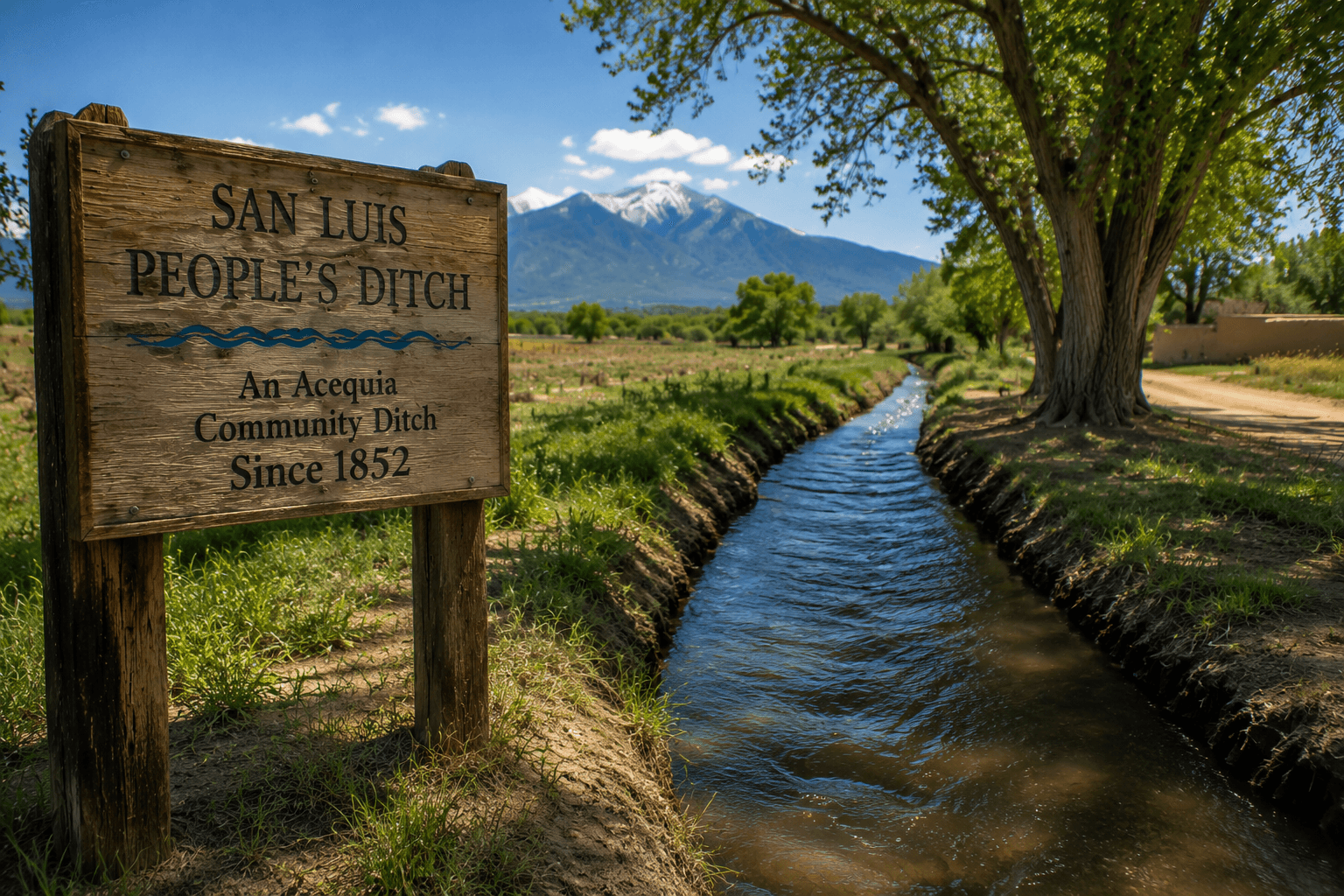
In 1852, just a year after San Luis was founded and decades before Colorado became a state, ten Hispano settlers began digging along Culebra Creek.
They created the San Luis People’s Ditch — Colorado’s oldest court-recognized water right.
This acequia, a tradition brought from Spain and New Mexico, provided a lifeline in the high desert by sharing water communally among landowners called parciantes.
Each parciante received a fair share of water—no bidding, no buying out neighbors—even during droughts.
The ditch, managed and maintained by the community, remains a powerful example of shared stewardship and resilience.
Today, the People’s Ditch still waters about two dozen farms on the original narrow vara strips, ensuring every family’s access, regardless of location.
This living legacy began with local farmers determined to build something lasting—and continues to shape Colorado’s water story to this day. Read More... |
 |
This newsletter sponsored by Mammoth |
More Than Just Great Food |
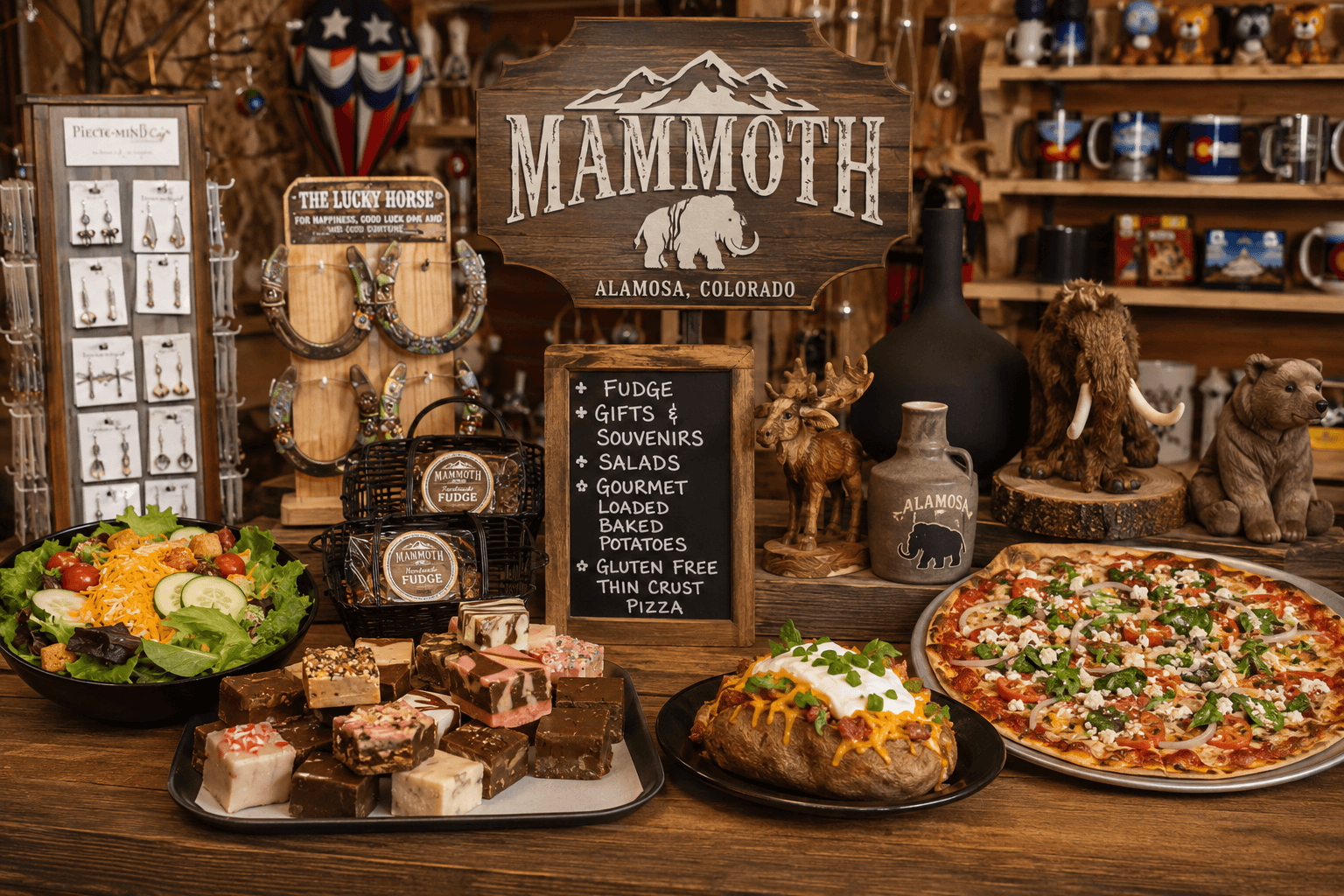
If you haven't stopped by Mammoth in Alamosa lately, you might be surprised by everything waiting inside.Part restaurant, part gift shop, and part specialty food destination, Mammoth offers a little something for just about everyone. Their menu features hearty gourmet loaded baked potatoes, fresh salads, and delicious gluten-free thin crust pizzas that have quickly become customer favorites.If you have a sweet tooth, don't leave without sampling their rich, homemade-style fudge. With a variety of flavors to choose from, it's the perfect treat to take home—or enjoy before you even leave the parking lot.
Beyond the food, Mammoth is filled with unique gifts, Colorado souvenirs, home décor, jewelry, locally inspired items, and fun treasures that make it an enjoyable place to browse whether you're shopping for yourself or looking for the perfect gift. It's the kind of local business where you can stop in for lunch, pick up dessert, and leave with a gift you never expected to find.Whether you're a longtime Valley resident or just passing through, Mammoth is well worth adding to your list of places to visit.**Mammoth** proves that some of the best local businesses aren't just one thing—they're an experience.
Tell them The San Luis Valley Beat sent you! 💛 |
|
 |
 |
Preserving the stories of places time forgot. |
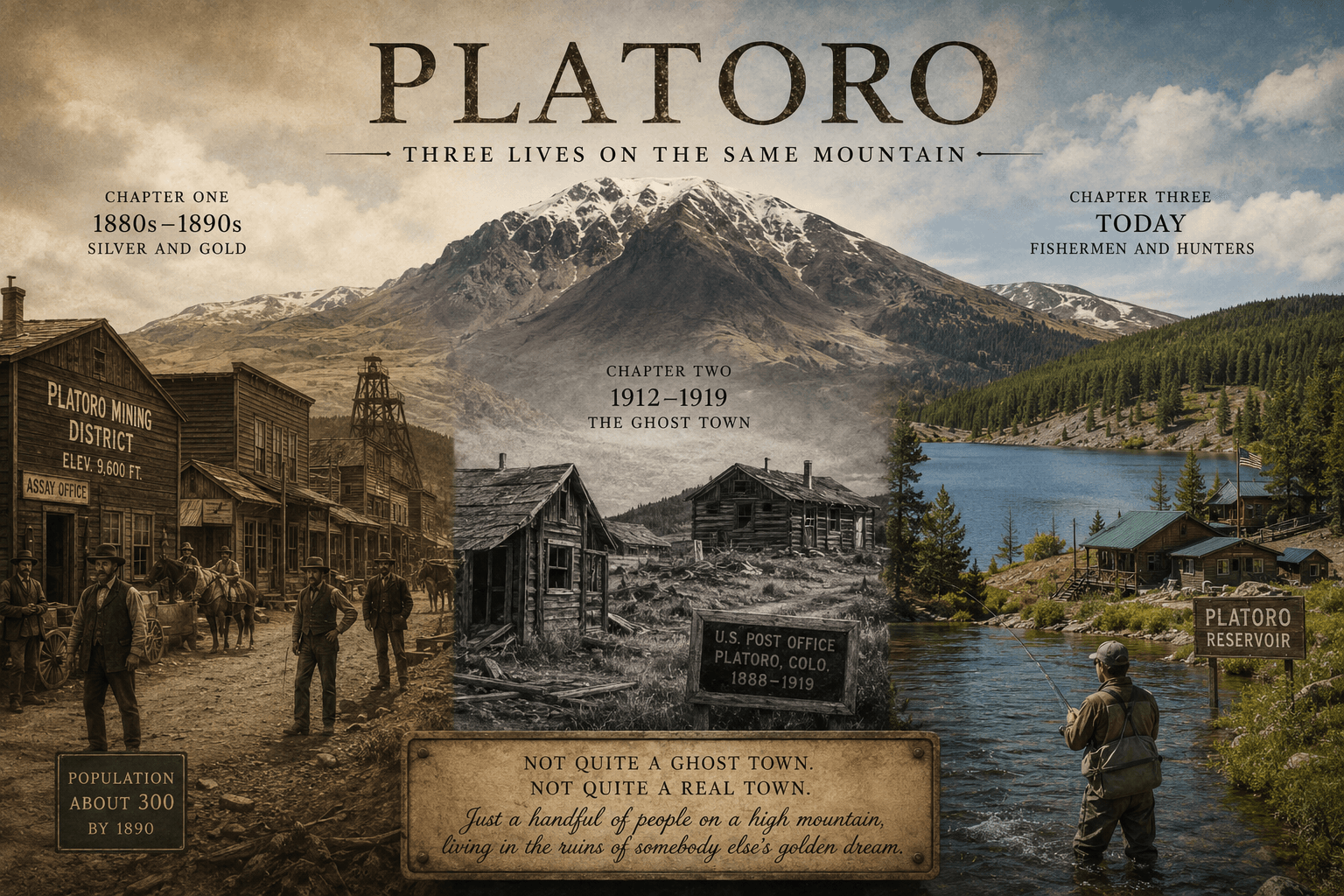 |
Platoro: Three Lives on the Same Mountain
The name says everything: Platoro, from the Spanish words for silver and gold — plata and oro — pressed together into a single word by miners who believed they had found both. At 9,870 feet in the San Juan Mountains of Conejos County, Platoro is one of those Colorado places that has lived and died and lived again, each chapter written by a different kind of hope on the same cold mountain.
The first chapter was silver and gold. The Platoro district had been producing ore since the 1880s, and by 1890 the town had grown to a population of roughly 300.
But it was October 1912 that set the mountain ablaze again: a miner discovered rich gold telluride on the west slope of Klondyke Mountain, about three and a half miles from town. The ore looked remarkably similar to the telluride gold of Cripple Creek — the discovery that had made Cripple Creek one of the richest gold strikes in American history. Word spread fast. Through the spring and summer of 1913, Platoro boomed with the conviction that it was about to become a second Cripple Creek.
It wasn't. The ore played out, as ore tends to do. The post office that had opened in 1888 closed in 1919. The second chapter — the ghost town chapter — was brief and quiet. The mountain was beautiful, but it was empty.
The third chapter was written by fishermen and hunters. Platoro Reservoir, built in the valley below the old townsite, turned the area into a destination for anglers targeting the stocked waters and the wild streams feeding into them.
Cabins and a small lodge cluster around the reservoir today, making Platoro one of those peculiar western places — not quite a ghost town anymore, not quite a real town either. Just a handful of people on a high mountain, living in the ruins of somebody else's golden dream.
"You come for the gold and you stay for the view — which was always worth more anyway."
|
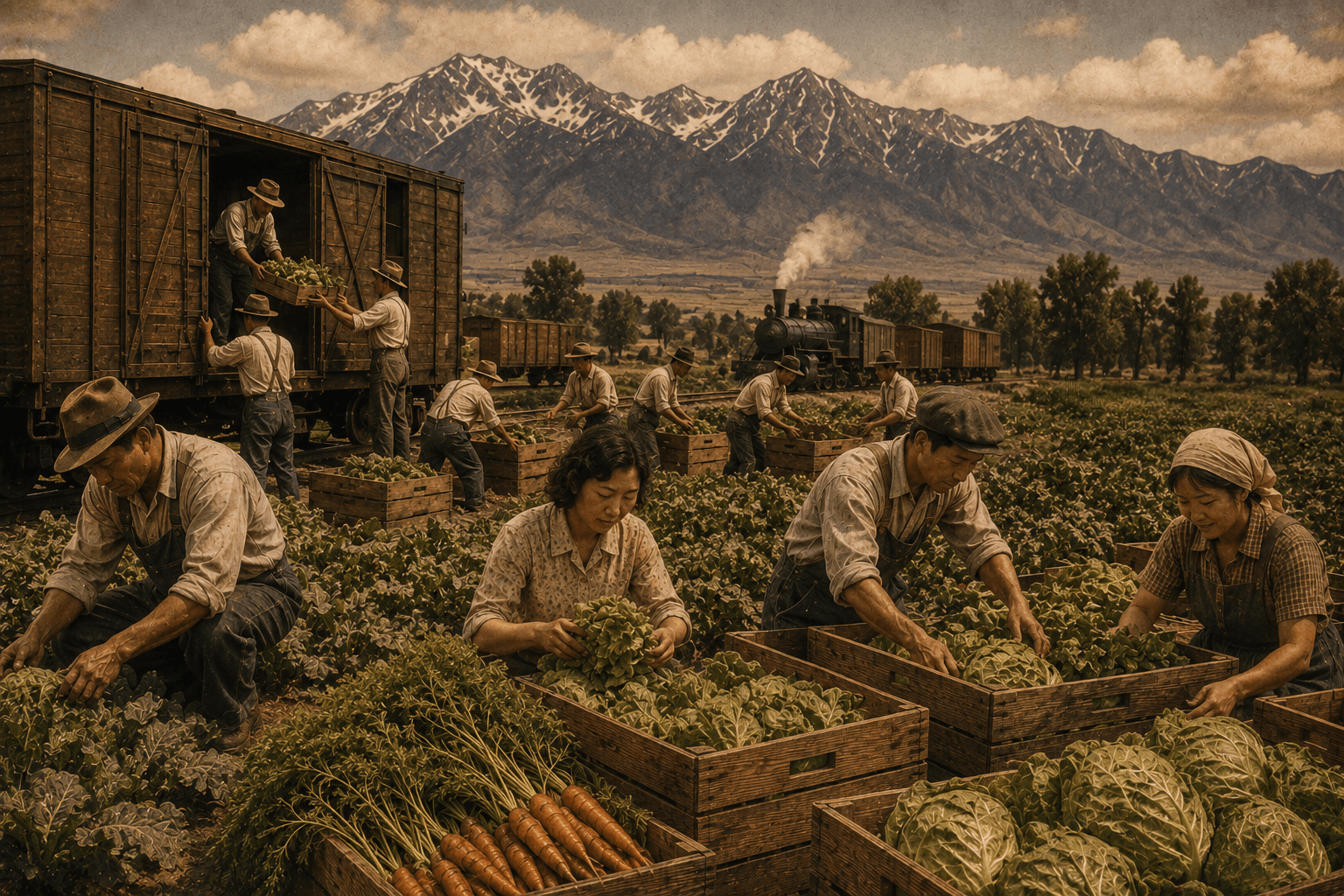
In the 1920s, Japanese farmers from California were drawn to Colorado’s San Luis Valley by the promise of rich, high-altitude farmland and new opportunities.
They introduced intensive small-plot truck farming, cultivating lettuce, spinach, carrots, and cabbage, and revolutionizing local agriculture.
Packing sheds sprang up in Fort Garland, Blanca, San Acacio, and La Jara, helping Japanese American families weave themselves into the region’s farming economy.
In 1936, Japanese and non-Japanese neighbors united to build the La Jara Buddhist Temple, a lasting spiritual and social landmark.
During World War II, Executive Order 9066 imposed strict restrictions, shuttering the temple and disrupting the community’s hard-won sense of belonging.
Despite adversity, many families stayed, and the temple still stands today. In 2025, it was nominated for the Colorado State Register of Historic Properties—a testament to the enduring impact of Japanese American farmers in the San Luis Valley.
Their legacy lives on in the valley’s fields and the temple that still watches over La Jara. Read More... |
 |
San Luis Valley Ecosystem Council
The San Luis Valley sits inside one of the most spectacular public land landscapes in North America — national forests, wilderness areas, wildlife refuges, and the Rio Grande corridor all intertwined across 8,000 square miles.
The San Luis Valley Ecosystem Council (SLVEC) is the only local organization dedicated to advocating for those public lands, making them one of the most important and least-known conservation voices in southern Colorado.
SLVEC works on wilderness protection, public land access, watershed health, and the long-term ecological integrity of the Valley's surrounding mountains and rivers.
In 2026, the organization is focused on mobilizing the community around protections for the Rio Grande corridor — a stretch of river and riparian land that is as culturally and ecologically significant as anything in the state.
If you care about keeping the Valley's public lands public, SLVEC is doing that work every day.
|
 |
 |
🏘️ Discover Alamosa Where the Railroad Built a City
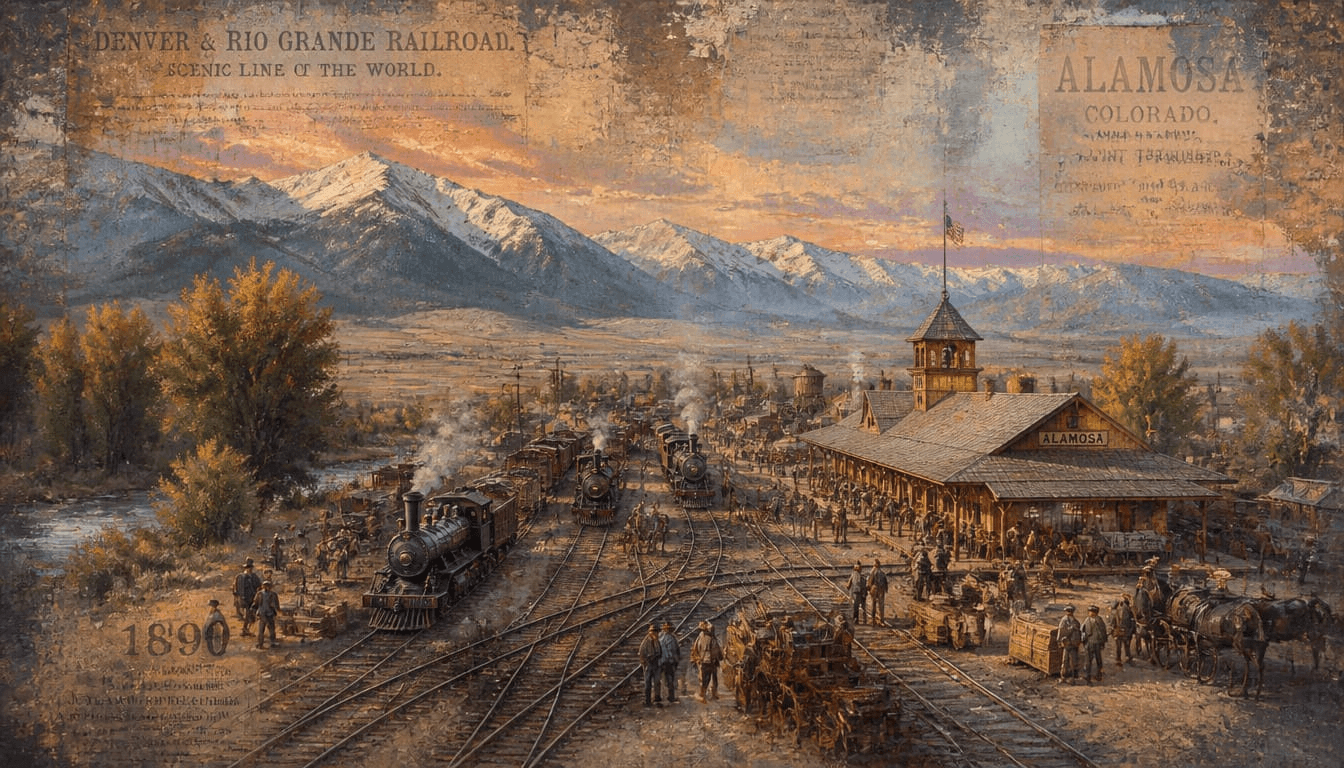
Alamosa wasn't planned — it was dropped. In the summer of 1878, the Denver & Rio Grande Railroad was pushing its narrow-gauge tracks south through the San Luis Valley, and when the line reached a wide bend in the Rio Grande where cottonwood trees lined the banks, the railroad set up a depot and declared a townsite.
The name it chose was alamosa — the Spanish word for a place of cottonwoods. The first passenger train arrived on July 4, 1878. Within two years, Alamosa had over 800 residents and was the largest, liveliest town in south-central Colorado.
What the D&RG built in Alamosa was nothing short of extraordinary. By 1890, the city had become the busiest narrow-gauge railroad hub in the entire nation — with tracks fanning out to Antonito in the south, Creede in the west, Salida in the north, and Santa Fe, New Mexico along the legendary "Chili Line."
The Alamosa yards held the world's only triple-rail switchyard, a mechanical marvel that allowed trains of different gauges to share the same tracks. The depot hummed around the clock. Ore from the San Juan mines, cattle from the Valley ranches, produce, lumber, passengers — all of it moved through Alamosa.
The railroad era left behind more than memories. In 1921, Adams State Normal School opened in Alamosa — now Adams State University, with more than 3,400 undergraduates and a presence that makes Alamosa the educational hub of the region.
The historic downtown retains the bones of a prosperous Victorian-era railroad city, and the restored Alamosa Depot still anchors the landscape near Cole Park along the Rio Grande.
Today Alamosa is the county seat and largest city in the Valley — the place you go for the hospital, the university, the big grocery run, and Adams State athletics.
It's also the gateway to Great Sand Dunes National Park & home to the Rio Grande Nature Center. If the Valley has a capital, Alamosa is it — a city born from a railroad junction that turned out to be one of the most important crossroads in the mountain West.
🧠 Did You Know? "Alamosa" comes from the Spanish word álamo, meaning cottonwood — and the Rio Grande's banks near the city were once lined with the towering shade trees that gave the town its name. |
 |
 |
The cards are on the table for one of the San Luis Valley's most meaningful summer fundraisers.
The 2nd Annual All-In for Veterans Casino Night Fundraiser, hosted by The Foxhole Project, will take place on Saturday, August 15, at Luchas Cantina & Speakeasy in Alamosa.
The evening combines the fun of a casino night with a mission to support veterans and their families throughout the San Luis Valley. Guests can expect classic casino-style games, prizes, food, and community fellowship while helping raise funds for a cause that stays close to home.
Every ticket purchased helps The Foxhole Project continue its work connecting veterans through peer support, community gatherings, outdoor experiences, resource navigation, and future retreat opportunities.
Unlike many organizations that focus only on services, The Foxhole Project is built around restoring the camaraderie many veterans miss after leaving military life. By creating opportunities to reconnect, share experiences, and support one another, the organization is working to ensure no veteran has to navigate life after service alone.
Whether you're a veteran, have family who served, or simply want to support those who have sacrificed for our country, Casino Night promises an entertaining evening while making a lasting difference for veterans across the San Luis Valley.
Event Details
This is the kind of community event that reminds us supporting local veterans isn't just about honoring their service — it's about helping build the community they deserve long after their time in uniform has ended. |
 |
Looking for a summer evening that's a little out of the ordinary?
Tracks & Tunes, presented by Revolution Rail and the Creede Musical Arts Collective, combines a scenic rail bike adventure with live music in one of the most beautiful settings in the San Luis Valley.
The experience begins at Revolution Rail's South Fork station, where guests board specially designed rail bikes for a leisurely ride along historic railroad tracks through the Rio Grande Coller Wildlife Area.
Surrounded by mountain views, forests, and open meadows, riders pedal approximately three miles before arriving at a secluded forest clearing for an intimate outdoor concert during the golden hour.
After the performance, everyone climbs back aboard their rail bikes for a peaceful ride beneath the evening sky, making for an unforgettable summer adventure.
Two Tracks & Tunes evenings remain this season: Saturday, July 18
Saturday, August 8
Each event lasts approximately 2½ hours and welcomes guests of all ages. Best of all, 10% of every ticket sold benefits the Creede Musical Arts Collective, helping support music and arts programming throughout the region.
Whether you're looking for a unique date night, a memorable family outing, or simply an excuse to enjoy Colorado's mountain scenery in a whole new way, Tracks & Tunes offers an experience unlike anything else in the Valley.
Event Details
If you've been looking for a reason to explore South Fork this summer, this may be one of the Valley's most memorable evenings. |
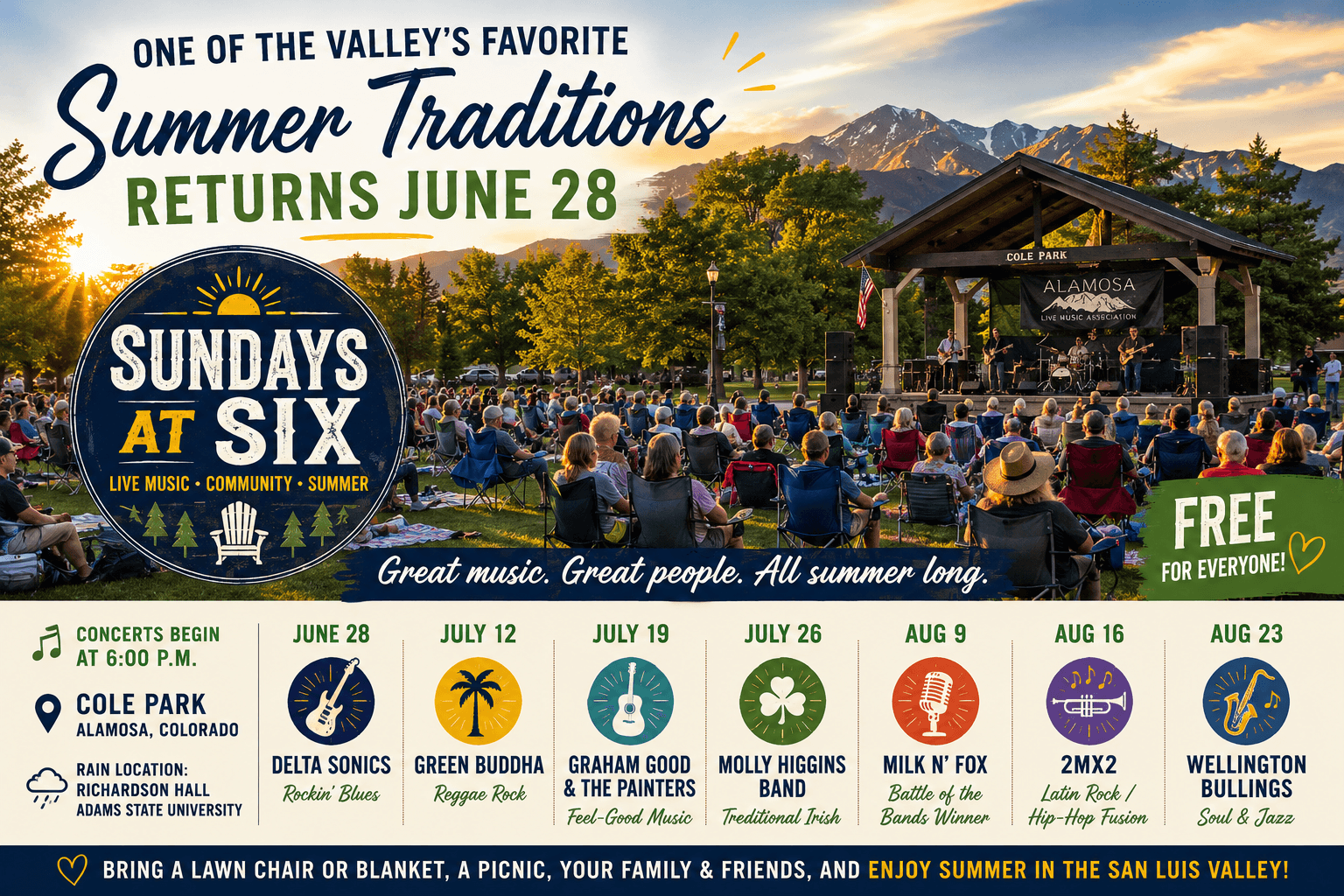 |
There's something special about a summer evening in Cole Park. As the sun begins to dip behind the mountains, lawn chairs unfold, picnic blankets are spread across the grass, children play nearby, and neighbors gather for one of the San Luis Valley's most beloved summer traditions — Sundays at Six.
Beginning Sunday, June 28, the free outdoor concert series returns to Cole Park in Alamosa for another season of live music, bringing together families, friends, and visitors for evenings filled with great entertainment and community spirit.
Hosted by the Alamosa Live Music Association, Sundays at Six has been a summertime favorite for more than two decades. The concerts showcase a wide variety of musical styles, from blues and reggae to Irish folk, jazz, Latin rock, and soul, ensuring there's something for every musical taste.
The 2026 season kicks off on June 28 with Delta Sonics, a high-energy blues band known for getting audiences on their feet. Future concerts throughout the summer will feature Green Buddha, Graham Good & The Painters, Molly Higgins Band, Milk N' Fox, 2MX2, and Wellington Bullings.
What makes Sundays at Six special isn't just the music — it's the atmosphere. Families arrive with picnic baskets, couples relax in lawn chairs, children dance near the stage, and friends reconnect while enjoying an evening outdoors. It's the kind of event that reminds us what summer in the San Luis Valley is all about.
Admission is always free, making it one of the Valley's best opportunities to enjoy live music in a relaxed and welcoming setting. Concerts begin at 6:00 p.m. in Cole Park, and in the event of inclement weather, performances move indoors to Richardson Hall at Adams State University.
Event Details
|
 |

The Conejos River, tucked away in southern Colorado’s San Luis Valley, remains a quiet escape for dedicated fly fishers.
Originating in the remote San Juan Wilderness, the river winds through dramatic canyons and dense ponderosa pine forests, creating a scenic route before merging with the Rio Grande near New Mexico.
Unlike popular destinations like the Frying Pan or Taylor, the Conejos offers solitude and thriving wild trout populations, thanks to stretches designated as Wild Trout water by Colorado Parks and Wildlife.
The lower river boasts vibrant rainbows and strong brown trout, while adventurous anglers who trek into the upper forks can discover native Rio Grande cutthroat trout, among the rarest in North America.
The historic Rainbow Trout Ranch has guided fishers here for over a century, with Rhyolite Canyon’s striking volcanic pillars challenging even experienced anglers.
Despite the river’s caliber, most days visitors enjoy the Conejos to themselves, offering a rare sense of tranquility in Colorado’s prized trout waters. Read More... |
💡 Tip of the Day:
Medano Creek at Great Sand Dunes National Park typically flows through mid-July — making right now one of the only weeks of the year when you can wade in seasonal "waves" at the base of the tallest sand dunes in North America. Go before it dries up. |
Small Business Spotlight |
1874 Distilling, Del Norte |

There's a building at 645 Grand Avenue in Del Norte that almost didn't make it. The Windsor Hotel, built in 1874, sat vacant for a quarter century after nearly being demolished in 1993. Then a distillery moved in, and the old building found its second act — one that might be better than the first.
1874 Distilling holds the distinction of being the first craft distillery in the San Luis Valley, and it takes that identity seriously. Every grain that goes into a bottle — barley, wheat, rye — is grown within 20 miles of the front door.
The result is a lineup of spirits that tastes unmistakably like this place: San Luis Valley Potato Vodka made from local spuds, Greenie Mountain Gin, Alamosa Single Malt Whiskey, and seasonal liqueurs that change with what the Valley is growing.
The tasting room opened in June 2021 inside the restored Windsor and is one of the best stops in Del Norte whether you're a whiskey person or just someone who appreciates what a beautiful old building smells like with a copper still in it.
1874 Distillery Tasting Room Hours Friday: 4–9 PM Saturday: 4–9 PM Sunday: 10:30 AM–2 PM Monday–Thursday: Closed
1874 Grill Hours Monday: 11:30 AM–1:30 PM Tuesday: Closed Wednesday–Thursday: 11:30 AM–1:30 PM Friday: 11:30 AM–1:30 PM & 5–9 PM Saturday: 8 AM–1:30 PM & 5–9 PM Sunday: 8 AM–1:30 PM & 5–8 PM
📍 645 Grand Avenue, Del Norte, CO 81132 (historic Windsor Hotel)
Tell them The San Luis Valley Beat sent you! 💛 |
|
 |
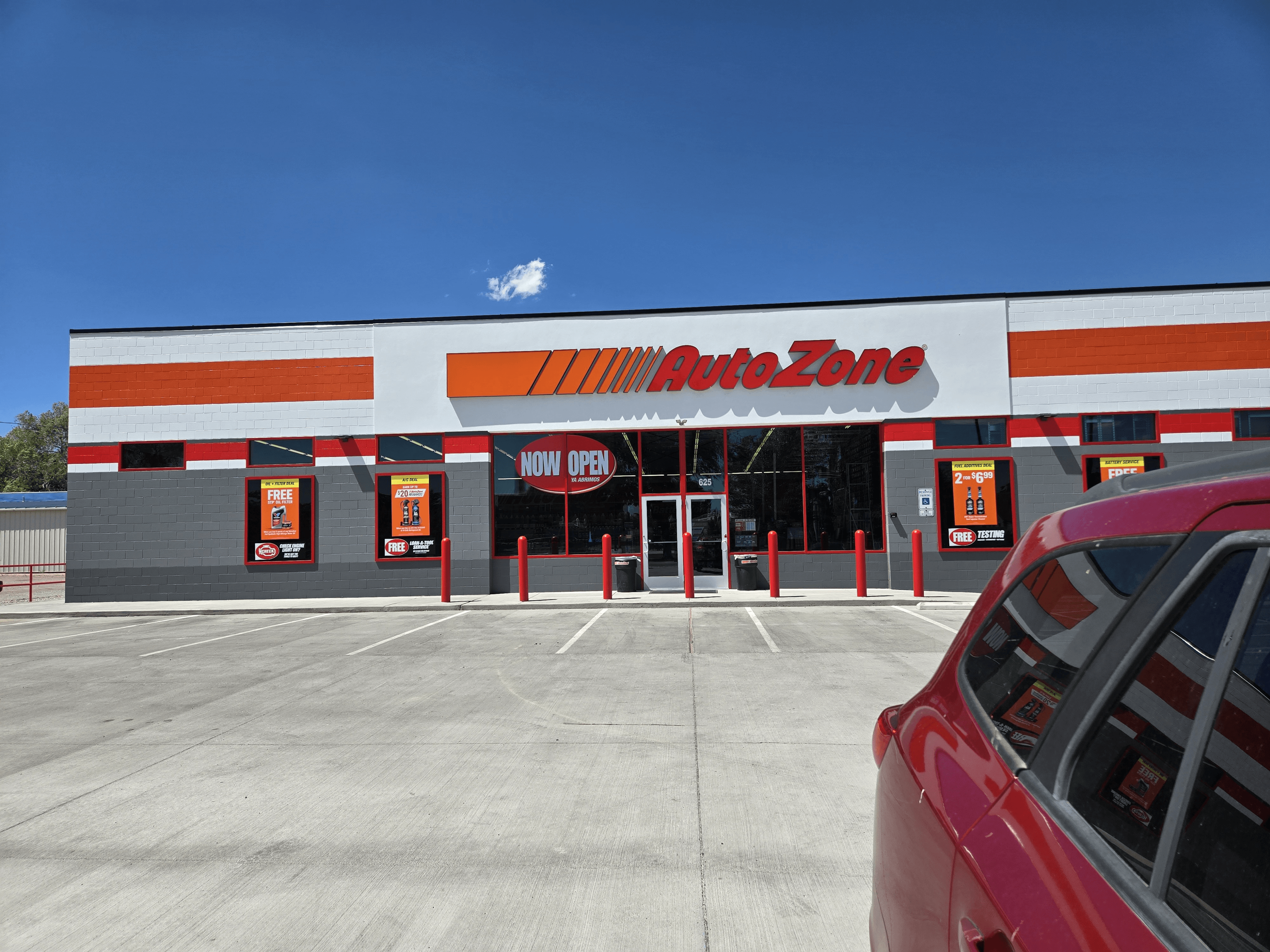
Monte Vista welcomes a brand-new AutoZone store at 625 North Broadway, expanding choices for automotive parts and repair supplies in the area.
This convenient location offers drivers and repair professionals a range of essentials, from batteries and brakes to filters, fluids, and specialty tools.
Shoppers can also take advantage of in-store services including battery testing, check engine light code scanning, and access to loaner tools for select repairs.
The launch further boosts North Broadway’s growing business district and delivers another reliable source for urgent automotive needs to Valley residents.
Photo: The Monte Vista AutoZone store stands ready to serve local drivers. Read More... |
 |
 |
 |
San Luis Valley Green Chile Potato Soup
The San Luis Valley grows nearly 10% of the nation's potato supply. It also sits at the northern edge of the green chile belt. This soup puts both facts to delicious use — creamy, smoky, warming, and deeply Valley in character.
INGREDIENTS
2 lbs Yukon Gold or russet potatoes, peeled and diced into 1-inch cubes
INSTRUCTIONS
1. Heat butter and olive oil together in a large pot over medium heat. Add the onion and cook until softened, about 6 minutes. 2. Add the garlic, cumin, and smoked paprika and cook for 1 minute until fragrant. 3. Add the diced potatoes and broth. Bring to a boil, then reduce heat and simmer for 18–20 minutes until potatoes are completely tender. 4. Use a potato masher or the back of a spoon to lightly mash about a third of the potatoes directly in the pot — this thickens the soup while keeping it chunky. 5. Stir in the green chiles and milk or cream. Simmer on low for another 5 minutes. Taste and adjust salt and pepper. 6. Ladle into bowls and top with shredded cheddar, a dollop of sour cream, and fresh cilantro. Serve with warm flour tortillas. |
 |
 |
💡 Trivia Answer:
Alamosa! By 1890, the Denver & Rio Grande Railroad had turned Alamosa into the nation's busiest narrow-gauge hub — with tracks running to Antonito, Santa Fe, Creede, and Salida, and a one-of-a-kind triple-rail switchyard that was the only one of its kind in the world. The railroad that built the city still echoes through its depot, its streets, and its identity as the Valley's capital. |