
Agriculture in the San Luis Valley: |
Uncover the rich history and sustainable practices shaping agriculture in San Luis Valley. |
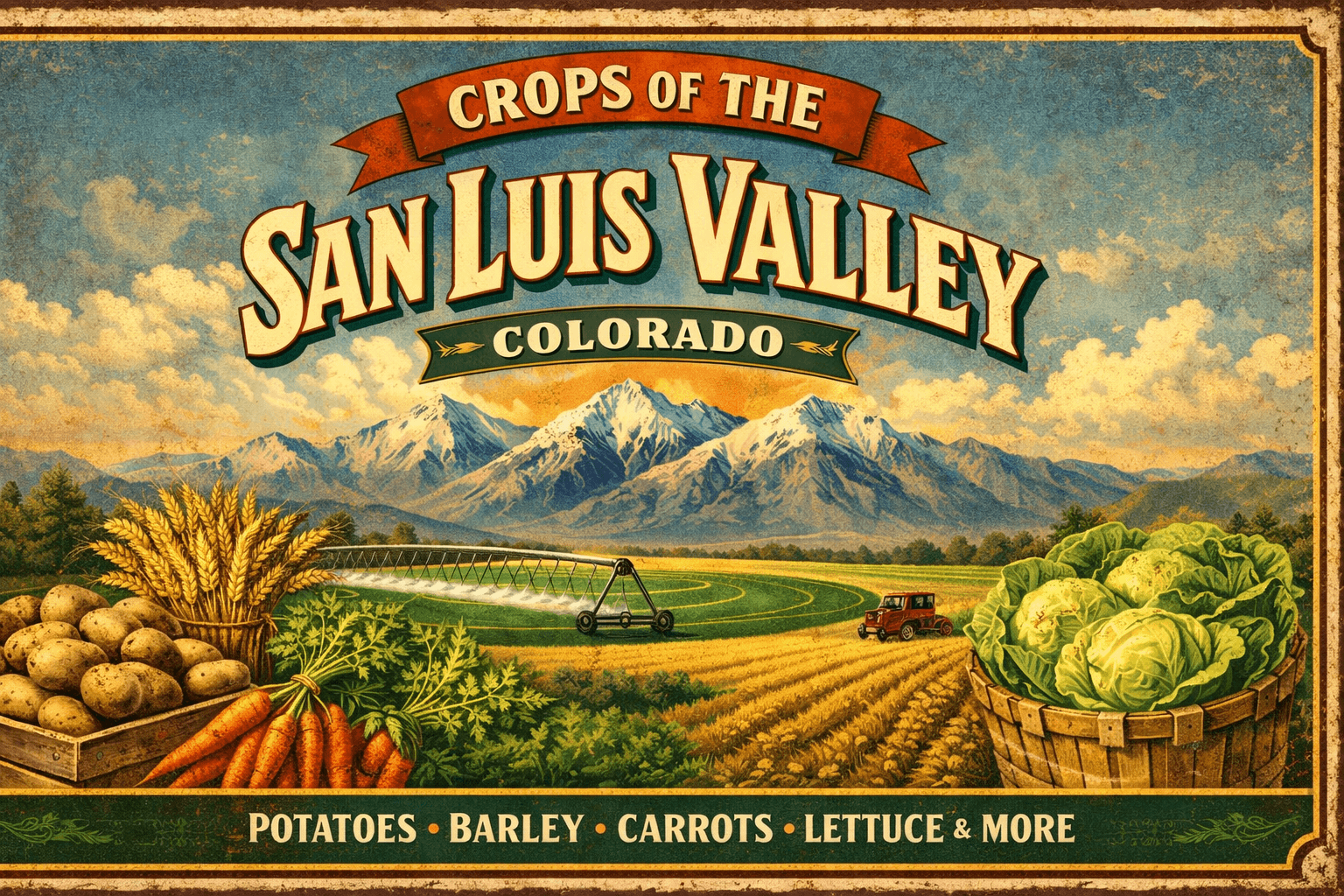
The San Luis Valley of southern Colorado has one of the longest and most unique agricultural histories in the American West. Surrounded by mountain ranges and resting at an elevation of roughly 7,500 feet, the valley has long been a place where water, fertile soil, and determination shaped generations of farmers and ranchers.
Long before large-scale farming took hold, Indigenous peoples used the valley for hunting, gathering, and seasonal food production. Permanent agriculture expanded in the mid-1800s when Hispanic settlers moved north from New Mexico and established farming communities along the Rio Grande. These settlers brought with them one of the most important agricultural traditions in the region: the acequia irrigation system. Acequias were community-managed, gravity-fed ditches that carried snowmelt and river water to fields and gardens. In a high-desert valley where rainfall is limited, these systems made it possible to grow crops such as corn, beans, wheat, and vegetables. In many parts of the San Luis Valley, acequias are still used today, connecting modern agriculture with the valley’s earliest farming traditions.
By the late 1800s and early 1900s, farming in the valley expanded as railroads and homesteaders brought new opportunities. Farmers quickly discovered that the valley’s climate was ideal for cool-weather crops. Warm sunny days, cool nights, mineral-rich soils, and clean mountain water created the kind of growing conditions that could produce both quality and abundance.
Potatoes eventually became the valley’s signature crop, especially around communities such as Monte Vista, Center, and Hooper. Today, the San Luis Valley is widely known as one of the nation’s most important potato-growing regions. The valley’s cold winters help reduce pests and disease, making it especially well suited for seed potato production as well as commercial potato farming.
But potatoes are only part of the story. Over the years, San Luis Valley farmers have also grown barley, wheat, oats, and alfalfa, all of which remain important to the region’s agricultural economy. Barley grown here helps supply Colorado’s brewing industry, while alfalfa continues to support cattle and livestock operations across the valley and beyond. Vegetable production has also played a significant role in the valley’s farming heritage. Crops such as carrots, lettuce, onions, and other produce thrive in the valley’s cool climate and long summer days. Many people are surprised to learn just how diverse valley agriculture really is. While potatoes may be the crop most associated with the region, the San Luis Valley has long produced a wide range of food crops that help feed Colorado and the nation.
Modern agriculture in the valley blends old and new. Center-pivot irrigation systems now stretch across the landscape, creating the green circles that are so recognizable from the road and from above. Yet even with changing technology, the heart of valley agriculture remains much the same: family farms, careful water use, and a strong connection to the land.
Agriculture is more than an industry in the San Luis Valley. It is part of the region’s identity. From historic acequias to modern fields of potatoes, barley, carrots, and lettuce, the valley’s agricultural story is one of resilience, tradition, and the enduring relationship between community and place. |
0 Comments
Join the conversation
Be the first to comment
Share your thoughts above.