San Luis Valley Research Center Secures Funding for New Potato Storage Facility |
Rebuilding Efforts to Enhance Colorado's Potato Industry |
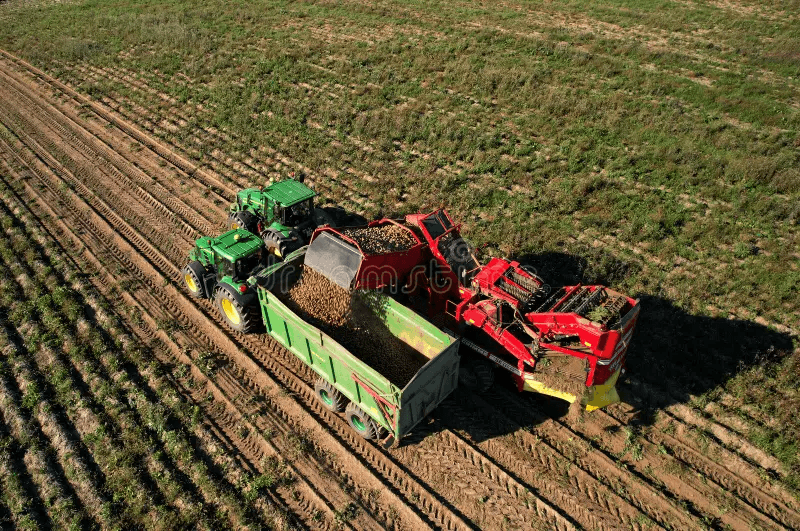
In a significant development for Colorado's agricultural sector, the San Luis Valley Research Center in Center, Colorado, has secured funding to construct a new potato research and storage facility.
The original storage facility was destroyed by an 80-mph windstorm in 2017, leading the center to lease inadequate space nine miles away.
This arrangement posed challenges, including daily travel that diverted employee time and resources from the main research site.
The new facility, with a total budget of $7.8 million, will be a 15,700-square-foot building designed to provide up-to-date, quality storage for potatoes and seeds, meeting the standards necessary for academic research and community partnerships.
It will also have the capacity to store other crops as needed for the university's research purposes.
The San Luis Valley is a major contributor to Colorado's potato industry, representing approximately 97% of the state's market share.
With over 120 farms supporting more than 4,000 jobs, the region's potato industry is a cornerstone of the local economy.
The new facility is expected to bolster the center's work in supporting growers within the Valley's nearly $600 million potato industry.
Dr. Amy Charkowski, Colorado State University Associate Dean for Research, emphasized the importance of proper storage for both farmers and research efforts.
"Potatoes are living things; the tubers we eat are swollen stems, and farmers need to be able to store them," Charkowski said.
"For potato research and breeding, we need to be able to store them over the winter in a way that keeps them healthy and alive."
She also highlighted the challenges in securing funding for facilities and expressed gratitude for the support received.
"It's hard to find money for facilities, and Rep. Hurd came through for us in a great big way," she said.
"He found the funding that will allow us to start putting the facility back, and that's going to help our potato improvement efforts, plant breeding, research, and being able to store over the winter so that we have something to plant the next spring."
Since the destruction of the original facility, staff have been renting space in a warehouse.
While this arrangement allowed operations to continue, it presented challenges, including safety concerns associated with transporting large loads of potatoes between sites.
The new facility is expected to alleviate these issues and enhance the center's research capabilities.
The San Luis Valley Research Center works in cooperation with programs across the Western U.S. to support San Luis Valley growers and communities with research, educational programs, and efforts toward optimizing agricultural productivity in current and future markets.
The construction of the new facility is a testament to the center's commitment to advancing agricultural research and supporting the local economy.
In related news, the U.S. Department of Agriculture is seeking nominees for the Colorado Potato Administrative Committee – Area 2 (San Luis Valley) to fill seats for eight members and eight alternates for a two-year term, beginning June 1, 2026, and ending May 31, 2028.
Nominations will be accepted at the Southern Rocky Mountain Agriculture Conference from Feb. 3-5, 2026, in Monte Vista, Colorado.
This initiative underscores the ongoing efforts to support and enhance the potato industry in the San Luis Valley.
For more information on the nomination process, interested parties can contact the Colorado Potato Administrative Committee - Area 2 Assistant Director Jessica Bradshaw at (719) 852-3322 or jessica@coloradopotato.org.
The San Luis Valley Research Center's new facility is poised to play a crucial role in the future of Colorado's potato industry, providing essential support to growers and contributing to the region's economic vitality. |
0 Comments
Join the conversation
Be the first to comment
Share your thoughts above.