
San Luis Valley Faces Dire Water Outlook Amidst Changing Climate |
Farmers and ranchers in the Upper Rio Grande Basin confront worsening water conditions and shifting weather patterns |
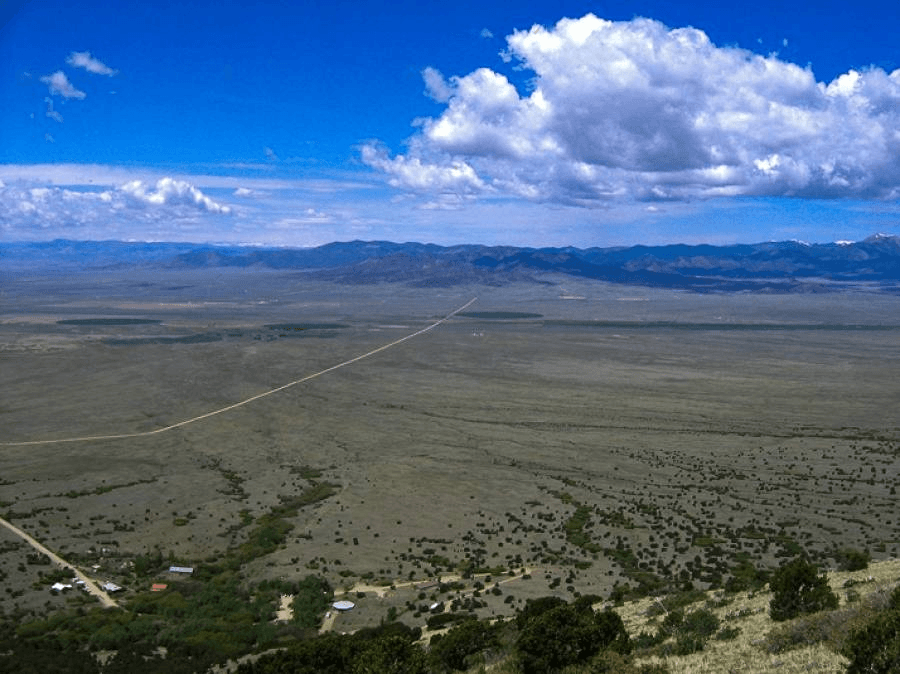
Division Engineer Craig Cotten and Pat McDermott from the Colorado Division of Water Resources recently delivered a sobering report to the San Luis Valley's agricultural community.
They highlighted a "poor" spring runoff, reservoir storage that is "not well," and an unconfined aquifer that is deteriorating.
These challenges underscore the urgent need for adaptive strategies in the region's farming and ranching sectors.
McDermott noted, "We do anticipate at this moment, at this date that it's going to be a poor runoff in 2026."
He and Cotten provided a retrospective on the recent water year and projections for the upcoming spring runoff.
Despite efforts to find optimism, the outlook remains bleak.
The state enforces groundwater pumping regulations in the San Luis Valley, requiring farmers to meet specific metrics to continue operations.
One such metric is the recovery of the unconfined aquifer through strategies like buy-and-dry and reduced groundwater pumping.
Cotten expressed concern, stating, "It just kind of gets worse and worse every year that we look at it."
He referenced the declining storage levels of the Upper Rio Grande's unconfined aquifer and the increasing recovery efforts required from crop producers in Subdistrict 1.
"Unfortunately, it's going in the wrong direction and it has been for quite some time here," Cotten added, referring to the latest five-year average for storage.
**The Numbers:**
Rio Grande 2025
493,000 acre-feet – Annual index flow or 80% of the long-term average over the past 30 years
125,000 acre-feet – Obligation to New Mexico and Texas under the Rio Grande Compact
The Rio Grande saw an increase of 95,000 acre-feet due to October 2025 rain.
Conejos River 2025
205,000 acre-feet – Annual index flow or 68% of the long-term average of 300,000 acre-feet
46,900 acre-feet – Obligation to New Mexico and Texas
The Conejos River saw an increase of 15,000 acre-feet due to October 2025 rain.
**February's Current Conditions:**
Statewide snowpack: 55% of median
Upper Rio Grande snowpack: 48% of median
Warmest December on record for nine western states based on 131 years of temperature data.
Nathan Coombs and Heather Dutton, both key figures in local and state water conservation efforts, elaborated on the changing weather patterns affecting the basin and the water available for irrigation.
Coombs highlighted the issue of rising overnight temperatures in late fall and winter months, noting that the Valley isn't experiencing the sub-zero temperatures it once did.
For instance, December 2025 had an average daily low of 11 degrees—double digits overnight—compared to the normal low of 0.8 degrees.
January of this year recorded an average daily low of 4 degrees, instead of the typical -1 degree.
"We're not sunburning that much harder; we're just losing the cold," Coombs remarked to fellow farmers.
The timing of moisture is also off.
In the past two water years—2024 and 2025—heavy rains in October added to the total water in the Rio Grande and Conejos River systems.
However, this moisture arrived too late to benefit irrigators but was sufficient to increase the overall water levels in the rivers.
"Look at how it's changing," Coombs said.
"Useful water for irrigation is changing in more ways than just volumes.
We're seeing timing change.
So that's part of what this is.
Mother Nature is playing a big role in this.
We've got to figure that component out a little better.
We don't need to look across the fence at what our neighbors are or aren't doing.
Let's figure out how we correct to that."
In response to these challenges, some farmers are taking proactive measures.
For example, a farmer in the San Luis Valley has ceased irrigating 1,800 acres to conserve the area's shrinking groundwater supply.
Instead, he is working with conservation organizations to permanently end the use of his water rights for cultivation on that land, aiming to restore balance to the aquifer.
As the San Luis Valley grapples with these water challenges, the community's resilience and adaptability will be crucial in navigating the uncertain future of farming and ranching in the region. |
0 Comments
Join the conversation
Be the first to comment
Share your thoughts above.